


Photo-degradation of yperite over V, Fe and Mn-doped titania–silica photocatalysts
Literature Information
Publication Date
2008-09-23
DOI
10.1039/B810200G
Impact Factor
3.676
Authors
Ştefan Neaţu, Vasile I. Pârvulescu, Gabriel Epure, Emilia Preda, Vasile Şomoghi, Alessandro Damin, Silvia Bordiga, Adriano Zecchina
View Original
Abstract
The photocatalytic decomposition of yperite (bis(2-chloroethyl)sulfide), a chemical warfare agent, was achieved by using titania–silica catalysts doped with several transition metal ions. The preparation of these catalysts was achieved by impregnation of a titania–silica mixed oxide previously synthesized using a sol-gel route with salts of the doping elements (vanadium, iron, manganese). The above catalysts were characterized using several spectroscopic techniques: FTIR, Raman, DR-UV-Vis, and XPS. The band gap energy was measured for each photocatalytic system. The reaction was carried out in two different types of reactors, i.e. naturally aerated and a closed quartz tube aerated under a constant flow, and using two types of irradiation, UV-Vis and Vis. The investigated systems proved to be extremely active, leading to an almost complete degradation of yperite in 2 h of irradiation. An excellent correlation between the photocatalytic performances and the band gap has been found. Based on the characterization data and on the temporal evolution of the reaction products, a reaction mechanism has been suggested. This mechanism considers two distinct pathways for the decomposition of yperite, namely the C–S bond cleavage and the S oxidation.
Recommended Journals

Applied Composite Materials

Construction and Building Materials

Heterocyclic Communications

Journal of Computer-Aided Molecular Design

Composite Interfaces

Advanced Composite Materials

Journal of Physical Organic Chemistry

Bio-Medical Materials and Engineering

Advanced Powder Technology

Cement and Concrete Composites
Related Literature
DFT investigations for the catalytic reaction mechanism of methane combustion occurring on Pd(ii)/Al-MCM-41
Anis Gannouni, Carine Michel, Françoise Delbecq, Mongia Saïd Zina
2018-09-20
Paper
DOI: 10.1039/C8CP04178D
Impact of H-termination on the nitrogen reduction reaction of molybdenum carbide as an electrochemical catalyst
Qinye Li, Siyao Qiu, Lizhong He, Xiwang Zhang
2018-08-24
Paper
DOI: 10.1039/C8CP04474K
Effect of protein–protein interactions and solvent viscosity on the rotational diffusion of proteins in crowded environments
Grzegorz Nawrocki, Alp Karaboga
2018-12-12
Paper
DOI: 10.1039/C8CP06142D
On-the-fly kinetics of hydrogen abstraction from polycyclic aromatic hydrocarbons by methyl/ethyl radicals
Artur Ratkiewicz, An Le, Minh v. Duong, Thanh N. Truong, Lam K. Huynh
2018-08-22
Paper
DOI: 10.1039/C8CP03718C
Modeling of aromatics formation in fuel-rich methane oxy-combustion with an automatically generated pressure-dependent mechanism
Te-Chun Chu, Zachary J. Buras, Patrick Oßwald, Mengjie Liu, Mark Jacob Goldman, William H. Green
2018-12-07
Paper
DOI: 10.1039/C8CP06097E
Pressure induced excellent thermoelectric behavior in skutterudites CoSb3 and IrSb3‡
Xiuxian Yang, Zhenhong Dai, Yinchang Zhao, Wenchao Niu, Jianye Liu
2018-11-21
Paper
DOI: 10.1039/C8CP04301A
Ab initio interatomic potentials and transport properties of alkali metal (M = Rb and Cs)–rare gas (Rg = He, Ne, Ar, Kr, and Xe) media
Alexander A. Medvedev, Vladimir V. Meshkov, Andrey V. Stolyarov, Michael C. Heaven
2018-09-20
Paper
DOI: 10.1039/C8CP04397C
Doping engineering of thermoelectric transport in BNC heteronanotubes
Gustavo Cuba-Supanta, Rafael Gutierrez, Justo Rojas-Tapia
2018-12-17
Paper
DOI: 10.1039/C8CP05592K
Swelling behaviour of core–shell microgels in H2O, analysed by temperature-dependent FTIR spectroscopy
Lars Wiehemeier, Oliver Wrede, Julian Oberdisse, Thomas Hellweg, Tilman Kottke
2018-12-03
Paper
DOI: 10.1039/C8CP05911J
You might also like
Compound Q&A
How is 3-(2-Bromoimidazo[2,1-b]thiazol-6-yl)propanoic acid hydrochloride (CAS: 1187830-80-3) typically synthesized?
3-(2-Bromoimidazo[2,1-b]thiazol-6-yl)propanoic acid hydrochloride is typically s...
1187830-80-33-(2-Bromoimidazo[2,...
Compound Q&A
How is 2-Isopropyl-1,3-dioxane-5-carboxylic acid (CAS: 116193-72-7) typically synthesized?
2-Isopropyl-1,3-dioxane-5-carboxylic acid is typically synthesized by the carbox...
116193-72-72-Isopropyl-1,3-diox...
Compound Q&A
What is Alisporivir (CAS: 254435-95-5)?
Alisporivir (CAS: 254435-95-5) is an antiviral medication used in the treatment ...
254435-95-5Alisporivir
Compound Q&A
What are the physical and chemical properties of [1,2,4]triazolo[3,4-a]phthalazine (CAS: 234-80-0)?
[1,2,4]triazolo[3,4-a]phthalazine (CAS: 234-80-0) is a crystalline compound with...
234-80-0[1,2,4]triazolo[3,4-...
Compound Q&A
What regulatory guidelines apply to (2S)-5-Hydroxy-2-(4-hydroxyphenyl)-4-oxo-3,4-dihydro-2H-chromen-7-yl methyl beta-D-glucopyranosiduronate (CAS: 1985597-72-5)?
Regulatory guidelines for (2S)-5-Hydroxy-2-(4-hydroxyphenyl)-4-oxo-3,4-dihydro-2...
1985597-72-5(2S)-5-Hydroxy-2-(4-...
Compound Q&A
Is 2,2-Difluorocyclohexanamine hydrochloride (CAS: 921602-83-7) safe?
2,2-Difluorocyclohexanamine hydrochloride is generally safe when handled under p...
921602-83-72,2-Difluorocyclohex...
Compound Q&A
What are the main uses of 3-Nitro-2-phenylthiophene (CAS: 18150-94-2)?
3-Nitro-2-phenylthiophene is primarily used in the synthesis of other organic co...
18150-94-23-Nitro-2-phenylthio...
Compound Q&A
What is 1-(Trifluoroacetyl)-4-piperidinecarbonitrile (CAS: 77940-79-5)?
1-(Trifluoroacetyl)-4-piperidinecarbonitrile (CAS: 77940-79-5) is a colorless to...
77940-79-51-(Trifluoroacetyl)-...
Compound Q&A
What is the market or research trend for 1,3,6,8-Tetranitro-9H-carbazole (CAS: 4543-33-3)?
Research and market trends for 1,3,6,8-Tetranitro-9H-carbazole (CAS: 4543-33-3) ...
4543-33-31,3,6,8-Tetranitro-9...
Compound Q&A
How should waste containing Dibenzo[b,d]thiophen-1-ylboronic acid (CAS: 1245943-60-5) be handled?
Waste containing Dibenzo[b,d]thiophen-1-ylboronic acid (CAS: 1245943-60-5) shoul...
1245943-60-5Dibenzo[b,d]thiophen...
Source Journal
Physical Chemistry Chemical Physics

CiteScore:
5.5
Self-citation Rate:
10.3%
Articles per Year:
3036
Physical Chemistry Chemical Physics (PCCP) is an international journal co-owned by 19 physical chemistry and physics societies from around the world. This journal publishes original, cutting-edge research in physical chemistry, chemical physics and biophysical chemistry. To be suitable for publication in PCCP, articles must include significant innovation and/or insight into physical chemistry; this is the most important criterion that reviewers and Editors will judge against when evaluating submissions. The journal has a broad scope and welcomes contributions spanning experiment, theory, computation and data science. Topical coverage includes spectroscopy, dynamics, kinetics, statistical mechanics, thermodynamics, electrochemistry, catalysis, surface science, quantum mechanics, quantum computing and machine learning. Interdisciplinary research areas such as polymers and soft matter, materials, nanoscience, energy, surfaces/interfaces, and biophysical chemistry are welcomed if they demonstrate significant innovation and/or insight into physical chemistry. Joined experimental/theoretical studies are particularly appreciated when complementary and based on up-to-date approaches.
Recommended Compounds
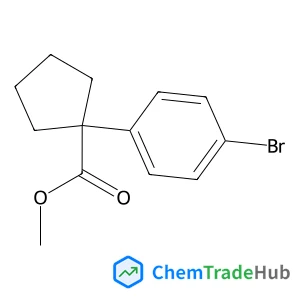
Methyl 1-(4-bromophenyl)cyclopentanecarboxylate
CAS Number:
1236357-64-4
Molecular Formula:
C13H15BrO2
Recommended Suppliers







Disclaimer
This page provides academic journal information for reference and research purposes only. We are not affiliated with any journal publishers and do not handle publication submissions. For publication-related inquiries, please contact the respective journal publishers directly.
If you notice any inaccuracies in the information displayed, please contact us at support@chemtradehub.com. We will promptly review and address your concerns.