


On-the-fly kinetics of hydrogen abstraction from polycyclic aromatic hydrocarbons by methyl/ethyl radicals
Literature Information
Publication Date
2018-08-22
DOI
10.1039/C8CP03718C
Impact Factor
3.676
Authors
Artur Ratkiewicz, An Le, Minh v. Duong, Thanh N. Truong, Lam K. Huynh
View Original
Abstract
This work provides a rigorous procedure, within the framework of the Reaction Class Transition State Theory (RC-TST) and the Structure–Activity Relationship (SAR), for predicting reliable thermal rate constants on-the-fly for hydrogen abstraction reactions by methyl/ethyl radicals from Polycyclic Aromatic Hydrocarbons (PAHs) in a temperature range of 300–3000 K. All necessary RC-TST parameters were derived from ab initio calculations for a representative set of 36 reactions on which different error analyses and comparisons with available literature data were carried out. In addition to the good agreement between the RC-TST rate constants and the literature data, the detailed error analyses show that RC-TST/SAR, utilizing either the Linear Energy Relationship (LER) where only the reaction energy is needed or Barrier Height Grouping (BHG) where no additional data is needed, can predict the thermal rate constants for any reaction in the title reaction class with an average systematic error of less than 50% when compared to the explicit rate calculations. Therefore, the constructed RC-TST procedure can be confidently used to obtain reliable rate constants on the fly in an attempt to effectively construct detailed kinetic mechanisms for PAH-related fuels.
Recommended Journals

Journal of Natural Medicines

Chemical Communications

Saudi Pharmaceutical Journal

Russian Journal of Organic Chemistry

Acta Materialia

Current Opinion in Colloid & Interface Science

Russian Chemical Bulletin

Russian Journal of Bioorganic Chemistry

Russian Journal of Applied Chemistry

Chemistry Education Research and Practice
Related Literature
Effect of copper doping on plasmonic nanofilms for high performance photovoltaic energy applications
Ghulam Hasnain Tariq, Ghulam Asghar, M. Shahzad Shifa, M. Anis-Ur-Rehman, Sana Ullah, Zulfiqar Ali Shah, Ahmed M. Tawfeek, Farooq Sher
2023-11-03
Paper
DOI: 10.1039/D3CP04332K
Enhanced electrocatalytic hydrogen evolution from nitrogen plasma-tailored MoS2 nanostructures
You Li, Yi Wan, Jiamin Yao, Hongqian Zheng, Xi Wang, Xuan Liu, Bo Ouyang, Chengxi Huang, Kaiming Deng, Erjun Kan
2023-11-03
Paper
DOI: 10.1039/D3CP04951E
Correction: UV and VUV-induced fragmentation of tin-oxo cage ions
Jarich Haitjema, Lianjia Wu, Laurent Nahon, Sonia Castellanos
2023-11-27
Correction
DOI: 10.1039/D3CP90231E
Enhancement of wide-band trace terahertz absorption spectroscopy based on microstructures: a review
Jining Li, Wenxin Lu
2023-11-09
Review Article
DOI: 10.1039/D3CP04746F
van der Waals induced ice growth on partially melted ice nuclei in mist and fog
M. Boström, I. Brevik, O. I. Malyi
2023-11-15
Paper
DOI: 10.1039/D3CP04157C
You might also like
Compound Q&A
Are there alternatives to 1-(4-Chlorophenyl)-N-hydroxymethanimine (CAS: 3848-36-0) in synthesis?
When considering alternatives to 1-(4-Chlorophenyl)-N-hydroxymethanimine (CAS: 3...
3848-36-01-(4-Chlorophenyl)-N...
Compound Q&A
How should (1R,9S,10S,12S,14E,16S,19R,20R,21S,22R)-3,9,21-Trihydroxy-5,10,12,14,16,20,22-heptamethyl-23,24-dioxatetracyclo[17.3.1.1~6,9~.0~2,7~]tetracosa-2,5,7,14-tetraen-4-one (CAS: 183202-73-5) be stored?
This compound should be stored in a cool, dry place away from direct sunlight. I...
183202-73-5(1R,9S,10S,12S,14E,1...
Compound Q&A
How is 3-(4-Bromophenyl)-5-(2-fluorophenyl)-1,2,4-oxadiazole (CAS: 419553-16-5) typically synthesized?
3-(4-Bromophenyl)-5-(2-fluorophenyl)-1,2,4-oxadiazole is synthesized through a m...
419553-16-53-(4-Bromophenyl)-5-...
Compound Q&A
How is 5-Chloro-2-(4-chlorophenyl)-4-methyl-6-[3-(1-piperidinyl)propoxy]pyrimidine (CAS: 1639220-19-1) typically synthesized?
5-Chloro-2-(4-chlorophenyl)-4-methyl-6-[3-(1-piperidinyl)propoxy]pyrimidine (CAS...
1639220-19-15-Chloro-2-(4-chloro...
Compound Q&A
What industries use 2-Chloro-4-(difluoromethoxy)pyridine (CAS: 1206978-15-5)?
2-Chloro-4-(difluoromethoxy)pyridine is used in the pharmaceutical industry for ...
1206978-15-52-Chloro-4-(difluoro...
Compound Q&A
What regulatory guidelines apply to 3-Chloro-6-methylpyridazine (CAS: 1121-79-5)?
3-Chloro-6-methylpyridazine (CAS: 1121-79-5) is classified under the Globally Ha...
1121-79-53-Chloro-6-methylpyr...
Compound Q&A
Are there alternatives to Methyl 4,5-dimethyl-2-nitrobenzoate in synthesis?
Several alternatives can be used in the synthesis of Methyl 4,5-dimethyl-2-nitro...
90922-74-0Methyl 4,5-dimethyl-...
Compound Q&A
Are there alternatives to (2E,2'E)-3,3'-(1,4-Phenylene)bisacrylaldehyde in synthesis?
Alternatives to (2E,2'E)-3,3'-(1,4-Phenylene)bisacrylaldehyde include other acry...
63405-68-5(2E,2'E)-3,3'-(1,4-P...
Compound Q&A
What is 3-Amino-5-chloropyridin-2-ol hydrochloride (CAS: 1261906-29-9)?
3-Amino-5-chloropyridin-2-ol hydrochloride is an organic compound with the CAS n...
1261906-29-93-Amino-5-chloropyri...
Compound Q&A
What precautions should be taken when handling 6,7-Difluoro-2,3-dihydro-4H-chromen-4-one (CAS: 1092349-93-3)?
When handling 6,7-Difluoro-2,3-dihydro-4H-chromen-4-one, it is essential to wear...
1092349-93-36,7-Difluoro-2,3-dih...
Source Journal
Physical Chemistry Chemical Physics

CiteScore:
5.5
Self-citation Rate:
10.3%
Articles per Year:
3036
Physical Chemistry Chemical Physics (PCCP) is an international journal co-owned by 19 physical chemistry and physics societies from around the world. This journal publishes original, cutting-edge research in physical chemistry, chemical physics and biophysical chemistry. To be suitable for publication in PCCP, articles must include significant innovation and/or insight into physical chemistry; this is the most important criterion that reviewers and Editors will judge against when evaluating submissions. The journal has a broad scope and welcomes contributions spanning experiment, theory, computation and data science. Topical coverage includes spectroscopy, dynamics, kinetics, statistical mechanics, thermodynamics, electrochemistry, catalysis, surface science, quantum mechanics, quantum computing and machine learning. Interdisciplinary research areas such as polymers and soft matter, materials, nanoscience, energy, surfaces/interfaces, and biophysical chemistry are welcomed if they demonstrate significant innovation and/or insight into physical chemistry. Joined experimental/theoretical studies are particularly appreciated when complementary and based on up-to-date approaches.
Recommended Compounds
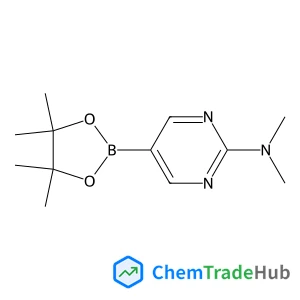
N,N-Dimethyl-5-(4,4,5,5-tetramethyl-1,3,2-dioxaborolan-2-yl)-2-pyrimidinamine
CAS Number:
1032759-30-0
Molecular Formula:
C12H20BN3O2
Recommended Suppliers






Disclaimer
This page provides academic journal information for reference and research purposes only. We are not affiliated with any journal publishers and do not handle publication submissions. For publication-related inquiries, please contact the respective journal publishers directly.
If you notice any inaccuracies in the information displayed, please contact us at support@chemtradehub.com. We will promptly review and address your concerns.