


Pressure induced excellent thermoelectric behavior in skutterudites CoSb3 and IrSb3‡
Literature Information
Publication Date
2018-11-21
DOI
10.1039/C8CP04301A
Impact Factor
3.676
Authors
Xiuxian Yang, Zhenhong Dai, Yinchang Zhao, Wenchao Niu, Jianye Liu
View Original
Abstract
Utilizing the first-principle calculations combined with Boltzmann transport equation (BTE) and semiclassical analysis, we have systematically investigated the electronic structure, lattice thermal conductivity κL, Seebeck coefficient S, and the dimensionless figure of merit zT as a function of hydrostatic pressure P in crystalline skutterudites CoSb3 and IrSb3. Interestingly, as the pressure increases, the band gap and κL show an approximate parabolic trend, which results in extraordinarily high S and excellent thermoelectric properties, and zT even exceeds 1.4(1.09) in IrSb3(CoSb3) at 54(58) GPa. This anomalous behavior arises from the electron distribution and intrinsic scattering processes. Further analyses indicate that (i) nonbonding electron pairs of Sb atoms are gradually transferred to the region between Co(Ir) and Sb atoms as the pressure increases, which leads to the formation of a partial metallic bond and thus the band gap first expands and then shrinks; (ii) the change of the strength of the anharmonic phonon scattering process results in the variation of κL. As a result, these behaviors cause excellent thermoelectric properties. Our results provide insight into the thermal transport properties of skutterudites, meanwhile, forecast potential high pressure applications for thermoelectric materials.
Recommended Journals

Saudi Pharmaceutical Journal

Russian Journal of Applied Chemistry

Journal of Natural Medicines

Organic Process Research & Development

Nature Medicine

Drug Discovery Today

Journal of Saudi Chemical Society

Russian Journal of Bioorganic Chemistry

Russian Journal of Coordination Chemistry

Current Opinion in Colloid & Interface Science
Related Literature
Styrylpyrimidine chromophores with bulky electron-donating substituents: experimental and theoretical investigation
Maxime Hodée, Julien Massue, Sylvain Achelle, Arnaud Fihey, Gilles Ulrich, Françoise Robin-le Guen, Claudine Katan
2023-11-15
Paper
DOI: 10.1039/D3CP03705C
Lone-pair-induced formation of intrinsic one-dimensional SbSX (X = Cl, Br, I) helix chain materials
Cong Hu
2023-10-27
Paper
DOI: 10.1039/D3CP00061C
Carbon-doped boron nitride nanosheets as an efficient metal-free catalyst for the selective oxidation of H2S
Ganchang Lei, Sihui Qi, Haiyan Li, Yinjiang Xue, Xiaohai Zheng, Shiping Wang, Yanning Cao, Yingying Zhan
2023-11-15
Communication
DOI: 10.1039/D3CP04495E
Hole-transporting interlayers based on pyrazine-containing conjugated polymers for perovskite solar cells
D. S. Zamoretskov, I. E. Kuznetsov, M. M. Tepliakova, D. K. Sagdullina, V. G. Kurbatov, A. G. Nasibulin, A. V. Akkuratov
2023-11-09
Paper
DOI: 10.1039/D3CP04533A
You might also like
Compound Q&A
Are there alternatives to 1-(4-Chlorophenyl)-N-hydroxymethanimine (CAS: 3848-36-0) in synthesis?
When considering alternatives to 1-(4-Chlorophenyl)-N-hydroxymethanimine (CAS: 3...
3848-36-01-(4-Chlorophenyl)-N...
Compound Q&A
How should (1R,9S,10S,12S,14E,16S,19R,20R,21S,22R)-3,9,21-Trihydroxy-5,10,12,14,16,20,22-heptamethyl-23,24-dioxatetracyclo[17.3.1.1~6,9~.0~2,7~]tetracosa-2,5,7,14-tetraen-4-one (CAS: 183202-73-5) be stored?
This compound should be stored in a cool, dry place away from direct sunlight. I...
183202-73-5(1R,9S,10S,12S,14E,1...
Compound Q&A
How is 3-(4-Bromophenyl)-5-(2-fluorophenyl)-1,2,4-oxadiazole (CAS: 419553-16-5) typically synthesized?
3-(4-Bromophenyl)-5-(2-fluorophenyl)-1,2,4-oxadiazole is synthesized through a m...
419553-16-53-(4-Bromophenyl)-5-...
Compound Q&A
How is 5-Chloro-2-(4-chlorophenyl)-4-methyl-6-[3-(1-piperidinyl)propoxy]pyrimidine (CAS: 1639220-19-1) typically synthesized?
5-Chloro-2-(4-chlorophenyl)-4-methyl-6-[3-(1-piperidinyl)propoxy]pyrimidine (CAS...
1639220-19-15-Chloro-2-(4-chloro...
Compound Q&A
What industries use 2-Chloro-4-(difluoromethoxy)pyridine (CAS: 1206978-15-5)?
2-Chloro-4-(difluoromethoxy)pyridine is used in the pharmaceutical industry for ...
1206978-15-52-Chloro-4-(difluoro...
Compound Q&A
What regulatory guidelines apply to 3-Chloro-6-methylpyridazine (CAS: 1121-79-5)?
3-Chloro-6-methylpyridazine (CAS: 1121-79-5) is classified under the Globally Ha...
1121-79-53-Chloro-6-methylpyr...
Compound Q&A
Are there alternatives to Methyl 4,5-dimethyl-2-nitrobenzoate in synthesis?
Several alternatives can be used in the synthesis of Methyl 4,5-dimethyl-2-nitro...
90922-74-0Methyl 4,5-dimethyl-...
Compound Q&A
Are there alternatives to (2E,2'E)-3,3'-(1,4-Phenylene)bisacrylaldehyde in synthesis?
Alternatives to (2E,2'E)-3,3'-(1,4-Phenylene)bisacrylaldehyde include other acry...
63405-68-5(2E,2'E)-3,3'-(1,4-P...
Compound Q&A
What is 3-Amino-5-chloropyridin-2-ol hydrochloride (CAS: 1261906-29-9)?
3-Amino-5-chloropyridin-2-ol hydrochloride is an organic compound with the CAS n...
1261906-29-93-Amino-5-chloropyri...
Compound Q&A
What precautions should be taken when handling 6,7-Difluoro-2,3-dihydro-4H-chromen-4-one (CAS: 1092349-93-3)?
When handling 6,7-Difluoro-2,3-dihydro-4H-chromen-4-one, it is essential to wear...
1092349-93-36,7-Difluoro-2,3-dih...
Source Journal
Physical Chemistry Chemical Physics

CiteScore:
5.5
Self-citation Rate:
10.3%
Articles per Year:
3036
Physical Chemistry Chemical Physics (PCCP) is an international journal co-owned by 19 physical chemistry and physics societies from around the world. This journal publishes original, cutting-edge research in physical chemistry, chemical physics and biophysical chemistry. To be suitable for publication in PCCP, articles must include significant innovation and/or insight into physical chemistry; this is the most important criterion that reviewers and Editors will judge against when evaluating submissions. The journal has a broad scope and welcomes contributions spanning experiment, theory, computation and data science. Topical coverage includes spectroscopy, dynamics, kinetics, statistical mechanics, thermodynamics, electrochemistry, catalysis, surface science, quantum mechanics, quantum computing and machine learning. Interdisciplinary research areas such as polymers and soft matter, materials, nanoscience, energy, surfaces/interfaces, and biophysical chemistry are welcomed if they demonstrate significant innovation and/or insight into physical chemistry. Joined experimental/theoretical studies are particularly appreciated when complementary and based on up-to-date approaches.
Recommended Compounds
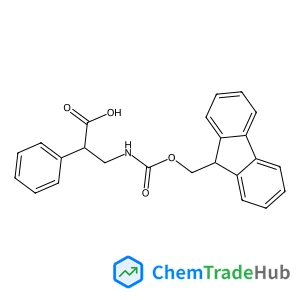
(S)-3-((((9H-Fluoren-9-yl)methoxy)carbonyl)amino)-2-phenylpropanoic acid
CAS Number:
1217663-60-9
Molecular Formula:
C24H21NO4
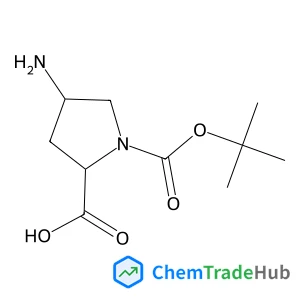
(2R,4R)-1-Boc-4-Aminopyrrolidine-2-carboxylic acid
CAS Number:
132622-98-1
Molecular Formula:
C10H18N2O4
Recommended Suppliers





Disclaimer
This page provides academic journal information for reference and research purposes only. We are not affiliated with any journal publishers and do not handle publication submissions. For publication-related inquiries, please contact the respective journal publishers directly.
If you notice any inaccuracies in the information displayed, please contact us at support@chemtradehub.com. We will promptly review and address your concerns.