












Polymeric engineering of AIEgens for NIR-II fluorescence imaging and detection of abdominal metastases of ovarian cancer in vivo
Literature Information
Publication Date
2023-10-10
DOI
10.1039/D3TB01750H
Impact Factor
6.331
Authors
Xiaobo Zhou, Yuhan Zeng, Shijie Li, Ke Zhang, Lingfeng Zhao, Guo Li, Qi Wang, Haiwei Ji, Mingmin Wu, Jinxia Liu, Yuling Qin, Wei Feng, Li Wu
View Original
Abstract
A polymeric engineering design principle is proposed for the construction of small-sized (∼20 nm) NIR-II AIEgen-doped nanodots (AIEdots) with high brightness and prolonged circulation time in blood vessels. With the utilization of the as-designed NIR-II AIEdots, the successful achievement of high-resolution NIR-II fluorescence imaging of tumor vessels and precise detection of abdominal metastases of ovarian cancer has been attained.
Recommended Journals
Related Literature
Reversibility and two state behaviour in the thermal unfolding of oligomeric TIM barrel proteins‡
Sergio Romero-Romero, Miguel Costas, Adela Rodríguez-Romero, D. Alejandro Fernández-Velasco
2015-07-08
Paper
DOI: 10.1039/C5CP01599E
Bio-sensing with butterfly wings: naturally occurring nano-structures for SERS-based malaria parasite detection
Matthew W. A. Dixon, Leann Tilley, Keith R. Bambery, Bayden R. Wood
2014-12-03
Paper
DOI: 10.1039/C4CP04930F
Particle size dependence of the surface-enhanced Raman scattering properties of densely arranged two-dimensional assemblies of Au(core)–Ag(shell) nanospheres
Kosuke Sugawa, Tsuyoshi Akiyama, Yoshimasa Tanoue, Takashi Harumoto, Sayaka Yanagida, Atsuo Yasumori, Shohei Tomita, Joe Otsuki
2014-12-19
Paper
DOI: 10.1039/C4CP05058D
Diverse mixtures of 2,4-dihydroxy tautomers and O4 protonated conformers of uridine and 2′-deoxyuridine coexist in the gas phase
R. R. Wu, Bo Yang, C. E. Frieler, G. Berden, M. T. Rodgers
2015-07-21
Paper
DOI: 10.1039/C5CP02227D
Critical assessment of enhancement factor measurements in surface-enhanced Raman scattering on different substrates
Daniel C. Rodrigues, Michele L. de Souza, Klester S. Souza, Diego P. dos Santos, Gustavo F. S. Andrade, Marcia L. A. Temperini
2015-01-26
Paper
DOI: 10.1039/C4CP05080K
Correction: Is there an intramolecular hydrogen bond in 2-halophenols? A theoretical and spectroscopic investigation
Michael H. Abraham, Raymond J. Abraham, Abil E. Aliev, Claudio F. Tormena
2015-09-17
Correction
DOI: 10.1039/C5CP90167G
Controlled functionalisation of single-walled carbon nanotube network electrodes for the enhanced voltammetric detection of dopamine
Sharel P. E, Thomas S. Miller, Julie V. Macpherson, Patrick R. Unwin
2015-09-08
Paper
DOI: 10.1039/C5CP04905A
Calculating average surface enhancement factors of randomly nanostructured electrodes by a combination of SERS and impedance spectroscopy
J. Kozuch, N. Petrusch, U. Gernert, I. M. Weidinger
2015-01-09
Paper
DOI: 10.1039/C4CP05015K
Monitoring the intramolecular charge transfer process in the Z907 solar cell sensitizer: a transient Vis and IR spectroscopy and ab initio investigation
Nicolò Azzaroli, Maria Grazia Lobello, Laura Bussotti, Giuseppe Calogero, Mariachiara Pastore, Filippo De Angelis
2015-07-13
Paper
DOI: 10.1039/C5CP03314D
A novel conception for spontaneous transversions caused by homo-pyrimidine DNA mismatches: a QM/QTAIM highlight
2015-07-13
Communication
DOI: 10.1039/C5CP03211C
You might also like
Compound Q&A
Is 6-(3-Fluorophenyl)picolinic acid (CAS: 887982-40-3) safe?
6-(3-Fluorophenyl)picolinic acid is generally considered safe for laboratory use...
887982-40-36-(3-Fluorophenyl)pi...
Compound Q&A
What industries use (3R)-3-Pyrrolidinol (CAS: 2799-21-5)?
(3R)-3-Pyrrolidinol is used in the pharmaceutical industry as a precursor for dr...
2799-21-5(3R)-3-Pyrrolidinol
Compound Q&A
What precautions should be taken when handling (4R,5R)-4,5-Diethoxycarbonyl-2,2-dimethyldioxolane (CAS: 59779-75-8)?
When handling (4R,5R)-4,5-Diethoxycarbonyl-2,2-dimethyldioxolane (CAS: 59779-75-...
59779-75-8(4R,5R)-4,5-Diethoxy...
Compound Q&A
How is 1-(6-Chloroimidazo[1,2-b]pyridazin-3-yl)ethanone (CAS: 90734-71-7) typically synthesized?
1-(6-Chloroimidazo[1,2-b]pyridazin-3-yl)ethanone is often synthesized via a mult...
90734-71-71-(6-Chloroimidazo[1...
Compound Q&A
What is the market or research trend for N-Ethyl-3,4-dimethylbenzylamine (CAS: 39180-83-1)?
The market for N-Ethyl-3,4-dimethylbenzylamine (CAS: 39180-83-1) remains steady,...
39180-83-1N-Ethyl-3,4-dimethyl...
Compound Q&A
What is Tert-butyl 3-(pyrrolidin-1-yl)azetidine-1-carboxylate (CAS: 1019008-21-9)?
Tert-butyl 3-(pyrrolidin-1-yl)azetidine-1-carboxylate is a chemical compound wit...
1019008-21-9Tert-butyl 3-(pyrrol...
Compound Q&A
What regulatory guidelines apply to 1-Bromo-3-chloro-2,4-dimethoxybenzene (CAS: 1228956-93-1)?
1-Bromo-3-chloro-2,4-dimethoxybenzene (CAS: 1228956-93-1) falls under the classi...
1228956-93-11-Bromo-3-chloro-2,4...
Compound Q&A
Is 8-Bromo-2-methyl-3,4-dihydroisoquinolin-1(2H)-one (CAS: 1368622-07-4) safe?
The safety of 8-Bromo-2-methyl-3,4-dihydroisoquinolin-1(2H)-one (CAS: 1368622-07...
1368622-07-48-Bromo-2-methyl-3,4...
Compound Q&A
Is Benzyl [(3S)-2,6-dioxo-3-piperidinyl]carbamate (CAS: 22785-43-9) safe?
Benzyl [(3S)-2,6-dioxo-3-piperidinyl]carbamate is generally safe when handled wi...
22785-43-9Benzyl [(3S)-2,6-dio...
Compound Q&A
How should 1-{[4-(4,4,5,5-Tetramethyl-1,3,2-dioxaborolan-2-yl)phenyl]sulfonyl}pyrrolidine (CAS: 928657-21-0) be stored?
1-{[4-(4,4,5,5-Tetramethyl-1,3,2-dioxaborolan-2-yl)phenyl]sulfonyl}pyrrolidine s...
928657-21-01-{[4-(4,4,5,5-Tetra...
Source Journal
Journal of Materials Chemistry B

CiteScore:
12
Self-citation Rate:
4.9%
Articles per Year:
831
Journal of Materials Chemistry A, B & C cover high quality studies across all fields of materials chemistry. The journals focus on those theoretical or experimental studies that report new understanding, applications, properties and synthesis of materials. The journals have a strong history of publishing quality reports of interest to interdisciplinary communities and providing an efficient and rigorous service through peer review and publication. The journals are led by an international team of Editors-in-Chief and Associate Editors who are all active researchers in their fields. Journal of Materials Chemistry A, B & C are separated by the intended application of the material studied. Broadly, applications in energy and sustainability are of interest to Journal of Materials Chemistry A, applications in biology and medicine are of interest to Journal of Materials Chemistry B, and applications in optical, magnetic and electronic devices are of interest to Journal of Materials Chemistry C. More than one Journal of Materials Chemistry journal may be suitable for certain fields and researchers are encouraged to submit their paper to the journal that they feel best fits for their particular article. Example topic areas within the scope of Journal of Materials Chemistry B are listed below. This list is neither exhaustive nor exclusive. Antifouling coatings Biocompatible materials Bioelectronics Bioimaging Biomimetics Biomineralisation Bionics Biosensors Diagnostics Drug delivery Gene delivery Immunobiology Nanomedicine Regenerative medicine & Tissue engineering Scaffolds Soft robotics Stem cells Therapeutic devices image block All articles published in Journal of Materials Chemistry B from 2019 onwards will be indexed in MEDLINE®. Articles that primarily focus on providing insight into the underlying science and performance of biomaterials within a biological environment are more suited to our companion journal, Biomaterials Science.
Recommended Compounds
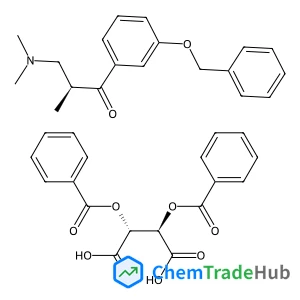
(S)-1-(3-(Benzyloxy)phenyl)-3-(dimethylamino)-2-methylpropan-1-one (2r,3r)-2,3-bis(benzoyloxy)succinate
CAS Number:
1004315-81-4
Molecular Formula:
C37H37NO10
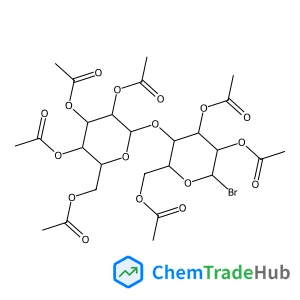
2,3,6-Tri-O-acetyl-4-O-(2,3,4,6-tetra-O-acetyl-beta-D-galactopyranosyl)-alpha-D-glucopyranosyl bromide
CAS Number:
4753-07-5
Molecular Formula:
C26H35BrO17
Recommended Suppliers







Disclaimer
This page provides academic journal information for reference and research purposes only. We are not affiliated with any journal publishers and do not handle publication submissions. For publication-related inquiries, please contact the respective journal publishers directly.
If you notice any inaccuracies in the information displayed, please contact us at support@chemtradehub.com. We will promptly review and address your concerns.