



A novel conception for spontaneous transversions caused by homo-pyrimidine DNA mismatches: a QM/QTAIM highlight
Literature Information
Publication Date
2015-07-13
DOI
10.1039/C5CP03211C
Impact Factor
3.676
Authors
View Original
Abstract
We have firstly shown that the T·T(w) and C·C(w) DNA mismatches with wobble (w) geometry stay in slow tautomeric equilibrium with short T·T*(WC) and C·C*(WC) Watson–Crick (WC) mispairs. These non-dissociative tautomeric rearrangements are controlled by the plane-symmetric, highly stable, highly polar and zwitterionic transition states. The obtained results allow us to understand in what way the T·T(w) and C·C(w) mismatches acquire enzymatically competent T·T*(WC) and C·C*(WC) conformations directly in the hydrophobic recognition pocket of a high-fidelity DNA-polymerase, thereby producing thermodynamically non-equilibrium spontaneous transversions. The simplest numerical estimation of the frequency ratio of the TT to CC spontaneous transversions satisfactorily agrees with experimental data.
Recommended Journals

Journal of Physics and Chemistry of Solids

Proceedings of the National Academy of Sciences of the United States of America

Planta Medica

Science Progress

European Journal of Wood and Wood Products

Pure and Applied Chemistry

Israel Journal of Chemistry

Kinetics and Catalysis

Helvetica Chimica Acta

Russian Chemical Reviews
Related Literature
Mechanism of gas-phase ozonolysis of sabinene in the atmosphere
2017-08-16
Paper
DOI: 10.1039/C7CP03216A
A complicated biocomputing system based on multi-responsive P(NIPAM-co-APBA) copolymer film electrodes and electrocatalysis of NADH
Jiying Liang, Xue Yu, Tiangang Yang, Menglu Li, Li Shen, Yue Jin, Hongyun Liu
2017-07-25
Paper
DOI: 10.1039/C7CP04030J
Role of carboxylic acid groups in the reduction of nitric oxide by carbon at low temperature, as exemplified by graphene oxide
Q. Gao, X. M. Li, J. Z. Zhou, X. X. Ruan, Q. Liu, G. R. Qian
2017-08-02
Paper
DOI: 10.1039/C7CP01541K
Cold atom–atom–ion three-body recombination of 4He–4He–X− (X = H or D)
Bin-Bin Wang, Yong-Chang Han, Wei Gao, Shu-Lin Cong
2017-08-03
Paper
DOI: 10.1039/C7CP04310D
Identifying the charge generation dynamics in Cs+-based triple cation mixed perovskite solar cells
Manuel Salado, Ramesh K. Kokal, Laura Calio, Samrana Kazim, Melepurath Deepa, Shahzada Ahmad
2017-07-27
Paper
DOI: 10.1039/C7CP03760K
External electric field control: driving the reactivity of metal-free azide–alkyne click reactions
Kalishankar Bhattacharyya, Sharmistha Karmakar, Ayan Datta
2017-08-07
Paper
DOI: 10.1039/C7CP04202G
Long-range Li ion diffusion in NASICON-type Li1.5Al0.5Ge1.5(PO4)3 (LAGP) studied by 7Li pulsed-gradient spin-echo NMR
Kikuko Hayamizu
2017-08-14
Paper
DOI: 10.1039/C7CP03647G
Piezoelectricity enhancement and bandstructure modification of atomic defect-mediated MoS2 monolayer
Sheng Yu, Quinton Rice, Tikaram Neupane, Bagher Tabibi, Qiliang Li, Felix Jaetae Seo
2017-08-15
Paper
DOI: 10.1039/C7CP04385F
Quantification of nucleobases/gold nanoparticles interactions: energetics of the interactions through apparent binding constants determination
J. M. Carnerero, A. Sánchez-Coronilla, E. I. Martín, A. Jimenez-Ruiz, R. Prado-Gotor
2017-08-02
Paper
DOI: 10.1039/C7CP03692B
Critical universality and asymmetry of ionic solution {iodobenzene + 1-decyl-3-methyl-imidazolium bis(trifluorosulfonyl)imide}
Xiaoyi Tao, Tianxiang Yin
2017-07-26
Paper
DOI: 10.1039/C7CP03807K
You might also like
Compound Q&A
Is 6-(3-Fluorophenyl)picolinic acid (CAS: 887982-40-3) safe?
6-(3-Fluorophenyl)picolinic acid is generally considered safe for laboratory use...
887982-40-36-(3-Fluorophenyl)pi...
Compound Q&A
What industries use (3R)-3-Pyrrolidinol (CAS: 2799-21-5)?
(3R)-3-Pyrrolidinol is used in the pharmaceutical industry as a precursor for dr...
2799-21-5(3R)-3-Pyrrolidinol
Compound Q&A
What precautions should be taken when handling (4R,5R)-4,5-Diethoxycarbonyl-2,2-dimethyldioxolane (CAS: 59779-75-8)?
When handling (4R,5R)-4,5-Diethoxycarbonyl-2,2-dimethyldioxolane (CAS: 59779-75-...
59779-75-8(4R,5R)-4,5-Diethoxy...
Compound Q&A
How is 1-(6-Chloroimidazo[1,2-b]pyridazin-3-yl)ethanone (CAS: 90734-71-7) typically synthesized?
1-(6-Chloroimidazo[1,2-b]pyridazin-3-yl)ethanone is often synthesized via a mult...
90734-71-71-(6-Chloroimidazo[1...
Compound Q&A
What is the market or research trend for N-Ethyl-3,4-dimethylbenzylamine (CAS: 39180-83-1)?
The market for N-Ethyl-3,4-dimethylbenzylamine (CAS: 39180-83-1) remains steady,...
39180-83-1N-Ethyl-3,4-dimethyl...
Compound Q&A
What is Tert-butyl 3-(pyrrolidin-1-yl)azetidine-1-carboxylate (CAS: 1019008-21-9)?
Tert-butyl 3-(pyrrolidin-1-yl)azetidine-1-carboxylate is a chemical compound wit...
1019008-21-9Tert-butyl 3-(pyrrol...
Compound Q&A
What regulatory guidelines apply to 1-Bromo-3-chloro-2,4-dimethoxybenzene (CAS: 1228956-93-1)?
1-Bromo-3-chloro-2,4-dimethoxybenzene (CAS: 1228956-93-1) falls under the classi...
1228956-93-11-Bromo-3-chloro-2,4...
Compound Q&A
Is 8-Bromo-2-methyl-3,4-dihydroisoquinolin-1(2H)-one (CAS: 1368622-07-4) safe?
The safety of 8-Bromo-2-methyl-3,4-dihydroisoquinolin-1(2H)-one (CAS: 1368622-07...
1368622-07-48-Bromo-2-methyl-3,4...
Compound Q&A
Is Benzyl [(3S)-2,6-dioxo-3-piperidinyl]carbamate (CAS: 22785-43-9) safe?
Benzyl [(3S)-2,6-dioxo-3-piperidinyl]carbamate is generally safe when handled wi...
22785-43-9Benzyl [(3S)-2,6-dio...
Compound Q&A
How should 1-{[4-(4,4,5,5-Tetramethyl-1,3,2-dioxaborolan-2-yl)phenyl]sulfonyl}pyrrolidine (CAS: 928657-21-0) be stored?
1-{[4-(4,4,5,5-Tetramethyl-1,3,2-dioxaborolan-2-yl)phenyl]sulfonyl}pyrrolidine s...
928657-21-01-{[4-(4,4,5,5-Tetra...
Source Journal
Physical Chemistry Chemical Physics

CiteScore:
5.5
Self-citation Rate:
10.3%
Articles per Year:
3036
Physical Chemistry Chemical Physics (PCCP) is an international journal co-owned by 19 physical chemistry and physics societies from around the world. This journal publishes original, cutting-edge research in physical chemistry, chemical physics and biophysical chemistry. To be suitable for publication in PCCP, articles must include significant innovation and/or insight into physical chemistry; this is the most important criterion that reviewers and Editors will judge against when evaluating submissions. The journal has a broad scope and welcomes contributions spanning experiment, theory, computation and data science. Topical coverage includes spectroscopy, dynamics, kinetics, statistical mechanics, thermodynamics, electrochemistry, catalysis, surface science, quantum mechanics, quantum computing and machine learning. Interdisciplinary research areas such as polymers and soft matter, materials, nanoscience, energy, surfaces/interfaces, and biophysical chemistry are welcomed if they demonstrate significant innovation and/or insight into physical chemistry. Joined experimental/theoretical studies are particularly appreciated when complementary and based on up-to-date approaches.
Recommended Compounds
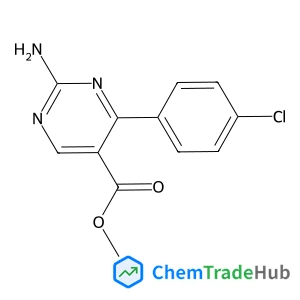
Methyl 2-amino-4-(4-chlorophenyl)-5-pyrimidinecarboxylate
CAS Number:
1133115-56-6
Molecular Formula:
C12H10ClN3O2
Recommended Suppliers





Disclaimer
This page provides academic journal information for reference and research purposes only. We are not affiliated with any journal publishers and do not handle publication submissions. For publication-related inquiries, please contact the respective journal publishers directly.
If you notice any inaccuracies in the information displayed, please contact us at support@chemtradehub.com. We will promptly review and address your concerns.