












Critical assessment of enhancement factor measurements in surface-enhanced Raman scattering on different substrates
Literature Information
Publication Date
2015-01-26
DOI
10.1039/C4CP05080K
Impact Factor
3.676
Authors
Daniel C. Rodrigues, Michele L. de Souza, Klester S. Souza, Diego P. dos Santos, Gustavo F. S. Andrade, Marcia L. A. Temperini
View Original
Abstract
The SERS enhancement factor (SERS-EF) is one of the most important parameters that characterizes the ability of a given substrate to enhance the Raman signal for SERS applications. The comparison of SERS intensities and SERS-EF values across different substrates is a common practice to unravel the performance of a given substrate. In this study, it is shown that such a comparison may lack significance if we compare substrates of very distinct nature and optical properties. It is specifically shown that the SERS-EF values for static substrates (e.g. immobilized metallic nanostructures) cannot be compared to those of dynamic ones (e.g. colloidal metal nanoparticle solutions), and that the optical properties for the latter show strong dependence on the metal–molecule interaction dynamics. The most representative experimental results concerning the dynamic substrates have been supported by generalized Mie theory simulations, which are tools used to describe the substrate complexity and the microscopic information not usually taken into account.
Recommended Journals
Related Literature
Mechanism of gas-phase ozonolysis of sabinene in the atmosphere
2017-08-16
Paper
DOI: 10.1039/C7CP03216A
Critical adsorption of periodic and random polyampholytes onto charged surfaces
Daniel L. Z. Caetano, Sidney J. de Carvalho, Ralf Metzler, Andrey G. Cherstvy
2017-08-08
Paper
DOI: 10.1039/C7CP04040G
Photoinduced dynamics of the hole-transport material H101 in organic solvents and on mesoporous Al2O3 and TiO2 thin films
Johannes R. Klein, Mirko Scholz, Kawon Oum, Thomas Lenzer
2017-08-07
Paper
DOI: 10.1039/C7CP01718A
The gas-phase structure of dimethyl peroxide
Olfa Ferchichi, Najoua Derbel, Nejm-Eddine Jaidane, Thibaud Cours, Alexander Alijah
2017-07-25
Paper
DOI: 10.1039/C7CP03134C
Metal-doped ceria nanoparticles: stability and redox processes
Alberto Figueroba, Albert Bruix, Gábor Kovács
2017-07-25
Paper
DOI: 10.1039/C7CP02820B
Developing force fields when experimental data is sparse: AMBER/GAFF-compatible parameters for inorganic and alkyl oxoanions
Sadra Kashefolgheta, Ana Vila Verde
2017-07-17
Paper
DOI: 10.1039/C7CP02557B
Spectroscopic characterization of the on-surface induced (cyclo)dehydrogenation of a N-heteroaromatic compound on noble metal surfaces
I. Palacio, A. L. Pinardi, J. I. Martínez, A. Preobrajenski, A. Cossaro, A. Jancarik, I. Stará, I. Starý, J. Méndez, J. A. Martín-Gago, M. F. López
2017-07-31
Paper
DOI: 10.1039/C7CP03955G
Change in optoelectronic properties of ExBox+4 on functionalization and guest encapsulation
Debdutta Chakraborty, Ranjita Das, Pratim Kumar Chattaraj
2017-08-09
Paper
DOI: 10.1039/C7CP02433A
Spin dynamics of light-induced charge separation in composites of semiconducting polymers and PC60BM revealed using Q-band pulse EPR
E. Suturina, E. Reijerse, W. Lubitz
2017-07-26
Paper
DOI: 10.1039/C7CP03680A
Constructing heterostructured Li–Fe–Ni–Mn–O cathodes for lithium-ion batteries: effective improvement of ultrafast lithium storage
Xiaoxiao Zhang, Qing Xue
2017-07-28
Paper
DOI: 10.1039/C7CP04092J
You might also like
Compound Q&A
Is 6-(3-Fluorophenyl)picolinic acid (CAS: 887982-40-3) safe?
6-(3-Fluorophenyl)picolinic acid is generally considered safe for laboratory use...
887982-40-36-(3-Fluorophenyl)pi...
Compound Q&A
What industries use (3R)-3-Pyrrolidinol (CAS: 2799-21-5)?
(3R)-3-Pyrrolidinol is used in the pharmaceutical industry as a precursor for dr...
2799-21-5(3R)-3-Pyrrolidinol
Compound Q&A
What precautions should be taken when handling (4R,5R)-4,5-Diethoxycarbonyl-2,2-dimethyldioxolane (CAS: 59779-75-8)?
When handling (4R,5R)-4,5-Diethoxycarbonyl-2,2-dimethyldioxolane (CAS: 59779-75-...
59779-75-8(4R,5R)-4,5-Diethoxy...
Compound Q&A
How is 1-(6-Chloroimidazo[1,2-b]pyridazin-3-yl)ethanone (CAS: 90734-71-7) typically synthesized?
1-(6-Chloroimidazo[1,2-b]pyridazin-3-yl)ethanone is often synthesized via a mult...
90734-71-71-(6-Chloroimidazo[1...
Compound Q&A
What is the market or research trend for N-Ethyl-3,4-dimethylbenzylamine (CAS: 39180-83-1)?
The market for N-Ethyl-3,4-dimethylbenzylamine (CAS: 39180-83-1) remains steady,...
39180-83-1N-Ethyl-3,4-dimethyl...
Compound Q&A
What is Tert-butyl 3-(pyrrolidin-1-yl)azetidine-1-carboxylate (CAS: 1019008-21-9)?
Tert-butyl 3-(pyrrolidin-1-yl)azetidine-1-carboxylate is a chemical compound wit...
1019008-21-9Tert-butyl 3-(pyrrol...
Compound Q&A
What regulatory guidelines apply to 1-Bromo-3-chloro-2,4-dimethoxybenzene (CAS: 1228956-93-1)?
1-Bromo-3-chloro-2,4-dimethoxybenzene (CAS: 1228956-93-1) falls under the classi...
1228956-93-11-Bromo-3-chloro-2,4...
Compound Q&A
Is 8-Bromo-2-methyl-3,4-dihydroisoquinolin-1(2H)-one (CAS: 1368622-07-4) safe?
The safety of 8-Bromo-2-methyl-3,4-dihydroisoquinolin-1(2H)-one (CAS: 1368622-07...
1368622-07-48-Bromo-2-methyl-3,4...
Compound Q&A
Is Benzyl [(3S)-2,6-dioxo-3-piperidinyl]carbamate (CAS: 22785-43-9) safe?
Benzyl [(3S)-2,6-dioxo-3-piperidinyl]carbamate is generally safe when handled wi...
22785-43-9Benzyl [(3S)-2,6-dio...
Compound Q&A
How should 1-{[4-(4,4,5,5-Tetramethyl-1,3,2-dioxaborolan-2-yl)phenyl]sulfonyl}pyrrolidine (CAS: 928657-21-0) be stored?
1-{[4-(4,4,5,5-Tetramethyl-1,3,2-dioxaborolan-2-yl)phenyl]sulfonyl}pyrrolidine s...
928657-21-01-{[4-(4,4,5,5-Tetra...
Source Journal
Physical Chemistry Chemical Physics

CiteScore:
5.5
Self-citation Rate:
10.3%
Articles per Year:
3036
Physical Chemistry Chemical Physics (PCCP) is an international journal co-owned by 19 physical chemistry and physics societies from around the world. This journal publishes original, cutting-edge research in physical chemistry, chemical physics and biophysical chemistry. To be suitable for publication in PCCP, articles must include significant innovation and/or insight into physical chemistry; this is the most important criterion that reviewers and Editors will judge against when evaluating submissions. The journal has a broad scope and welcomes contributions spanning experiment, theory, computation and data science. Topical coverage includes spectroscopy, dynamics, kinetics, statistical mechanics, thermodynamics, electrochemistry, catalysis, surface science, quantum mechanics, quantum computing and machine learning. Interdisciplinary research areas such as polymers and soft matter, materials, nanoscience, energy, surfaces/interfaces, and biophysical chemistry are welcomed if they demonstrate significant innovation and/or insight into physical chemistry. Joined experimental/theoretical studies are particularly appreciated when complementary and based on up-to-date approaches.
Recommended Compounds
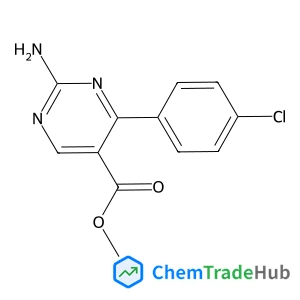
Methyl 2-amino-4-(4-chlorophenyl)-5-pyrimidinecarboxylate
CAS Number:
1133115-56-6
Molecular Formula:
C12H10ClN3O2

Recommended Suppliers








Disclaimer
This page provides academic journal information for reference and research purposes only. We are not affiliated with any journal publishers and do not handle publication submissions. For publication-related inquiries, please contact the respective journal publishers directly.
If you notice any inaccuracies in the information displayed, please contact us at support@chemtradehub.com. We will promptly review and address your concerns.