












Oxygen-doped Sn17Sb6S29 bimetal oxysulfide catalysts for efficient reduction of organic pollutants and hexavalent chromium in the dark
Literature Information
Publication Date
2023-11-03
DOI
10.1039/D3RE00339F
Impact Factor
4.239
Authors
Ting Huang, Ping Li, Qinhan Wu, Adugna Boke Abdeta, Dong-Hau Kuo, Hanya Zhang, Binghong Wu, Mengistu Tadesse Mosisa, Jinguo Lin, Xiaoyun Chen, Xueshen Liu
View Original
Abstract
Novel oxygen-doped Sn17Sb6S29 bimetal oxysulfide catalysts (labeled as SnSbOS) were successfully synthesized by a facile method via adjusting the H2O2 amount. The samples were characterized by XPS, XRD, UV, SEM, FTIR, and BET, and their catalytic performance was evaluated by reducing a toxic organic compound (4-NP), organic dyes (MO, MB, RhB), and heavy metal ions (Cr(VI)) without light illumination. The results showed that adding an appropriate amount of H2O2 could improve the catalytic performance. The SnSbOS-3 catalyst prepared with 0.4 ml H2O2 had the best catalytic performance, i.e., 100 ml of 20 ppm 4-NP solution was completely reduced by 5 mg SnSbOS-3 in 8 min. In addition, 5 mg SnSbOS-3 also completely reduced 100 ml solutions of 50 ppm MO, RhB, MB, and Cr(VI) within 6, 6, 8, and 6 min, respectively. The oxygen doping can adjust the band energy structure and increase the active surface sites of the SnSbOS catalyst. Hydrogen peroxide regulating the various valence states of Sn in the catalyst can promote electron transfer and improve the activity of the catalyst. Therefore, SnSbOS is an effective catalyst for reducing toxic organics, organic dyes, and heavy metal ions and has great potential for industrial applications.
Related Literature
Adsorption and diffusion in thin films of nanoporous metal–organic frameworks: ferrocene in SURMOF Cu2(ndc)2(dabco)
2013-04-12
Paper
DOI: 10.1039/C3CP50578B
On the dual emission of p-dimethylaminobenzonitrile and its photophysical implications
Javier Catalán
2013-04-11
Paper
DOI: 10.1039/C3CP44627A
A kinetic and mechanistic study into the formation of the Cu–Cr layered double hydroxide
Alexander Clout, Jonathan C. Burley
2013-02-04
Paper
DOI: 10.1039/C3CP44339F
Electronic structure analysis of multistate reactivity in transition metal catalyzed reactions: the case of C–H bond activation by non-heme iron(iv)–oxo cores
Shengfa Ye, Cai-Yun Geng, Sason Shaik, Frank Neese
2013-05-01
Perspective
DOI: 10.1039/C3CP00080J
Lone-pair distribution and plumbite network formation in high lead silicate glass, 80PbO·20SiO2
Oliver L. G. Alderman, Alex C. Hannon, Diane Holland, Steve Feller, Gloria Lehr, Adam J. Vitale, Uwe Hoppe, Martin v. Zimmerman, Anke Watenphul
2013-04-29
Paper
DOI: 10.1039/C3CP51348C
Low-density nanoporous phases of group-III nitrides built from sodalite cage clusters
Zhifeng Liu, Xinqiang Wang, Gaobin Liu, Jian Sui, Xuefang Wang, Hengjiang Zhu, Zhilin Hou
2013-04-03
Paper
DOI: 10.1039/C3CP50814E
Influence of the Ce–Zr promoter on Pd behaviour under dynamic CO/NO cycling conditions: a structural and chemical approach
Anna Kubacka, Ana Iglesias-Juez, M. Di Michiel, Mark A. Newton, Marcos Fernández-García
2013-03-18
Paper
DOI: 10.1039/C3CP44293D
The electronic structure of pyracene: a spectroscopic and computational study
Johannes Auerswald, Bernd Engels, Ingo Fischer, Thiemo Gerbich, Jörg Herterich, Anke Krueger, Melanie Lang, Hans-Christian Schmitt, Christof Schon, Christof Walter
2013-03-27
Paper
DOI: 10.1039/C3CP44271C
Photoinduced electron transfer of platinum(ii) bipyridine diacetylides linked by triphenylamine- and naphthaleneimide-derivatives and their application to photoelectric conversion systems
Yuma Matsumoto, Mai Tsubamoto, Ryoji Sugimura, Masatoshi Kozaki, Kenshi Kimoto, Munetaka Iwamura, Koichi Nozaki, Naoki Senju, Chiasa Uragami, Yohei Muramatsu, Akinori Konno
2013-02-28
Paper
DOI: 10.1039/C3CP50182E
The chemical sensitivity of X-ray spectroscopy: high energy resolution XANESversusX-ray emission spectroscopy of substituted ferrocenes
Andrew J. Atkins, Matthias Bauer, Christoph R. Jacob
2013-04-12
Paper
DOI: 10.1039/C3CP50999K
You might also like
Compound Q&A
What is the market or research trend for N-(4-Methoxybenzyl)-2-pyridinamine (CAS: 52818-63-0)?
N-(4-Methoxybenzyl)-2-pyridinamine (CAS: 52818-63-0) is increasingly being used ...
52818-63-0N-(4-Methoxybenzyl)-...
Compound Q&A
What precautions should be taken when handling Ethyl 4-(2-chlorophenyl)-1,3-thiazole-2-carboxylate (CAS: 1050507-06-6)?
When handling Ethyl 4-(2-chlorophenyl)-1,3-thiazole-2-carboxylate, appropriate p...
1050507-06-6Ethyl 4-(2-chlorophe...
Compound Q&A
What regulatory guidelines apply to diethyldiselane (CAS: 628-39-7)?
Diethyldiselane (CAS: 628-39-7) is classified under the Globally Harmonized Syst...
628-39-7Diethyldiselane
Compound Q&A
What is the market or research trend for oxocopper (CAS: 12053-18-8)?
The market for oxocopper (CAS: 12053-18-8) is primarily driven by its use in cat...
12053-18-8oxocopper; oxo-(oxoc...
Compound Q&A
What is the market or research trend for 5-{[(2-Methyl-2-propanyl)oxy]carbonyl}-5-azaspiro[2.4]heptane-7-carboxylic acid?
The market for 5-{[(2-Methyl-2-propanyl)oxy]carbonyl}-5-azaspiro[2.4]heptane-7-c...
1268519-54-55-{[(2-Methyl-2-prop...
Compound Q&A
What is 2-(1-Pyrrolidinyl)-4-pyridinamine (CAS: 35981-63-6)?
2-(1-Pyrrolidinyl)-4-pyridinamine is a chemical compound with the CAS number 359...
35981-63-62-(1-Pyrrolidinyl)-4...
Compound Q&A
What are the physical and chemical properties of 2-(3-Pyridinyl)-1-azabicyclo[2.2.2]octane (CAS: 91556-75-1)?
2-(3-Pyridinyl)-1-azabicyclo[2.2.2]octane (CAS: 91556-75-1) is a crystalline sol...
91556-75-12-(3-Pyridinyl)-1-az...
Compound Q&A
How is (S)-Alpha-allyl-proline hydrochloride (CAS: 129704-91-2) typically synthesized?
(S)-Alpha-allyl-proline hydrochloride is usually synthesized via a Wittig reacti...
129704-91-2(S)-Alpha-allyl-prol...
Compound Q&A
What is 3-Methyl-1,2-oxazole-5-carboxylic acid (CAS: 4857-42-5)?
3-Methyl-1,2-oxazole-5-carboxylic acid (CAS: 4857-42-5) is an organic compound w...
4857-42-53-Methyl-1,2-oxazole...
Compound Q&A
How is Lys-SMCC-DM1 (CAS: 1281816-04-3) typically synthesized?
Lys-SMCC-DM1 is synthesized via a multi-step process involving the coupling of S...
1281816-04-3Lys-SMCC-DM1
Source Journal
Reaction Chemistry & Engineering

CiteScore:
0
Self-citation Rate:
8.8%
Articles per Year:
284
Reaction Chemistry & Engineering is an interdisciplinary journal reporting cutting-edge research focused on enhancing the understanding and efficiency of reactions. Reaction engineering leverages the interface where fundamental molecular chemistry meets chemical engineering and technology. Challenges in chemistry can be overcome by the application of new technologies, while engineers may find improved solutions for process development from the latest developments in reaction chemistry. Reaction Chemistry & Engineering is a unique forum for researchers whose interests span the broad areas of chemical engineering and chemical sciences to come together in solving problems of importance to wider society. All papers should be written to be approachable by readers across the engineering and chemical sciences. Papers that consider multiple scales, from the laboratory up to and including plant scale, are particularly encouraged.
Recommended Compounds
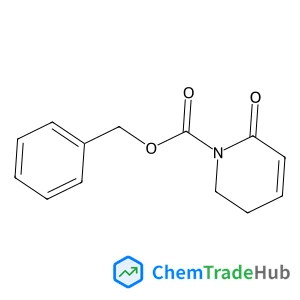
Benzyl 6-oxo-3,6-dihydro-1(2H)-pyridinecarboxylate
CAS Number:
725746-35-0
Molecular Formula:
C13H13NO3
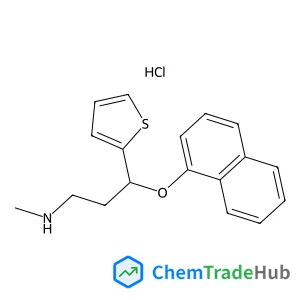
N-Methyl-3-(1-naphthyloxy)-3-(2-thienyl)-1-propanamine hydrochloride (1:1)
CAS Number:
1188266-11-6
Molecular Formula:
C18H20ClNOS
Recommended Suppliers





Disclaimer
This page provides academic journal information for reference and research purposes only. We are not affiliated with any journal publishers and do not handle publication submissions. For publication-related inquiries, please contact the respective journal publishers directly.
If you notice any inaccuracies in the information displayed, please contact us at support@chemtradehub.com. We will promptly review and address your concerns.