












Electronic structure analysis of multistate reactivity in transition metal catalyzed reactions: the case of C–H bond activation by non-heme iron(iv)–oxo cores
Literature Information
Publication Date
2013-05-01
DOI
10.1039/C3CP00080J
Impact Factor
3.676
Authors
Shengfa Ye, Cai-Yun Geng, Sason Shaik, Frank Neese
View Original
Abstract
This perspective discusses the principles of the multistate scenario often encountered in transition metal catalyzed reactions, and is organized as follows. First, several important theoretical concepts (physical versus formal oxidation states, orbital interactions, use of (spin) natural and corresponding orbitals, exchange enhanced reactivity and the connection between valence bond and molecular orbital based electronic structure analysis) are presented. These concepts are then used to analyze the electronic structure changes occurring in the reaction of C–H bond oxidation by FeIVoxo species. The analysis reveals that the energy separation and the overlap between the electron donating orbitals and electron accepting orbitals of the FeIVoxo complexes dictate the reaction stereochemistry, and that the manner in which the exchange interaction changes depends on the identity of these orbitals. The electronic reorganization of the FeIVoxo species during the reaction is thoroughly analyzed and it is shown that the FeIVoxo reactant develops oxyl radical character, which interacts effectively with the σCH orbital of the alkane. The factors that determine the energy barrier for the reaction are discussed in terms of molecular orbital and valence bond concepts.
Related Literature
A reusable, reagent-less free chlorine sensor using gold thin film electrode
Arif Ul Alam, Dennis Clyne
2021-03-03
Paper
DOI: 10.1039/D1AN00038A
Flexible thread-based electrochemical sensors for oxygen monitoring
2021-03-09
Paper
DOI: 10.1039/D0AN02400G
Signal enhancement and low oxidation potentials for miniaturized ECL biosensors via N-butyldiethanolamine
Stefanie Kirschbaum-Harriman, Michael Mayer, Axel Duerkop, Thomas Hirsch
2017-05-15
Paper
DOI: 10.1039/C7AN00261K
Simultaneous analysis of dopamine and homovanillic acid by high-performance liquid chromatography with wall-jet/thin-layer electrochemical detection
Yaping Zhou, Hongling Yan, Qingji Xie, Siyu Huang, Jiali Liu, Zou Li, Ming Ma
2013-09-13
Paper
DOI: 10.1039/C3AN01437A
Overcoming drug resistance with functional mesoporous titanium dioxide nanoparticles combining targeting, drug delivery and photodynamic therapy
Zhaoming Guo, Kun Zheng, Zhenquan Tan, Ye Liu, Ziyin Zhao, Guang Zhu, Kun Ma, Changhao Cui, Li Wang, Tianyu Kang
2018-10-17
Paper
DOI: 10.1039/C8TB01810C
ATR-FTIR spectroscopy and spectroscopic imaging to investigate the behaviour of proteins subjected to freeze–thaw cycles in droplets, wells, and under flow
Bernadette Byrne, Sergei G. Kazarian
2021-03-08
Paper
DOI: 10.1039/D1AN00087J
Effect of boron incorporation on the bioactivity, structure, and mechanical properties of ordered mesoporous bioactive glasses
Leonie Deilmann, Oliver Winter, Bianca Cerrutti, Henrik Bradtmüller, Christopher Herzig, Andreas Limbeck, Olaf Lahayne, Christian Hellmich, Dominik Eder
2020-01-09
Paper
DOI: 10.1039/C9TB01805K
Simultaneous measurement of free and conjugated estrogens in surface water using capillary liquid chromatography tandem mass spectrometry
Fan Huang, Kersti Karu, Luiza C. Campos
2021-03-03
Paper
DOI: 10.1039/D0AN02335C
Hollow double-layered polymer nanoparticles with S-nitrosothiols for tumor targeted therapy
Tuanwei Liu, Jingjing Hu, Xiaoye Ma, Bing Kong, Jilan Wang, Zhide Zhang, Dian-Shun Guo, Xinlin Yang
2017-08-17
Paper
DOI: 10.1039/C7TB01715D
You might also like
Compound Q&A
What is the market or research trend for N-(4-Methoxybenzyl)-2-pyridinamine (CAS: 52818-63-0)?
N-(4-Methoxybenzyl)-2-pyridinamine (CAS: 52818-63-0) is increasingly being used ...
52818-63-0N-(4-Methoxybenzyl)-...
Compound Q&A
What precautions should be taken when handling Ethyl 4-(2-chlorophenyl)-1,3-thiazole-2-carboxylate (CAS: 1050507-06-6)?
When handling Ethyl 4-(2-chlorophenyl)-1,3-thiazole-2-carboxylate, appropriate p...
1050507-06-6Ethyl 4-(2-chlorophe...
Compound Q&A
What regulatory guidelines apply to diethyldiselane (CAS: 628-39-7)?
Diethyldiselane (CAS: 628-39-7) is classified under the Globally Harmonized Syst...
628-39-7Diethyldiselane
Compound Q&A
What is the market or research trend for oxocopper (CAS: 12053-18-8)?
The market for oxocopper (CAS: 12053-18-8) is primarily driven by its use in cat...
12053-18-8oxocopper; oxo-(oxoc...
Compound Q&A
What is the market or research trend for 5-{[(2-Methyl-2-propanyl)oxy]carbonyl}-5-azaspiro[2.4]heptane-7-carboxylic acid?
The market for 5-{[(2-Methyl-2-propanyl)oxy]carbonyl}-5-azaspiro[2.4]heptane-7-c...
1268519-54-55-{[(2-Methyl-2-prop...
Compound Q&A
What is 2-(1-Pyrrolidinyl)-4-pyridinamine (CAS: 35981-63-6)?
2-(1-Pyrrolidinyl)-4-pyridinamine is a chemical compound with the CAS number 359...
35981-63-62-(1-Pyrrolidinyl)-4...
Compound Q&A
What are the physical and chemical properties of 2-(3-Pyridinyl)-1-azabicyclo[2.2.2]octane (CAS: 91556-75-1)?
2-(3-Pyridinyl)-1-azabicyclo[2.2.2]octane (CAS: 91556-75-1) is a crystalline sol...
91556-75-12-(3-Pyridinyl)-1-az...
Compound Q&A
How is (S)-Alpha-allyl-proline hydrochloride (CAS: 129704-91-2) typically synthesized?
(S)-Alpha-allyl-proline hydrochloride is usually synthesized via a Wittig reacti...
129704-91-2(S)-Alpha-allyl-prol...
Compound Q&A
What is 3-Methyl-1,2-oxazole-5-carboxylic acid (CAS: 4857-42-5)?
3-Methyl-1,2-oxazole-5-carboxylic acid (CAS: 4857-42-5) is an organic compound w...
4857-42-53-Methyl-1,2-oxazole...
Compound Q&A
How is Lys-SMCC-DM1 (CAS: 1281816-04-3) typically synthesized?
Lys-SMCC-DM1 is synthesized via a multi-step process involving the coupling of S...
1281816-04-3Lys-SMCC-DM1
Source Journal
Physical Chemistry Chemical Physics

CiteScore:
5.5
Self-citation Rate:
10.3%
Articles per Year:
3036
Physical Chemistry Chemical Physics (PCCP) is an international journal co-owned by 19 physical chemistry and physics societies from around the world. This journal publishes original, cutting-edge research in physical chemistry, chemical physics and biophysical chemistry. To be suitable for publication in PCCP, articles must include significant innovation and/or insight into physical chemistry; this is the most important criterion that reviewers and Editors will judge against when evaluating submissions. The journal has a broad scope and welcomes contributions spanning experiment, theory, computation and data science. Topical coverage includes spectroscopy, dynamics, kinetics, statistical mechanics, thermodynamics, electrochemistry, catalysis, surface science, quantum mechanics, quantum computing and machine learning. Interdisciplinary research areas such as polymers and soft matter, materials, nanoscience, energy, surfaces/interfaces, and biophysical chemistry are welcomed if they demonstrate significant innovation and/or insight into physical chemistry. Joined experimental/theoretical studies are particularly appreciated when complementary and based on up-to-date approaches.
Recommended Compounds
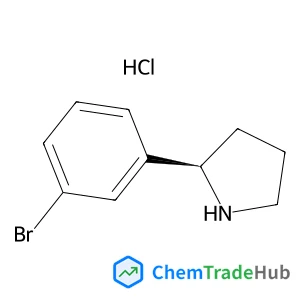
(2R)-2-(3-Bromophenyl)pyrrolidine hydrochloride (1:1)
CAS Number:
1391550-13-2
Molecular Formula:
C10H13BrClN

![1-(1-Benzyl-1,2,3,6-tetrahydropyridin-4-yl)-1H-benzo[d]imidazol-2(3H)-one structure](https://static.chemtradehub.com/structs/603/60373-71-9-7dfb.webp "1-(1-Benzyl-1,2,3,6-tetrahydropyridin-4-yl)-1H-benzo[d]imidazol-2(3H)-one structure")
1-(1-Benzyl-1,2,3,6-tetrahydropyridin-4-yl)-1H-benzo[d]imidazol-2(3H)-one
CAS Number:
60373-71-9
Molecular Formula:
C19H19N3O
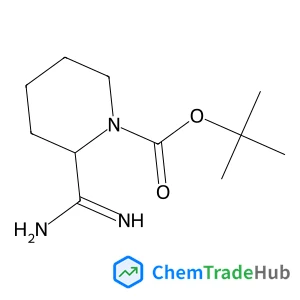
2-Methyl-2-propanyl 2-carbamimidoyl-1-piperidinecarboxylate
CAS Number:
1258640-98-0
Molecular Formula:
C11H21N3O2
Recommended Suppliers






Disclaimer
This page provides academic journal information for reference and research purposes only. We are not affiliated with any journal publishers and do not handle publication submissions. For publication-related inquiries, please contact the respective journal publishers directly.
If you notice any inaccuracies in the information displayed, please contact us at support@chemtradehub.com. We will promptly review and address your concerns.