












![5'-Fluoro-[2,3'-biindolinylidene]-2',3-dione structure](https://static.chemtradehub.com/structs/251/251903-00-1-9cb1.webp "5'-Fluoro-[2,3'-biindolinylidene]-2',3-dione structure")
Photoinduced electron transfer of platinum(ii) bipyridine diacetylides linked by triphenylamine- and naphthaleneimide-derivatives and their application to photoelectric conversion systems
Literature Information
Publication Date
2013-02-28
DOI
10.1039/C3CP50182E
Impact Factor
3.676
Authors
Yuma Matsumoto, Mai Tsubamoto, Ryoji Sugimura, Masatoshi Kozaki, Kenshi Kimoto, Munetaka Iwamura, Koichi Nozaki, Naoki Senju, Chiasa Uragami, Yohei Muramatsu, Akinori Konno
View Original
Abstract
The recently reported efficient charge-separated system based on bipyridine–diacetylide platinum(II) complexes was applied to photoelectric conversion systems herein, based on the design and synthesis of two triads: MTA–Pt–NDISAc (3, MTA: dimethoxytriphenylamine, Pt: platinum(II) complex, NDISAc: thioacetate derivative linked to naphthalenediimide) and MTA–Pt–MNICOOH (4, MNICOOH: naphthaleneimide-4-carboxylic acid). The charge-separated (CS) states of triads 3 and 5 (MOM-protected 4) were effectively generated by photo-induced electron transfer in both THF and toluene, although the rate of formation of the CS state from 5 was relatively slow in toluene. The lifetimes of these CS states were determined to be 730 ns in toluene and 61 ns (70%) and 170 ns (30%) as a double exponential decay in THF for 3, and 600 ns in toluene and 170 ns in THF for 5. The acetylthio group of triad 3 was exploited in the preparation of a self-assembled monolayer (SAM) on a gold surface. Photocurrent was detected upon irradiation of an electrochemical cell comprising Au/3/Na ascorbate/Pt, which was ascribed to the platinum(II) complex based on the action spectrum. The carboxylic acid group of triad 4 facilitated adsorption on the TiO2 surface, and a dye-sensitized solar cell constructed based on FTO/TiO2/4/electrolyte (LiI–I2)/Pt exhibited a poor energy conversion efficiency (η = 0.20%) based on the incident photon-to-current conversion efficiency spectrum and the I–V curve. This poor efficiency may be derived from the bent molecular shape of 4, or may be due to a possible high energy barrier in the electron injection process through the adsorption site.
Related Literature
Optical fiber sensor for the detection of tetracycline using surface plasmon resonance and molecular imprinting
Roli Verma, Banshi D. Gupta
2013-09-13
Paper
DOI: 10.1039/C3AN01098H
High resolution magic angle spinning NMR as a tool for unveiling the molecular enantiorecognition of omeprazole by amylose-based chiral phase
Juliana Cristina Barreiro, Tiago de Campos Lourenço, Lorena Mara A. Silva, Tiago Venâncio, Quezia Bezerra Cass
2013-12-17
Paper
DOI: 10.1039/C3AN02029K
Rational design of water-dispersible and biocompatible nanoprobes with H2S-triggered NIR emission for cancer cell imaging
Hengyan Liu, Ge Xu, Tianli Zhu, Rongchen Wang, Jiahui Tan, Chunchang Zhao, Xianfeng Gu
2020-06-29
Communication
DOI: 10.1039/D0TB00173B
Theoretical insight into the roles of cocatalysts in the Ni–NiO/β-Ga2O3 photocatalyst for overall water splitting
Ionut Tranca, Xin Zhou, Can Li
2015-04-10
Paper
DOI: 10.1039/C5TA02193F
Thermostable and nonflammable silica–polyetherimide–polyurethane nanofibrous separators for high power lithium ion batteries
Ke Xiao, Jianyong Yu, Jianmao Yang
2015-04-13
Paper
DOI: 10.1039/C5TA00856E
Graphene nanosheets, carbon nanotubes, graphite, and activated carbon as anode materials for sodium-ion batteries
Xu-Feng Luo, Cheng-Hsien Yang, You-Yu Peng, Nen-Wen Pu, Ming-Der Ger, Chien-Te Hsieh, Jeng-Kuei Chang
2015-04-15
Paper
DOI: 10.1039/C5TA00727E
Development of a PCR-free electrochemical point of care test for clinical detection of methicillin resistant Staphylococcus aureus (MRSA)
H. Schulze, G. Henihan, A. Hardie, I. Ciani, G. Giraud, J. G. Terry, A. J. Walton, R. Pethig, P. Ghazal, K. E. Templeton, A. R. Mount, T. T. Bachmann
2013-10-04
Paper
DOI: 10.1039/C3AN01319G
Determination of trace rare earth elements in uranium by inductively coupled plasma atomic emission spectrometry
Paper
DOI: 10.1039/JA9860100145
You might also like
Compound Q&A
What is the market or research trend for N-(4-Methoxybenzyl)-2-pyridinamine (CAS: 52818-63-0)?
N-(4-Methoxybenzyl)-2-pyridinamine (CAS: 52818-63-0) is increasingly being used ...
52818-63-0N-(4-Methoxybenzyl)-...
Compound Q&A
What precautions should be taken when handling Ethyl 4-(2-chlorophenyl)-1,3-thiazole-2-carboxylate (CAS: 1050507-06-6)?
When handling Ethyl 4-(2-chlorophenyl)-1,3-thiazole-2-carboxylate, appropriate p...
1050507-06-6Ethyl 4-(2-chlorophe...
Compound Q&A
What regulatory guidelines apply to diethyldiselane (CAS: 628-39-7)?
Diethyldiselane (CAS: 628-39-7) is classified under the Globally Harmonized Syst...
628-39-7Diethyldiselane
Compound Q&A
What is the market or research trend for oxocopper (CAS: 12053-18-8)?
The market for oxocopper (CAS: 12053-18-8) is primarily driven by its use in cat...
12053-18-8oxocopper; oxo-(oxoc...
Compound Q&A
What is the market or research trend for 5-{[(2-Methyl-2-propanyl)oxy]carbonyl}-5-azaspiro[2.4]heptane-7-carboxylic acid?
The market for 5-{[(2-Methyl-2-propanyl)oxy]carbonyl}-5-azaspiro[2.4]heptane-7-c...
1268519-54-55-{[(2-Methyl-2-prop...
Compound Q&A
What is 2-(1-Pyrrolidinyl)-4-pyridinamine (CAS: 35981-63-6)?
2-(1-Pyrrolidinyl)-4-pyridinamine is a chemical compound with the CAS number 359...
35981-63-62-(1-Pyrrolidinyl)-4...
Compound Q&A
What are the physical and chemical properties of 2-(3-Pyridinyl)-1-azabicyclo[2.2.2]octane (CAS: 91556-75-1)?
2-(3-Pyridinyl)-1-azabicyclo[2.2.2]octane (CAS: 91556-75-1) is a crystalline sol...
91556-75-12-(3-Pyridinyl)-1-az...
Compound Q&A
How is (S)-Alpha-allyl-proline hydrochloride (CAS: 129704-91-2) typically synthesized?
(S)-Alpha-allyl-proline hydrochloride is usually synthesized via a Wittig reacti...
129704-91-2(S)-Alpha-allyl-prol...
Compound Q&A
What is 3-Methyl-1,2-oxazole-5-carboxylic acid (CAS: 4857-42-5)?
3-Methyl-1,2-oxazole-5-carboxylic acid (CAS: 4857-42-5) is an organic compound w...
4857-42-53-Methyl-1,2-oxazole...
Compound Q&A
How is Lys-SMCC-DM1 (CAS: 1281816-04-3) typically synthesized?
Lys-SMCC-DM1 is synthesized via a multi-step process involving the coupling of S...
1281816-04-3Lys-SMCC-DM1
Source Journal
Physical Chemistry Chemical Physics

CiteScore:
5.5
Self-citation Rate:
10.3%
Articles per Year:
3036
Physical Chemistry Chemical Physics (PCCP) is an international journal co-owned by 19 physical chemistry and physics societies from around the world. This journal publishes original, cutting-edge research in physical chemistry, chemical physics and biophysical chemistry. To be suitable for publication in PCCP, articles must include significant innovation and/or insight into physical chemistry; this is the most important criterion that reviewers and Editors will judge against when evaluating submissions. The journal has a broad scope and welcomes contributions spanning experiment, theory, computation and data science. Topical coverage includes spectroscopy, dynamics, kinetics, statistical mechanics, thermodynamics, electrochemistry, catalysis, surface science, quantum mechanics, quantum computing and machine learning. Interdisciplinary research areas such as polymers and soft matter, materials, nanoscience, energy, surfaces/interfaces, and biophysical chemistry are welcomed if they demonstrate significant innovation and/or insight into physical chemistry. Joined experimental/theoretical studies are particularly appreciated when complementary and based on up-to-date approaches.
Recommended Compounds
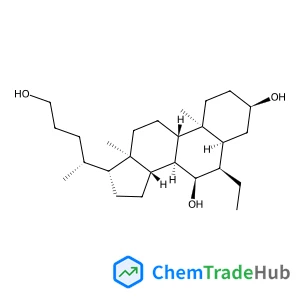
(3alpha,5beta,6alpha,7alpha)-6-Ethylcholane-3,7,24-triol
CAS Number:
1537866-49-1
Molecular Formula:
C26H46O3
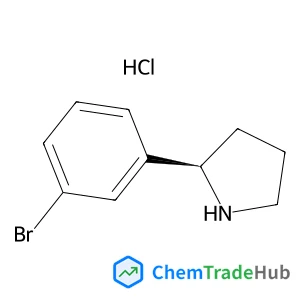
(2R)-2-(3-Bromophenyl)pyrrolidine hydrochloride (1:1)
CAS Number:
1391550-13-2
Molecular Formula:
C10H13BrClN
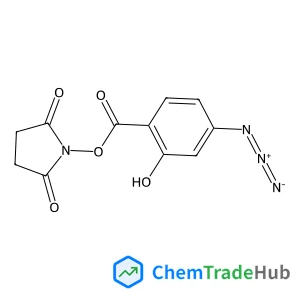
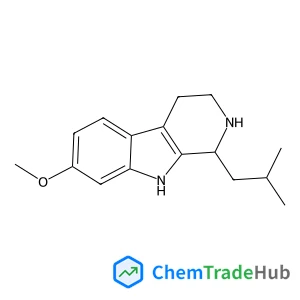
1-Isobutyl-7-methoxy-2,3,4,9-tetrahydro-1H-beta-carboline
CAS Number:
175975-76-5
Molecular Formula:
C16H22N2O
Recommended Suppliers






Disclaimer
This page provides academic journal information for reference and research purposes only. We are not affiliated with any journal publishers and do not handle publication submissions. For publication-related inquiries, please contact the respective journal publishers directly.
If you notice any inaccuracies in the information displayed, please contact us at support@chemtradehub.com. We will promptly review and address your concerns.