












Lone-pair distribution and plumbite network formation in high lead silicate glass, 80PbO·20SiO2
Literature Information
Publication Date
2013-04-29
DOI
10.1039/C3CP51348C
Impact Factor
3.676
Authors
Oliver L. G. Alderman, Alex C. Hannon, Diane Holland, Steve Feller, Gloria Lehr, Adam J. Vitale, Uwe Hoppe, Martin v. Zimmerman, Anke Watenphul
View Original
Abstract
For the first time a detailed structural model has been determined which shows how the lone-pairs of electrons are arranged relative to each other in a glass network containing lone-pair cations. High energy X-ray and neutron diffraction patterns of a very high lead content silicate glass (80PbO·20SiO2) have been used to build three-dimensional models using empirical potential structure refinement. Coordination number and bond angle distributions reveal structural similarity to crystalline Pb11Si3O17 and α- and β-PbO, and therefore strong evidence for a plumbite glass network built from pyramidal [PbOm] polyhedra (m ∼ 3–4), with stereochemically active lone-pairs, although with greater disorder in the first coordination shell of lead compared to the first coordination shell of silicon. The oxygen atoms are coordinated predominantly to four cations. Explicit introduction of lone-pair entities into some models leads to modification of the local Pb environment, whilst still allowing for reproduction of the measured diffraction patterns, thus demonstrating the non-uniqueness of the solutions. Nonetheless, the models share many features with crystalline Pb11Si3O17, including the O–Pb–O bond angle distribution, which is more highly structured than reported for lower Pb content glasses using reverse Monte Carlo techniques. The lone-pair separation of 2.85 Å in the model glasses compares favourably with that estimated in α-PbO as 2.88 Å, and these lone-pairs organise to create voids in the glass, just as they create channels in Pb11Si3O17 and interlayer spaces in the PbO polymorphs.
Related Literature
Catalytic cycle of the partial oxidation of methane to methanol over Cu-ZSM-5 revealed using DFT calculations
2021-02-05
Paper
DOI: 10.1039/D0CP06696F
Excitation and ionisation cross-sections in condensed-phase biomaterials by electrons down to very low energy: application to liquid water and genetic building blocks
Isabel Abril, Rafael Garcia-Molina
2021-02-10
Paper
DOI: 10.1039/D0CP04951D
Parameterization of the optical constants of polydopamine films for spectroscopic ellipsometry studies
Runtian Qie, Saeed Zajforoushan Moghaddam, Esben Thormann
2021-02-23
Paper
DOI: 10.1039/D0CP04796A
Improvement of NOx uptake/release over Pd/Beta by propylene: shielding effect of intermediates on adsorbed NOx species
Chao Liu, Jun Wang, Zexiang Chen, Jianqiang Wang
2021-02-06
Paper
DOI: 10.1039/D0CP06075E
Influence of a single ether bond on assembly, orientation, and miscibility of phosphocholine lipids at the air–water interface
Christian Schwieger
2021-02-23
Paper
DOI: 10.1039/D0CP06520J
Structural and mechanical parameters of lipid bilayer membranes using a lattice refined self-consistent field theory
2021-02-08
Paper
DOI: 10.1039/D0CP05597B
Density matrix and purity evolution in dissipative two-level systems: II. Relaxation
Sambarta Chatterjee
2021-02-24
Paper
DOI: 10.1039/D0CP05528J
Structural, elastic and electronic properties of atomically thin pyridyne: theoretical predictions
Chuan Liu, Shuaishuai Wang, Xuchun Wang, Xiangju Ye, Zirong Li, Jumeng Wei, Ping Cheng, Yingjie Li
2021-02-10
Paper
DOI: 10.1039/D0CP06504H
Hydrogen adsorption on inorganic benzenes decorated with alkali metal cations: theoretical study
Igor K. Petrushenko, Holger F. Bettinger
2021-02-16
Paper
DOI: 10.1039/D1CP00025J
You might also like
Compound Q&A
What is the market or research trend for N-(4-Methoxybenzyl)-2-pyridinamine (CAS: 52818-63-0)?
N-(4-Methoxybenzyl)-2-pyridinamine (CAS: 52818-63-0) is increasingly being used ...
52818-63-0N-(4-Methoxybenzyl)-...
Compound Q&A
What precautions should be taken when handling Ethyl 4-(2-chlorophenyl)-1,3-thiazole-2-carboxylate (CAS: 1050507-06-6)?
When handling Ethyl 4-(2-chlorophenyl)-1,3-thiazole-2-carboxylate, appropriate p...
1050507-06-6Ethyl 4-(2-chlorophe...
Compound Q&A
What regulatory guidelines apply to diethyldiselane (CAS: 628-39-7)?
Diethyldiselane (CAS: 628-39-7) is classified under the Globally Harmonized Syst...
628-39-7Diethyldiselane
Compound Q&A
What is the market or research trend for oxocopper (CAS: 12053-18-8)?
The market for oxocopper (CAS: 12053-18-8) is primarily driven by its use in cat...
12053-18-8oxocopper; oxo-(oxoc...
Compound Q&A
What is the market or research trend for 5-{[(2-Methyl-2-propanyl)oxy]carbonyl}-5-azaspiro[2.4]heptane-7-carboxylic acid?
The market for 5-{[(2-Methyl-2-propanyl)oxy]carbonyl}-5-azaspiro[2.4]heptane-7-c...
1268519-54-55-{[(2-Methyl-2-prop...
Compound Q&A
What is 2-(1-Pyrrolidinyl)-4-pyridinamine (CAS: 35981-63-6)?
2-(1-Pyrrolidinyl)-4-pyridinamine is a chemical compound with the CAS number 359...
35981-63-62-(1-Pyrrolidinyl)-4...
Compound Q&A
What are the physical and chemical properties of 2-(3-Pyridinyl)-1-azabicyclo[2.2.2]octane (CAS: 91556-75-1)?
2-(3-Pyridinyl)-1-azabicyclo[2.2.2]octane (CAS: 91556-75-1) is a crystalline sol...
91556-75-12-(3-Pyridinyl)-1-az...
Compound Q&A
How is (S)-Alpha-allyl-proline hydrochloride (CAS: 129704-91-2) typically synthesized?
(S)-Alpha-allyl-proline hydrochloride is usually synthesized via a Wittig reacti...
129704-91-2(S)-Alpha-allyl-prol...
Compound Q&A
What is 3-Methyl-1,2-oxazole-5-carboxylic acid (CAS: 4857-42-5)?
3-Methyl-1,2-oxazole-5-carboxylic acid (CAS: 4857-42-5) is an organic compound w...
4857-42-53-Methyl-1,2-oxazole...
Compound Q&A
How is Lys-SMCC-DM1 (CAS: 1281816-04-3) typically synthesized?
Lys-SMCC-DM1 is synthesized via a multi-step process involving the coupling of S...
1281816-04-3Lys-SMCC-DM1
Source Journal
Physical Chemistry Chemical Physics

CiteScore:
5.5
Self-citation Rate:
10.3%
Articles per Year:
3036
Physical Chemistry Chemical Physics (PCCP) is an international journal co-owned by 19 physical chemistry and physics societies from around the world. This journal publishes original, cutting-edge research in physical chemistry, chemical physics and biophysical chemistry. To be suitable for publication in PCCP, articles must include significant innovation and/or insight into physical chemistry; this is the most important criterion that reviewers and Editors will judge against when evaluating submissions. The journal has a broad scope and welcomes contributions spanning experiment, theory, computation and data science. Topical coverage includes spectroscopy, dynamics, kinetics, statistical mechanics, thermodynamics, electrochemistry, catalysis, surface science, quantum mechanics, quantum computing and machine learning. Interdisciplinary research areas such as polymers and soft matter, materials, nanoscience, energy, surfaces/interfaces, and biophysical chemistry are welcomed if they demonstrate significant innovation and/or insight into physical chemistry. Joined experimental/theoretical studies are particularly appreciated when complementary and based on up-to-date approaches.
Recommended Compounds
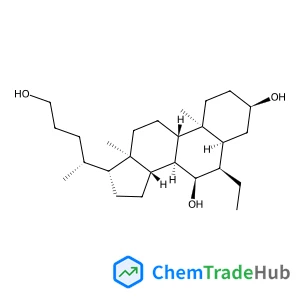
(3alpha,5beta,6alpha,7alpha)-6-Ethylcholane-3,7,24-triol
CAS Number:
1537866-49-1
Molecular Formula:
C26H46O3
![1-(1-Benzyl-1,2,3,6-tetrahydropyridin-4-yl)-1H-benzo[d]imidazol-2(3H)-one structure](https://static.chemtradehub.com/structs/603/60373-71-9-7dfb.webp "1-(1-Benzyl-1,2,3,6-tetrahydropyridin-4-yl)-1H-benzo[d]imidazol-2(3H)-one structure")
1-(1-Benzyl-1,2,3,6-tetrahydropyridin-4-yl)-1H-benzo[d]imidazol-2(3H)-one
CAS Number:
60373-71-9
Molecular Formula:
C19H19N3O
Recommended Suppliers





Disclaimer
This page provides academic journal information for reference and research purposes only. We are not affiliated with any journal publishers and do not handle publication submissions. For publication-related inquiries, please contact the respective journal publishers directly.
If you notice any inaccuracies in the information displayed, please contact us at support@chemtradehub.com. We will promptly review and address your concerns.