












![1-[6-(1H-Imidazol-1-yl)-3-pyridinyl]methanamine structure](https://static.chemtradehub.com/structs/914/914637-08-4-8825.webp "1-[6-(1H-Imidazol-1-yl)-3-pyridinyl]methanamine structure")
The electronic structure of pyracene: a spectroscopic and computational study
Literature Information
Publication Date
2013-03-27
DOI
10.1039/C3CP44271C
Impact Factor
3.676
Authors
Johannes Auerswald, Bernd Engels, Ingo Fischer, Thiemo Gerbich, Jörg Herterich, Anke Krueger, Melanie Lang, Hans-Christian Schmitt, Christof Schon, Christof Walter
View Original
Abstract
We report a synthetic, spectroscopic and computational study of the polycyclic aromatic molecule pyracene, which contains aliphatic five-membered rings annealed to a naphthalene chromophore. An improved route to synthesize the compound is described. Gas-phase IR and solid-state Raman spectra agree with a ground-state D2h structure. The electronically excited S1 A1B3u state has been studied by resonance-enhanced multiphoton ionisation. An adiabatic excitation energy T0 = 30 798 cm−1 (3.818 eV) was determined. SCS-ADC(2) calculations found a D2h minimum energy structure of the S1 state and yielded an excitation energy of +3.98 eV, including correction for zero point vibrational energy. The spectrum shows a rich low-frequency vibrational structure that can be assigned to the overtones of out-of-plane deformation modes of the five-membered rings by comparison with computations. The appearance of these modes as well as the frequency reduction in the excited state indicate that the potential in the S1 state is very flat. At higher excess energies most bands can be assigned to fundamentals, overtones and combination bands of either totally symmetric ag modes or of b2g modes that appear due to vibronic coupling. Lifetimes between 43 ns and 76 ns were measured for a number of vibronic bands. For the S2 state an equilibrium geometry with a non-planar carbon framework was computed. In addition a signal from the pyracene dimer was present. The spectrum shows several broad and structureless transitions. The origin band has a maximum at around 329 nm (30 400 cm−1). Again lifetimes between 60 ns and 70 ns were found. The dimer ion signal rises within less than 10 ps. Computations show that a crossed geometry with the long axis of one unit aligned with the short axis of the second constitutes the most stable structure. The broadening of the bands is most likely caused by excimer formation.
Related Literature
D–A–π–A featured sensitizers containing an auxiliary acceptor of benzoxadiazole: molecular engineering and co-sensitization
Haibo Zhu, Yongzhen Wu, Jingchuan Liu, Weiwei Zhang, Wenjun Wu, Wei-Hong Zhu
2015-04-15
Paper
DOI: 10.1039/C5TA01371B
Unforeseen distance-dependent SERS spectroelectrochemistry from surface-tethered Nile Blue: the role of molecular orientation
Andrew J. Wilson, Katherine A. Willets
2016-06-20
Paper
DOI: 10.1039/C6AN01266C
Signal enhancement and low oxidation potentials for miniaturized ECL biosensors via N-butyldiethanolamine
Stefanie Kirschbaum-Harriman, Michael Mayer, Axel Duerkop, Thomas Hirsch
2017-05-15
Paper
DOI: 10.1039/C7AN00261K
Tethering of spherical DOTAP liposome gold nanoparticles on cysteamine monolayer for sensitive label free electrochemical detection of DNA and transfection
Mohanlal Bhuvana, Venkataraman Dharuman
2014-02-10
Paper
DOI: 10.1039/C4AN00017J
A universal in situ strategy for charging supercapacitors
Zhiling Luo, Changhong Liu, Shoushan Fan, Enchong Liu
2019-05-24
Paper
DOI: 10.1039/C9TA04105B
Ascorbic acid functionalized anti-aggregated Au nanoparticles for ultrafast MEF and SERS detection of tartrazine: an ultra-wide piecewise linear range study
Mengru Li, Ran Li, Bo Han, Haojie Ma, Xueyan Hou, Yulong Kang, Yuqi Zhang, Ji-Jiang Wang
2021-12-30
Paper
DOI: 10.1039/D1AN02139G
A turn-on homodimer fluorescent probe based on homo-FRET for the sensing of biothiols in lysosome: a trial of a new turn-on strategy
Ying-Jie Tang, Wen-Le Fang, Kui Ren, Xiao-Feng Guo, Hong Wang
2021-03-11
Paper
DOI: 10.1039/D1AN00161B
Circumventing paclitaxel resistance in breast cancer cells using a nanoemulsion system and determining its efficacy via an impedance biosensor
Farnoosh Attari, Habibullah Hazim, Ashkan Zandi, Zeinab Mazarei, Hasan Rafati
2021-04-08
Paper
DOI: 10.1039/D0AN02013C
You might also like
Compound Q&A
What is the market or research trend for N-(4-Methoxybenzyl)-2-pyridinamine (CAS: 52818-63-0)?
N-(4-Methoxybenzyl)-2-pyridinamine (CAS: 52818-63-0) is increasingly being used ...
52818-63-0N-(4-Methoxybenzyl)-...
Compound Q&A
What precautions should be taken when handling Ethyl 4-(2-chlorophenyl)-1,3-thiazole-2-carboxylate (CAS: 1050507-06-6)?
When handling Ethyl 4-(2-chlorophenyl)-1,3-thiazole-2-carboxylate, appropriate p...
1050507-06-6Ethyl 4-(2-chlorophe...
Compound Q&A
What regulatory guidelines apply to diethyldiselane (CAS: 628-39-7)?
Diethyldiselane (CAS: 628-39-7) is classified under the Globally Harmonized Syst...
628-39-7Diethyldiselane
Compound Q&A
What is the market or research trend for oxocopper (CAS: 12053-18-8)?
The market for oxocopper (CAS: 12053-18-8) is primarily driven by its use in cat...
12053-18-8oxocopper; oxo-(oxoc...
Compound Q&A
What is the market or research trend for 5-{[(2-Methyl-2-propanyl)oxy]carbonyl}-5-azaspiro[2.4]heptane-7-carboxylic acid?
The market for 5-{[(2-Methyl-2-propanyl)oxy]carbonyl}-5-azaspiro[2.4]heptane-7-c...
1268519-54-55-{[(2-Methyl-2-prop...
Compound Q&A
What is 2-(1-Pyrrolidinyl)-4-pyridinamine (CAS: 35981-63-6)?
2-(1-Pyrrolidinyl)-4-pyridinamine is a chemical compound with the CAS number 359...
35981-63-62-(1-Pyrrolidinyl)-4...
Compound Q&A
What are the physical and chemical properties of 2-(3-Pyridinyl)-1-azabicyclo[2.2.2]octane (CAS: 91556-75-1)?
2-(3-Pyridinyl)-1-azabicyclo[2.2.2]octane (CAS: 91556-75-1) is a crystalline sol...
91556-75-12-(3-Pyridinyl)-1-az...
Compound Q&A
How is (S)-Alpha-allyl-proline hydrochloride (CAS: 129704-91-2) typically synthesized?
(S)-Alpha-allyl-proline hydrochloride is usually synthesized via a Wittig reacti...
129704-91-2(S)-Alpha-allyl-prol...
Compound Q&A
What is 3-Methyl-1,2-oxazole-5-carboxylic acid (CAS: 4857-42-5)?
3-Methyl-1,2-oxazole-5-carboxylic acid (CAS: 4857-42-5) is an organic compound w...
4857-42-53-Methyl-1,2-oxazole...
Compound Q&A
How is Lys-SMCC-DM1 (CAS: 1281816-04-3) typically synthesized?
Lys-SMCC-DM1 is synthesized via a multi-step process involving the coupling of S...
1281816-04-3Lys-SMCC-DM1
Source Journal
Physical Chemistry Chemical Physics

CiteScore:
5.5
Self-citation Rate:
10.3%
Articles per Year:
3036
Physical Chemistry Chemical Physics (PCCP) is an international journal co-owned by 19 physical chemistry and physics societies from around the world. This journal publishes original, cutting-edge research in physical chemistry, chemical physics and biophysical chemistry. To be suitable for publication in PCCP, articles must include significant innovation and/or insight into physical chemistry; this is the most important criterion that reviewers and Editors will judge against when evaluating submissions. The journal has a broad scope and welcomes contributions spanning experiment, theory, computation and data science. Topical coverage includes spectroscopy, dynamics, kinetics, statistical mechanics, thermodynamics, electrochemistry, catalysis, surface science, quantum mechanics, quantum computing and machine learning. Interdisciplinary research areas such as polymers and soft matter, materials, nanoscience, energy, surfaces/interfaces, and biophysical chemistry are welcomed if they demonstrate significant innovation and/or insight into physical chemistry. Joined experimental/theoretical studies are particularly appreciated when complementary and based on up-to-date approaches.
Recommended Compounds

![1-{3-[4-Amino-3-(4-phenoxyphenyl)-1H-pyrazolo[3,4-d]pyrimidin-1-yl]-1-piperidinyl}-2,3-dihydroxy-1-propanone structure](https://static.chemtradehub.com/structs/122/1226872-27-0-e037.webp "1-{3-[4-Amino-3-(4-phenoxyphenyl)-1H-pyrazolo[3,4-d]pyrimidin-1-yl]-1-piperidinyl}-2,3-dihydroxy-1-propanone structure")
1-{3-[4-Amino-3-(4-phenoxyphenyl)-1H-pyrazolo[3,4-d]pyrimidin-1-yl]-1-piperidinyl}-2,3-dihydroxy-1-propanone
CAS Number:
1226872-27-0
Molecular Formula:
C25H26N6O4
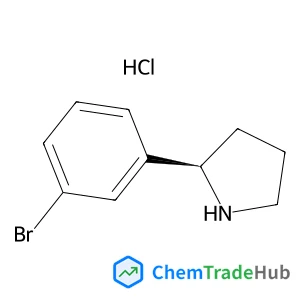
(2R)-2-(3-Bromophenyl)pyrrolidine hydrochloride (1:1)
CAS Number:
1391550-13-2
Molecular Formula:
C10H13BrClN
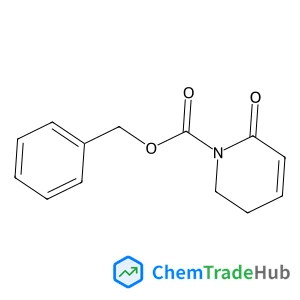
Benzyl 6-oxo-3,6-dihydro-1(2H)-pyridinecarboxylate
CAS Number:
725746-35-0
Molecular Formula:
C13H13NO3
Recommended Suppliers





Disclaimer
This page provides academic journal information for reference and research purposes only. We are not affiliated with any journal publishers and do not handle publication submissions. For publication-related inquiries, please contact the respective journal publishers directly.
If you notice any inaccuracies in the information displayed, please contact us at support@chemtradehub.com. We will promptly review and address your concerns.