












![1-oxaspiro[4.4]nonan-6-one structure](https://static.chemtradehub.com/structs/134/134179-01-4-e051.webp "1-oxaspiro[4.4]nonan-6-one structure")
The chemical sensitivity of X-ray spectroscopy: high energy resolution XANESversusX-ray emission spectroscopy of substituted ferrocenes
Literature Information
Publication Date
2013-04-12
DOI
10.1039/C3CP50999K
Impact Factor
3.676
Authors
Andrew J. Atkins, Matthias Bauer, Christoph R. Jacob
View Original
Abstract
X-ray spectroscopy at the metal K-edge is an important tool for understanding catalytic processes and provides insight into the geometric and electronic structures of transition metal complexes. In particular, X-ray emission-based methods such as high-energy resolution fluorescence detection (HERFD), X-ray absorption near-edge spectroscopy (XANES) and valence-to-core X-ray emission spectroscopy (V2C-XES) hold the promise of providing increased chemical sensitivity compared to conventional X-ray absorption spectroscopy. Here, we explore the ability of HERFD-XANES and V2C-XES spectroscopy to distinguish substitutions beyond the directly coordinated atoms for the example of ferrocene and selected ferrocene derivatives. The experimental spectra are assigned and interpreted through the use of density functional theory (DFT) calculations. We find that while the pre-edge peaks in the HERFD-XANES spectra are affected by substituents at the cyclopentadienyl ring containing π-bonds [A. J. Atkins, Ch. R. Jacob and M. Bauer, Chem.–Eur. J., 2012, 18, 7021], the V2C-XES spectra are virtually unchanged. The pre-edge in HERFD-XANES probes the weak transition to unoccupied metal d-orbitals, while the V2C-XES spectra are determined by dipole-allowed transitions from occupied ligand orbitals to the 1s core hole. The latter turn out to be less sensitive to changes beyond the first coordination shell.
Related Literature
Enhanced electrochemiluminescence of CdS quantum dots capped with mercaptopropionic acid activated by EDC for Zika virus detection
Hui-Jun Zhang, Jin Zhu, Ning Bao, Shou-Nian Ding
2021-02-26
Paper
DOI: 10.1039/D0AN02437F
A facile online multi-gear capacitively coupled contactless conductivity detector for an automatic and wide range monitoring of high salt in HPLC
Weiwen Liu, Ziqi Liang, Yuanyu Wang, Jun Cao, Qiang Zhang, Xiaoping Liu, Yuxing Wang
2021-12-27
Paper
DOI: 10.1039/D1AN02249K
Single microbead-based fluorescent aptasensor (SMFA) for direct isolation and in situ quantification of exosomes from plasma
Fangfang Wang, Yi Zhang, Desheng Chen, Zhuoqi Zhang, Zhengping Li
2021-03-23
Paper
DOI: 10.1039/D1AN00463H
Determination of total ionic alkyllead in water by electrothermal atomisation atomic absorption spectrometry
Paper
DOI: 10.1039/JA9860100293
Development of a PCR-free electrochemical point of care test for clinical detection of methicillin resistant Staphylococcus aureus (MRSA)
H. Schulze, G. Henihan, A. Hardie, I. Ciani, G. Giraud, J. G. Terry, A. J. Walton, R. Pethig, P. Ghazal, K. E. Templeton, A. R. Mount, T. T. Bachmann
2013-10-04
Paper
DOI: 10.1039/C3AN01319G
Electrochemical sensing of hepatocyte viability
Shang-heng Tsai, Wei-Jen Ting, Chao-Chin Hu, C. Bor Fuh
2014-02-21
Paper
DOI: 10.1039/C3AN02226A
Determination of selenium in steel by flame atomic absorption spectrometry
Paper
DOI: 10.1039/JA9860100309
Self-assembled nanomaterials for biosensing and therapeutics: recent advances and challenges
Shan Huang, Yuexin Song, Zhimei He, Jian-Rong Zhang, Jun-Jie Zhu
2021-03-10
Minireview
DOI: 10.1039/D1AN00077B
Simultaneous measurement of free and conjugated estrogens in surface water using capillary liquid chromatography tandem mass spectrometry
Fan Huang, Kersti Karu, Luiza C. Campos
2021-03-03
Paper
DOI: 10.1039/D0AN02335C
You might also like
Compound Q&A
What is the market or research trend for N-(4-Methoxybenzyl)-2-pyridinamine (CAS: 52818-63-0)?
N-(4-Methoxybenzyl)-2-pyridinamine (CAS: 52818-63-0) is increasingly being used ...
52818-63-0N-(4-Methoxybenzyl)-...
Compound Q&A
What precautions should be taken when handling Ethyl 4-(2-chlorophenyl)-1,3-thiazole-2-carboxylate (CAS: 1050507-06-6)?
When handling Ethyl 4-(2-chlorophenyl)-1,3-thiazole-2-carboxylate, appropriate p...
1050507-06-6Ethyl 4-(2-chlorophe...
Compound Q&A
What regulatory guidelines apply to diethyldiselane (CAS: 628-39-7)?
Diethyldiselane (CAS: 628-39-7) is classified under the Globally Harmonized Syst...
628-39-7Diethyldiselane
Compound Q&A
What is the market or research trend for oxocopper (CAS: 12053-18-8)?
The market for oxocopper (CAS: 12053-18-8) is primarily driven by its use in cat...
12053-18-8oxocopper; oxo-(oxoc...
Compound Q&A
What is the market or research trend for 5-{[(2-Methyl-2-propanyl)oxy]carbonyl}-5-azaspiro[2.4]heptane-7-carboxylic acid?
The market for 5-{[(2-Methyl-2-propanyl)oxy]carbonyl}-5-azaspiro[2.4]heptane-7-c...
1268519-54-55-{[(2-Methyl-2-prop...
Compound Q&A
What is 2-(1-Pyrrolidinyl)-4-pyridinamine (CAS: 35981-63-6)?
2-(1-Pyrrolidinyl)-4-pyridinamine is a chemical compound with the CAS number 359...
35981-63-62-(1-Pyrrolidinyl)-4...
Compound Q&A
What are the physical and chemical properties of 2-(3-Pyridinyl)-1-azabicyclo[2.2.2]octane (CAS: 91556-75-1)?
2-(3-Pyridinyl)-1-azabicyclo[2.2.2]octane (CAS: 91556-75-1) is a crystalline sol...
91556-75-12-(3-Pyridinyl)-1-az...
Compound Q&A
How is (S)-Alpha-allyl-proline hydrochloride (CAS: 129704-91-2) typically synthesized?
(S)-Alpha-allyl-proline hydrochloride is usually synthesized via a Wittig reacti...
129704-91-2(S)-Alpha-allyl-prol...
Compound Q&A
What is 3-Methyl-1,2-oxazole-5-carboxylic acid (CAS: 4857-42-5)?
3-Methyl-1,2-oxazole-5-carboxylic acid (CAS: 4857-42-5) is an organic compound w...
4857-42-53-Methyl-1,2-oxazole...
Compound Q&A
How is Lys-SMCC-DM1 (CAS: 1281816-04-3) typically synthesized?
Lys-SMCC-DM1 is synthesized via a multi-step process involving the coupling of S...
1281816-04-3Lys-SMCC-DM1
Source Journal
Physical Chemistry Chemical Physics

CiteScore:
5.5
Self-citation Rate:
10.3%
Articles per Year:
3036
Physical Chemistry Chemical Physics (PCCP) is an international journal co-owned by 19 physical chemistry and physics societies from around the world. This journal publishes original, cutting-edge research in physical chemistry, chemical physics and biophysical chemistry. To be suitable for publication in PCCP, articles must include significant innovation and/or insight into physical chemistry; this is the most important criterion that reviewers and Editors will judge against when evaluating submissions. The journal has a broad scope and welcomes contributions spanning experiment, theory, computation and data science. Topical coverage includes spectroscopy, dynamics, kinetics, statistical mechanics, thermodynamics, electrochemistry, catalysis, surface science, quantum mechanics, quantum computing and machine learning. Interdisciplinary research areas such as polymers and soft matter, materials, nanoscience, energy, surfaces/interfaces, and biophysical chemistry are welcomed if they demonstrate significant innovation and/or insight into physical chemistry. Joined experimental/theoretical studies are particularly appreciated when complementary and based on up-to-date approaches.
Recommended Compounds
![(2R,6S)-6-[(Benzyloxy)methyl]-4-{[(2-methyl-2-propanyl)oxy]carbonyl}-2-morpholinecarboxylic acid structure](https://static.chemtradehub.com/structs/109/1093085-91-6-3382.webp "(2R,6S)-6-[(Benzyloxy)methyl]-4-{[(2-methyl-2-propanyl)oxy]carbonyl}-2-morpholinecarboxylic acid structure")
(2R,6S)-6-[(Benzyloxy)methyl]-4-{[(2-methyl-2-propanyl)oxy]carbonyl}-2-morpholinecarboxylic acid
CAS Number:
1093085-91-6
Molecular Formula:
C18H25NO6

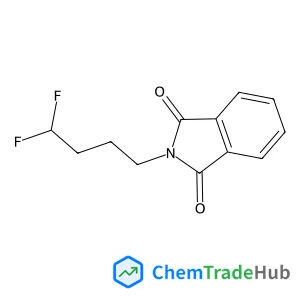
2-(4,4-Difluorobutyl)-1H-isoindole-1,3(2H)-dione
CAS Number:
1265341-14-7
Molecular Formula:
C12H11F2NO2
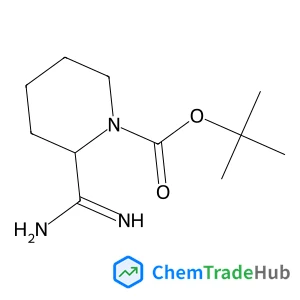
2-Methyl-2-propanyl 2-carbamimidoyl-1-piperidinecarboxylate
CAS Number:
1258640-98-0
Molecular Formula:
C11H21N3O2
Recommended Suppliers




Disclaimer
This page provides academic journal information for reference and research purposes only. We are not affiliated with any journal publishers and do not handle publication submissions. For publication-related inquiries, please contact the respective journal publishers directly.
If you notice any inaccuracies in the information displayed, please contact us at support@chemtradehub.com. We will promptly review and address your concerns.