












Highly differentiated multi-stimuli-responsive fluorescence performance of tetraphenylethylene-containing styrene–maleic acid copolymers induced by macromolecular architecture control
Literature Information
Publication Date
2023-11-06
DOI
10.1039/D3PY01040F
Impact Factor
5.582
Authors
Ranran Gao, Xiaoning Guo, Li Wang
View Original
Abstract
Stimuli-responsive aggregation-induced emission (AIE) active polymers with structural diversity and tunability in fluorescence responsive behavior are in high demand in practical applications. Recently, tetraphenylethylene (TPE)-appended maleic anhydride terpolymers were proposed as a multi-stimuli-responsive fluorescence platform by our group. Here, we report TPE-containing styrene–maleic acid copolymers with diverse chain topologies and locations of the TPE moiety by reversible activation-fragmentation transfer polymerization (RAFT) with meticulously designed chain transfer agents and a TPE-containing monomer. The fluorescence responsiveness of the copolymers to the pH value, Ca2+, and bovine serum albumin (BSA) was systematically investigated, which showed an influence substantially on both the “stimuli acceptor” and “signaling” sides of the macromolecular structure. The discovery made in our work accentuates the importance of macromolecular engineering in developing fluorescent probes with highly differentiated performance and provides great flexibility in meeting the wide range of requirements of various applications.
Related Literature
Selective dual detection of Hg2+ and TATP based on amphiphilic conjugated polythiophene-quantum dot hybrid materials
Salah M. Tawfik, Ali A. Abd-Elaal, Yong-Ill Lee
2021-03-02
Paper
DOI: 10.1039/D1AN00166C
A universal in situ strategy for charging supercapacitors
Zhiling Luo, Changhong Liu, Shoushan Fan, Enchong Liu
2019-05-24
Paper
DOI: 10.1039/C9TA04105B
ATR-FTIR spectroscopy and spectroscopic imaging to investigate the behaviour of proteins subjected to freeze–thaw cycles in droplets, wells, and under flow
Bernadette Byrne, Sergei G. Kazarian
2021-03-08
Paper
DOI: 10.1039/D1AN00087J
Viscosity sensitive endoplasmic reticulum fluorescent probes based on oxazolopyridinium
Ya-Nan Wang, Xiao-Qing Zhang, Ru Sun, Yu-Jie Xu, Jian-Feng Ge
2021-06-09
Paper
DOI: 10.1039/D1TB01106E
An integrated self-powered 3D printed sample concentrator for highly sensitive molecular detection of HIV in whole blood at the point of care
Karteek Kadimisetty, Aoife M. Roche, Yanjie Yi, Frederic D. Bushman, Liang Feng
2021-03-30
Paper
DOI: 10.1039/D0AN02482A
Correction: Redox-responsive, reversibly fluorescent nanoparticles from sustainable cellulose derivatives
Wei Wang, Wei Li, Kai Zhang
2015-04-22
Correction
DOI: 10.1039/C5TA90092A
Rhodamine 6G-based efficient chemosensor for trivalent metal ions (Al3+, Cr3+ and Fe3+) upon single excitation with applications in combinational logic circuits and memory devices
Dipankar Das, Rabiul Alam
2021-12-10
Paper
DOI: 10.1039/D1AN01788H
Cell-inspired biointerfaces constructed from patterned smart hydrogels for immunoassays in whole blood
Jianwen Hou, Runhai Chen, Zhirong Xin, Hengchong Shi, Shing-Chung Wong, Jinghua Yin, Qiang Shi
2017-02-27
Paper
DOI: 10.1039/C6TB03385G
Label-free and highly sensitive detection of DNA adenine methylation methyltransferase through cathodic photoelectrochemistry
Fang Li, Xiuming Wu, Mengmeng Gu, Guang-Li Wang
2021-02-02
Paper
DOI: 10.1039/D0AN02438D
Retraction: A battle between spherical and cube-shaped Ag/AgCl nanoparticle modified imprinted polymer to achieve femtogram detection of alpha-feto protein
2018-12-03
Retraction
DOI: 10.1039/C8TB90176G
You might also like
Compound Q&A
What is the market or research trend for N-(4-Methoxybenzyl)-2-pyridinamine (CAS: 52818-63-0)?
N-(4-Methoxybenzyl)-2-pyridinamine (CAS: 52818-63-0) is increasingly being used ...
52818-63-0N-(4-Methoxybenzyl)-...
Compound Q&A
What precautions should be taken when handling Ethyl 4-(2-chlorophenyl)-1,3-thiazole-2-carboxylate (CAS: 1050507-06-6)?
When handling Ethyl 4-(2-chlorophenyl)-1,3-thiazole-2-carboxylate, appropriate p...
1050507-06-6Ethyl 4-(2-chlorophe...
Compound Q&A
What regulatory guidelines apply to diethyldiselane (CAS: 628-39-7)?
Diethyldiselane (CAS: 628-39-7) is classified under the Globally Harmonized Syst...
628-39-7Diethyldiselane
Compound Q&A
What is the market or research trend for oxocopper (CAS: 12053-18-8)?
The market for oxocopper (CAS: 12053-18-8) is primarily driven by its use in cat...
12053-18-8oxocopper; oxo-(oxoc...
Compound Q&A
What is the market or research trend for 5-{[(2-Methyl-2-propanyl)oxy]carbonyl}-5-azaspiro[2.4]heptane-7-carboxylic acid?
The market for 5-{[(2-Methyl-2-propanyl)oxy]carbonyl}-5-azaspiro[2.4]heptane-7-c...
1268519-54-55-{[(2-Methyl-2-prop...
Compound Q&A
What is 2-(1-Pyrrolidinyl)-4-pyridinamine (CAS: 35981-63-6)?
2-(1-Pyrrolidinyl)-4-pyridinamine is a chemical compound with the CAS number 359...
35981-63-62-(1-Pyrrolidinyl)-4...
Compound Q&A
What are the physical and chemical properties of 2-(3-Pyridinyl)-1-azabicyclo[2.2.2]octane (CAS: 91556-75-1)?
2-(3-Pyridinyl)-1-azabicyclo[2.2.2]octane (CAS: 91556-75-1) is a crystalline sol...
91556-75-12-(3-Pyridinyl)-1-az...
Compound Q&A
How is (S)-Alpha-allyl-proline hydrochloride (CAS: 129704-91-2) typically synthesized?
(S)-Alpha-allyl-proline hydrochloride is usually synthesized via a Wittig reacti...
129704-91-2(S)-Alpha-allyl-prol...
Compound Q&A
What is 3-Methyl-1,2-oxazole-5-carboxylic acid (CAS: 4857-42-5)?
3-Methyl-1,2-oxazole-5-carboxylic acid (CAS: 4857-42-5) is an organic compound w...
4857-42-53-Methyl-1,2-oxazole...
Compound Q&A
How is Lys-SMCC-DM1 (CAS: 1281816-04-3) typically synthesized?
Lys-SMCC-DM1 is synthesized via a multi-step process involving the coupling of S...
1281816-04-3Lys-SMCC-DM1
Source Journal
Polymer Chemistry

CiteScore:
8.6
Self-citation Rate:
7.3%
Articles per Year:
457
Polymer Chemistry welcomes submissions in all areas of polymer science that have a strong focus on macromolecular chemistry. Manuscripts may cover a broad range of fields, yet no direct application focus is required.
Recommended Compounds

(3alpha,5beta,6alpha,7alpha)-6-Ethylcholane-3,7,24-triol
CAS Number:
1537866-49-1
Molecular Formula:
C26H46O3
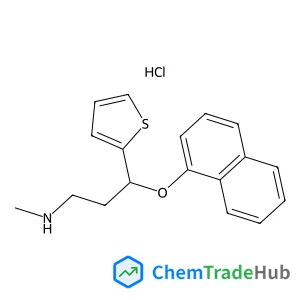
N-Methyl-3-(1-naphthyloxy)-3-(2-thienyl)-1-propanamine hydrochloride (1:1)
CAS Number:
1188266-11-6
Molecular Formula:
C18H20ClNOS
![1-{3-[4-Amino-3-(4-phenoxyphenyl)-1H-pyrazolo[3,4-d]pyrimidin-1-yl]-1-piperidinyl}-2,3-dihydroxy-1-propanone structure](https://static.chemtradehub.com/structs/122/1226872-27-0-e037.webp "1-{3-[4-Amino-3-(4-phenoxyphenyl)-1H-pyrazolo[3,4-d]pyrimidin-1-yl]-1-piperidinyl}-2,3-dihydroxy-1-propanone structure")
1-{3-[4-Amino-3-(4-phenoxyphenyl)-1H-pyrazolo[3,4-d]pyrimidin-1-yl]-1-piperidinyl}-2,3-dihydroxy-1-propanone
CAS Number:
1226872-27-0
Molecular Formula:
C25H26N6O4
Recommended Suppliers






Disclaimer
This page provides academic journal information for reference and research purposes only. We are not affiliated with any journal publishers and do not handle publication submissions. For publication-related inquiries, please contact the respective journal publishers directly.
If you notice any inaccuracies in the information displayed, please contact us at support@chemtradehub.com. We will promptly review and address your concerns.