












An integrated self-powered 3D printed sample concentrator for highly sensitive molecular detection of HIV in whole blood at the point of care
Literature Information
Publication Date
2021-03-30
DOI
10.1039/D0AN02482A
Impact Factor
4.616
Authors
Karteek Kadimisetty, Aoife M. Roche, Yanjie Yi, Frederic D. Bushman, Liang Feng
View Original
Abstract
Rapid and efficient biological sample preparation and pretreatment are crucial for highly sensitive, reliable and reproducible molecular detection of infectious diseases. Herein, we report a self-powered, integrated sample concentrator (SPISC) for rapid plasma separation, pathogen lysis, nucleic acid trapping and enrichment at the point of care. The proposed sample concentrator uses a combination of gravitational sedimentation of blood cells and capillary force for rapid, self-powered plasma separation. The pathogens (e.g., HIV virus) in separated plasma were directly lysed and pathogen nucleic acid was enriched by an integrated, flow-through FTA® membrane in the concentrator, enabling highly efficient nucleic acid preparation. The FTA® membrane of the SPISC is easy to store and transport at room temperature without need for uninterrupted cold chain, which is crucial for point of care sampling in resource-limited settings. The platform has been successfully applied to detect HIV virus in blood samples. Our experiments show that the sample concentrator can achieve a plasma separation efficiency as high as 95% and a detection sensitivity as low as 10 copies per 200 μL blood (∼100 copies per mL plasma) with variability less than 7%. The sample concentrator described is fully compatible with downstream nucleic acid detection and has great potential for early diagnostics, monitoring and management of infectious diseases at the point of care.
Related Literature
Evaluation of charge-transfer rates in fullerene-based donor–acceptor dyads with different density functional approximations
Pau Besalú-Sala, Josep M. Luis, Miquel Solà
2021-02-05
Paper
DOI: 10.1039/D0CP06510B
Non-collinear antiferromagnetism to compensated ferrimagnetism in Ti(Fe1−xCox)2 (x = 0, 0.5 and 1) alloys: experiment and theory
S. Shanmukharao Samatham, Akhilesh Kumar Patel, K. G. Suresh, R. Nirmala
2021-02-08
Paper
DOI: 10.1039/D0CP06368A
Nanomechanics of antimonene allotropes under tensile loading
Tanmay Sarkar Akash, Pritom Bose, Md Mahbubul Islam
2021-02-18
Paper
DOI: 10.1039/D0CP05563H
Spin density localization and accessibility of organic radicals affect liquid-state DNP efficiency
Markus Hiller, Igor Tkach, Tomas Orlando
2021-02-05
Communication
DOI: 10.1039/D0CP05796G
Experimental and theoretical study on the impact of a nitrate group on the chemistry of alkoxy radicals‡
A. Novelli, C. Cho, H. Fuchs, A. Hofzumahaus, F. Rohrer, R. Tillmann, A. Kiendler-Scharr, A. Wahner, L. Vereecken
2021-03-02
Paper
DOI: 10.1039/D0CP05555G
Reply to the ‘comment on “impact of water on the BrO + HO2 gas-phase reaction: mechanism, kinetics and products”’ by R. Chow, D. K. W. Mok, E. P. F. Lee and J. M. Dyke, Phys. Chem. Chem. Phys., 2021, 23, DOI: 10.1039/D0CP00222D
Narcisse T. Tsona, Shanshan Tang, Lin Du
2021-03-10
Comment
DOI: 10.1039/D0CP02854A
Interaction strength of osmolytes with the anion of a salt-bridge determines its stability
Mrityunjay K. Tiwari, Rajesh K. Murarka
2021-02-11
Paper
DOI: 10.1039/D0CP05378C
Pentagonal B2C monolayer with extremely high theoretical capacity for Li-/Na-ion batteries
Jianbo Gao
2021-02-23
Paper
DOI: 10.1039/D0CP06363K
Conformational H-bonding modulation of the iron active site cysteine ligand of superoxide reductase: absorption and resonance Raman studies
Alain Desbois, Julien Valton, Yohann Moreau, Stéphane Torelli, Vincent Nivière
2021-01-14
Paper
DOI: 10.1039/D0CP03898A
You might also like
Compound Q&A
What is the market or research trend for N-(4-Methoxybenzyl)-2-pyridinamine (CAS: 52818-63-0)?
N-(4-Methoxybenzyl)-2-pyridinamine (CAS: 52818-63-0) is increasingly being used ...
52818-63-0N-(4-Methoxybenzyl)-...
Compound Q&A
What precautions should be taken when handling Ethyl 4-(2-chlorophenyl)-1,3-thiazole-2-carboxylate (CAS: 1050507-06-6)?
When handling Ethyl 4-(2-chlorophenyl)-1,3-thiazole-2-carboxylate, appropriate p...
1050507-06-6Ethyl 4-(2-chlorophe...
Compound Q&A
What regulatory guidelines apply to diethyldiselane (CAS: 628-39-7)?
Diethyldiselane (CAS: 628-39-7) is classified under the Globally Harmonized Syst...
628-39-7Diethyldiselane
Compound Q&A
What is the market or research trend for oxocopper (CAS: 12053-18-8)?
The market for oxocopper (CAS: 12053-18-8) is primarily driven by its use in cat...
12053-18-8oxocopper; oxo-(oxoc...
Compound Q&A
What is the market or research trend for 5-{[(2-Methyl-2-propanyl)oxy]carbonyl}-5-azaspiro[2.4]heptane-7-carboxylic acid?
The market for 5-{[(2-Methyl-2-propanyl)oxy]carbonyl}-5-azaspiro[2.4]heptane-7-c...
1268519-54-55-{[(2-Methyl-2-prop...
Compound Q&A
What is 2-(1-Pyrrolidinyl)-4-pyridinamine (CAS: 35981-63-6)?
2-(1-Pyrrolidinyl)-4-pyridinamine is a chemical compound with the CAS number 359...
35981-63-62-(1-Pyrrolidinyl)-4...
Compound Q&A
What are the physical and chemical properties of 2-(3-Pyridinyl)-1-azabicyclo[2.2.2]octane (CAS: 91556-75-1)?
2-(3-Pyridinyl)-1-azabicyclo[2.2.2]octane (CAS: 91556-75-1) is a crystalline sol...
91556-75-12-(3-Pyridinyl)-1-az...
Compound Q&A
How is (S)-Alpha-allyl-proline hydrochloride (CAS: 129704-91-2) typically synthesized?
(S)-Alpha-allyl-proline hydrochloride is usually synthesized via a Wittig reacti...
129704-91-2(S)-Alpha-allyl-prol...
Compound Q&A
What is 3-Methyl-1,2-oxazole-5-carboxylic acid (CAS: 4857-42-5)?
3-Methyl-1,2-oxazole-5-carboxylic acid (CAS: 4857-42-5) is an organic compound w...
4857-42-53-Methyl-1,2-oxazole...
Compound Q&A
How is Lys-SMCC-DM1 (CAS: 1281816-04-3) typically synthesized?
Lys-SMCC-DM1 is synthesized via a multi-step process involving the coupling of S...
1281816-04-3Lys-SMCC-DM1
Source Journal
Analyst

CiteScore:
7.8
Self-citation Rate:
5.6%
Articles per Year:
653
Analyst publishes analytical and bioanalytical research that reports premier fundamental discoveries and inventions, and the applications of those discoveries, unconfined by traditional discipline barriers.
Recommended Compounds
![1-{3-[4-Amino-3-(4-phenoxyphenyl)-1H-pyrazolo[3,4-d]pyrimidin-1-yl]-1-piperidinyl}-2,3-dihydroxy-1-propanone structure](https://static.chemtradehub.com/structs/122/1226872-27-0-e037.webp "1-{3-[4-Amino-3-(4-phenoxyphenyl)-1H-pyrazolo[3,4-d]pyrimidin-1-yl]-1-piperidinyl}-2,3-dihydroxy-1-propanone structure")
1-{3-[4-Amino-3-(4-phenoxyphenyl)-1H-pyrazolo[3,4-d]pyrimidin-1-yl]-1-piperidinyl}-2,3-dihydroxy-1-propanone
CAS Number:
1226872-27-0
Molecular Formula:
C25H26N6O4
![5'-Fluoro-[2,3'-biindolinylidene]-2',3-dione structure](https://static.chemtradehub.com/structs/251/251903-00-1-9cb1.webp "5'-Fluoro-[2,3'-biindolinylidene]-2',3-dione structure")

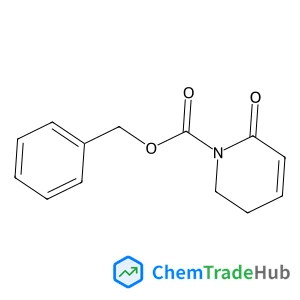
Benzyl 6-oxo-3,6-dihydro-1(2H)-pyridinecarboxylate
CAS Number:
725746-35-0
Molecular Formula:
C13H13NO3
Recommended Suppliers






Disclaimer
This page provides academic journal information for reference and research purposes only. We are not affiliated with any journal publishers and do not handle publication submissions. For publication-related inquiries, please contact the respective journal publishers directly.
If you notice any inaccuracies in the information displayed, please contact us at support@chemtradehub.com. We will promptly review and address your concerns.