


Rhodamine 6G-based efficient chemosensor for trivalent metal ions (Al3+, Cr3+ and Fe3+) upon single excitation with applications in combinational logic circuits and memory devices
Literature Information
Publication Date
2021-12-10
DOI
10.1039/D1AN01788H
Impact Factor
4.616
Authors
Dipankar Das, Rabiul Alam
View Original
Abstract
A new rhodamine 6G-based chemosensor (L3) was synthesized and characterized by 1H, 13C, IR and mass spectroscopy studies. It exhibited an excellent selective and sensitive CHEF-based recognition of trivalent metal ions M3+ (M = Fe, Al and Cr) over mono and di-valent and other trivalent metal ions with prominent enhancement in the absorption and fluorescence intensity for Fe3+ (669-fold), Al3+ (653-fold) and Cr3+ (667-fold) upon the addition of 2.6 equivalent of these metal ions in the probe in H2O/CH3CN (7 : 3, v/v, pH 7.2). The corresponding Kd values were evaluated to be 1.94 × 10⁻⁵ (Fe3+), 3.15 × 10⁻⁵ (Al3+) and 2.26 × 10⁻⁵ M (Cr3+). The quantum yields of L3, [L3–Fe3+], [L3–Al3+] and [L3–Cr3+] complexes in H2O/CH3CN (7 : 3, v/v, pH 7.2) were found to be 0.0005, 0.335, 0.327 and 0.333, respectively, using rhodamine-6G as the standard. The LODs for Fe3+, Al3+ and Cr3+ were determined by 3σ methods and found to be 2.57, 0.78 and 0.47 μM, respectively. The cyanide ion snatched Fe3+ from the [Fe3+–L3] complex and quenched its fluorescence via its ring-closed spirolactam form. Advanced level molecular logic devices using different inputs (2 and 4 input) and a memory device were constructed.
Recommended Journals

Pharmacological Reviews

Journal of Medicinal Chemistry

Journal of Heterocyclic Chemistry

European Journal of Wood and Wood Products

Planta Medica

Israel Journal of Chemistry

Pure and Applied Chemistry

Journal of Physics and Chemistry of Solids

Proceedings of the National Academy of Sciences of the United States of America

Journal of Organometallic Chemistry
Related Literature
The generation and trapping of organozinc carbenoids from N-diethoxymethyl amides: a new amidocyclopropanation reaction
Guillaume Bégis, David Cladingboel, William B. Motherwell
2003-10-03
Communication
DOI: 10.1039/B309887G
Controlled crystallization of mixed-ligand complexes of 1,3-bis(4-pyridyl)propane-N,N′-dioxide with metal(ii) thiocyanates: isostructurality in coordination networks bearing different mono- and di-nuclear nodes‡
Lin-Ping Zhang, Thomas C. W. Mak
2003-10-17
Communication
DOI: 10.1039/B307604K
Thiazole orange as fluorescent universal base in peptide nucleic acids
Olaf Köhler, Oliver Seitz
2003-10-21
Communication
DOI: 10.1039/B308299G
Solvent-free ketone hydrogenations catalyzed by molybdenum complexes
Barbara F. M. Kimmich, Paul J. Fagan, Elisabeth Hauptman, R. Morris Bullock
2004-03-22
Communication
DOI: 10.1039/B401760A
Synthesis of nearly monodisperse polystyrene–polypeptideblock copolymersviapolymerisation of N-carboxyanhydrides
Ivaylo Dimitrov, Helmut Schlaad
2003-10-17
Communication
DOI: 10.1039/B308990H
A novel molecular ladder structure of Cu(ii)–Ba(ii) coordination polymer exhibiting ferromagnetic coupling
Yang Zou, Wenlong Liu, Song Gao, Jingli Xie, Qingjin Meng
2003-10-17
Communication
DOI: 10.1039/B308474D
Electrochemical lithography: fabrication of nanoscale Si tips by porous anodization of Al/Si wafer
L. Pu, Y. Shi, J. M. Zhu, X. M. Bao, R. Zhang, Y. D. Zheng
2004-03-18
Communication
DOI: 10.1039/B315810A
Facilitation of addition–elimination reactions in pyrimidines and purines using trifluoroacetic acid in trifluoroethanol
Hayley J. Whitfield, Roger J. Griffin, Ian R. Hardcastle, Andrew Henderson, Jerome Meneyrol, Veronique Mesguiche, Kerry L. Sayle, Bernard T. Golding
2003-10-14
Communication
DOI: 10.1039/B308948G
Rotavap simulation and the estimation of boiling points
Craig R. Stewart, Jonathan M. Goodman
2003-09-29
Communication
DOI: 10.1039/B309488J
DPA-substituted coumarins as chemosensors for zinc(ii): modulation of the chemosensory characteristics by variation of the position of the chelate on the coumarin
Nathaniel C. Lim, Christian Brückner
2004-04-01
Communication
DOI: 10.1039/B403448A
You might also like
Compound Q&A
What is the market or research trend for N-(4-Methoxybenzyl)-2-pyridinamine (CAS: 52818-63-0)?
N-(4-Methoxybenzyl)-2-pyridinamine (CAS: 52818-63-0) is increasingly being used ...
52818-63-0N-(4-Methoxybenzyl)-...
Compound Q&A
What precautions should be taken when handling Ethyl 4-(2-chlorophenyl)-1,3-thiazole-2-carboxylate (CAS: 1050507-06-6)?
When handling Ethyl 4-(2-chlorophenyl)-1,3-thiazole-2-carboxylate, appropriate p...
1050507-06-6Ethyl 4-(2-chlorophe...
Compound Q&A
What regulatory guidelines apply to diethyldiselane (CAS: 628-39-7)?
Diethyldiselane (CAS: 628-39-7) is classified under the Globally Harmonized Syst...
628-39-7Diethyldiselane
Compound Q&A
What is the market or research trend for oxocopper (CAS: 12053-18-8)?
The market for oxocopper (CAS: 12053-18-8) is primarily driven by its use in cat...
12053-18-8oxocopper; oxo-(oxoc...
Compound Q&A
What is the market or research trend for 5-{[(2-Methyl-2-propanyl)oxy]carbonyl}-5-azaspiro[2.4]heptane-7-carboxylic acid?
The market for 5-{[(2-Methyl-2-propanyl)oxy]carbonyl}-5-azaspiro[2.4]heptane-7-c...
1268519-54-55-{[(2-Methyl-2-prop...
Compound Q&A
What is 2-(1-Pyrrolidinyl)-4-pyridinamine (CAS: 35981-63-6)?
2-(1-Pyrrolidinyl)-4-pyridinamine is a chemical compound with the CAS number 359...
35981-63-62-(1-Pyrrolidinyl)-4...
Compound Q&A
What are the physical and chemical properties of 2-(3-Pyridinyl)-1-azabicyclo[2.2.2]octane (CAS: 91556-75-1)?
2-(3-Pyridinyl)-1-azabicyclo[2.2.2]octane (CAS: 91556-75-1) is a crystalline sol...
91556-75-12-(3-Pyridinyl)-1-az...
Compound Q&A
How is (S)-Alpha-allyl-proline hydrochloride (CAS: 129704-91-2) typically synthesized?
(S)-Alpha-allyl-proline hydrochloride is usually synthesized via a Wittig reacti...
129704-91-2(S)-Alpha-allyl-prol...
Compound Q&A
What is 3-Methyl-1,2-oxazole-5-carboxylic acid (CAS: 4857-42-5)?
3-Methyl-1,2-oxazole-5-carboxylic acid (CAS: 4857-42-5) is an organic compound w...
4857-42-53-Methyl-1,2-oxazole...
Compound Q&A
How is Lys-SMCC-DM1 (CAS: 1281816-04-3) typically synthesized?
Lys-SMCC-DM1 is synthesized via a multi-step process involving the coupling of S...
1281816-04-3Lys-SMCC-DM1
Source Journal
Analyst

CiteScore:
7.8
Self-citation Rate:
5.6%
Articles per Year:
653
Analyst publishes analytical and bioanalytical research that reports premier fundamental discoveries and inventions, and the applications of those discoveries, unconfined by traditional discipline barriers.
Recommended Compounds
![N-{15-[(2,5-Dioxo-1-pyrrolidinyl)oxy]-15-oxo-3,6,9,12-tetraoxapentadec-1-yl}-2-(2-propyn-1-yloxy)acetamide structure](https://static.chemtradehub.com/structs/210/2101206-92-0-2eb5.webp "N-{15-[(2,5-Dioxo-1-pyrrolidinyl)oxy]-15-oxo-3,6,9,12-tetraoxapentadec-1-yl}-2-(2-propyn-1-yloxy)acetamide structure")
N-{15-[(2,5-Dioxo-1-pyrrolidinyl)oxy]-15-oxo-3,6,9,12-tetraoxapentadec-1-yl}-2-(2-propyn-1-yloxy)acetamide
CAS Number:
2101206-92-0
Molecular Formula:
C20H30N2O10
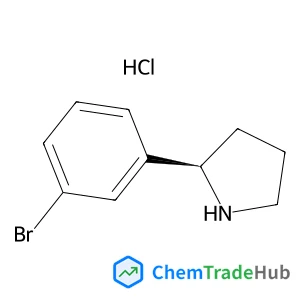
(2R)-2-(3-Bromophenyl)pyrrolidine hydrochloride (1:1)
CAS Number:
1391550-13-2
Molecular Formula:
C10H13BrClN
![1-oxaspiro[4.4]nonan-6-one structure](https://static.chemtradehub.com/structs/134/134179-01-4-e051.webp "1-oxaspiro[4.4]nonan-6-one structure")
![1,10-bis(3,5-dimethylphenyl)-12-hydroxy-4,5,6,7-tetrahydroiindeno[7,1-de:1',7'-fg][1,3,2]dioxaphosphocine 12-oxide structure](https://static.chemtradehub.com/structs/141/1412439-82-7-b9a9.webp "1,10-bis(3,5-dimethylphenyl)-12-hydroxy-4,5,6,7-tetrahydroiindeno[7,1-de:1',7'-fg][1,3,2]dioxaphosphocine 12-oxide structure")
1,10-bis(3,5-dimethylphenyl)-12-hydroxy-4,5,6,7-tetrahydroiindeno[7,1-de:1',7'-fg][1,3,2]dioxaphosphocine 12-oxide
CAS Number:
1412439-82-7
Molecular Formula:
C33H31O4P
Recommended Suppliers






Disclaimer
This page provides academic journal information for reference and research purposes only. We are not affiliated with any journal publishers and do not handle publication submissions. For publication-related inquiries, please contact the respective journal publishers directly.
If you notice any inaccuracies in the information displayed, please contact us at support@chemtradehub.com. We will promptly review and address your concerns.