


Retraction: A battle between spherical and cube-shaped Ag/AgCl nanoparticle modified imprinted polymer to achieve femtogram detection of alpha-feto protein
Literature Information
Publication Date
2018-12-03
DOI
10.1039/C8TB90176G
Impact Factor
6.331
Authors
View Original
Abstract
Retraction of ‘A battle between spherical and cube-shaped Ag/AgCl nanoparticle modified imprinted polymer to achieve femtogram detection of alpha-feto protein’ by Paramita Karfa et al., J. Mater. Chem. B, 2016, 4, 5534–5547.
Recommended Journals

Journal of Organometallic Chemistry

Kinetics and Catalysis

Journal of Catalysis

Organic Preparations and Procedures International

Helvetica Chimica Acta

Planta Medica

Russian Chemical Reviews

Pharmacological Reviews

Proceedings of the National Academy of Sciences of the United States of America

Journal of Heterocyclic Chemistry
Related Literature
New dibenzofuran-bridged bis(amidoamine) and bis(ethylenediamine) ligands and their dinuclear zinc and aluminium complexes
Mark L. Hlavinka, John R. Hagadorn
2003-09-26
Communication
DOI: 10.1039/B309732C
First in-situSAXS studies of the mesostructuration of spherical silica and titania particles during spray-drying process
C. Boissiere, D. Grosso, H. Amenitsch, A. Gibaud, A. Coupé, N. Baccile, C. Sanchez
2003-10-14
Communication
DOI: 10.1039/B308694A
The photonic opal – the jewel in the crown of optical information processing
2003-10-07
Focus
DOI: 10.1039/B306771H
Ionic liquids based on N-alkyl-N-methylmorpholinium salts as potential electrolytes
Ki-Sub Kim, Sukjeong Choi, D. Demberelnyamba, Huen Lee, Jaeseung Oh, Byoung-Bae Lee, Su-Jin Mun
2004-02-27
Communication
DOI: 10.1039/B400198B
Palladium-containing perovskites: recoverable and reuseable catalysts for Suzuki couplings
Martin D. Smith, Antonia F. Stepan, Chandrashekar Ramarao, Paul E. Brennan, Steven V. Ley
2003-09-30
Communication
DOI: 10.1039/B308465E
Carbonate and oxalate dianions as prolific hydrogen-bond acceptors in supramolecular assembly‡
Chi-Keung Lam, Thomas C. W. Mak
2003-10-08
Communication
DOI: 10.1039/B306649E
Electrophilic terminal phosphinidene complex–Lewis base adducts: Chemistry between carbon–halide bond activation and weak Lewis base adduct formation
Arif Ali Khan, Cathleen Wismach, Peter G. Jones, Rainer Streubel
2003-10-22
Communication
DOI: 10.1039/B309443J
Controlled crystallization of mixed-ligand complexes of 1,3-bis(4-pyridyl)propane-N,N′-dioxide with metal(ii) thiocyanates: isostructurality in coordination networks bearing different mono- and di-nuclear nodes‡
Lin-Ping Zhang, Thomas C. W. Mak
2003-10-17
Communication
DOI: 10.1039/B307604K
Synthesis of the stable UO2I2, the last of the uranyl dihalides. X-Ray crystal structure of [UO2I2(py)3]
Jean-Claude Berthet, Martine Nierlich, Michel Ephritikhine
2004-02-27
Communication
DOI: 10.1039/B400717D
High efficiency photocurrent generation by two-dimensional mixed J-aggregates of cyanine dyes
Mitsuo Kawasaki, Satoshi Aoyama
2004-03-19
Communication
DOI: 10.1039/B400071D
You might also like
Compound Q&A
What is the market or research trend for N-(4-Methoxybenzyl)-2-pyridinamine (CAS: 52818-63-0)?
N-(4-Methoxybenzyl)-2-pyridinamine (CAS: 52818-63-0) is increasingly being used ...
52818-63-0N-(4-Methoxybenzyl)-...
Compound Q&A
What precautions should be taken when handling Ethyl 4-(2-chlorophenyl)-1,3-thiazole-2-carboxylate (CAS: 1050507-06-6)?
When handling Ethyl 4-(2-chlorophenyl)-1,3-thiazole-2-carboxylate, appropriate p...
1050507-06-6Ethyl 4-(2-chlorophe...
Compound Q&A
What regulatory guidelines apply to diethyldiselane (CAS: 628-39-7)?
Diethyldiselane (CAS: 628-39-7) is classified under the Globally Harmonized Syst...
628-39-7Diethyldiselane
Compound Q&A
What is the market or research trend for oxocopper (CAS: 12053-18-8)?
The market for oxocopper (CAS: 12053-18-8) is primarily driven by its use in cat...
12053-18-8oxocopper; oxo-(oxoc...
Compound Q&A
What is the market or research trend for 5-{[(2-Methyl-2-propanyl)oxy]carbonyl}-5-azaspiro[2.4]heptane-7-carboxylic acid?
The market for 5-{[(2-Methyl-2-propanyl)oxy]carbonyl}-5-azaspiro[2.4]heptane-7-c...
1268519-54-55-{[(2-Methyl-2-prop...
Compound Q&A
What is 2-(1-Pyrrolidinyl)-4-pyridinamine (CAS: 35981-63-6)?
2-(1-Pyrrolidinyl)-4-pyridinamine is a chemical compound with the CAS number 359...
35981-63-62-(1-Pyrrolidinyl)-4...
Compound Q&A
What are the physical and chemical properties of 2-(3-Pyridinyl)-1-azabicyclo[2.2.2]octane (CAS: 91556-75-1)?
2-(3-Pyridinyl)-1-azabicyclo[2.2.2]octane (CAS: 91556-75-1) is a crystalline sol...
91556-75-12-(3-Pyridinyl)-1-az...
Compound Q&A
How is (S)-Alpha-allyl-proline hydrochloride (CAS: 129704-91-2) typically synthesized?
(S)-Alpha-allyl-proline hydrochloride is usually synthesized via a Wittig reacti...
129704-91-2(S)-Alpha-allyl-prol...
Compound Q&A
What is 3-Methyl-1,2-oxazole-5-carboxylic acid (CAS: 4857-42-5)?
3-Methyl-1,2-oxazole-5-carboxylic acid (CAS: 4857-42-5) is an organic compound w...
4857-42-53-Methyl-1,2-oxazole...
Compound Q&A
How is Lys-SMCC-DM1 (CAS: 1281816-04-3) typically synthesized?
Lys-SMCC-DM1 is synthesized via a multi-step process involving the coupling of S...
1281816-04-3Lys-SMCC-DM1
Source Journal
Journal of Materials Chemistry B
CiteScore:
12
Self-citation Rate:
4.9%
Articles per Year:
831
Journal of Materials Chemistry A, B & C cover high quality studies across all fields of materials chemistry. The journals focus on those theoretical or experimental studies that report new understanding, applications, properties and synthesis of materials. The journals have a strong history of publishing quality reports of interest to interdisciplinary communities and providing an efficient and rigorous service through peer review and publication. The journals are led by an international team of Editors-in-Chief and Associate Editors who are all active researchers in their fields. Journal of Materials Chemistry A, B & C are separated by the intended application of the material studied. Broadly, applications in energy and sustainability are of interest to Journal of Materials Chemistry A, applications in biology and medicine are of interest to Journal of Materials Chemistry B, and applications in optical, magnetic and electronic devices are of interest to Journal of Materials Chemistry C. More than one Journal of Materials Chemistry journal may be suitable for certain fields and researchers are encouraged to submit their paper to the journal that they feel best fits for their particular article. Example topic areas within the scope of Journal of Materials Chemistry B are listed below. This list is neither exhaustive nor exclusive. Antifouling coatings Biocompatible materials Bioelectronics Bioimaging Biomimetics Biomineralisation Bionics Biosensors Diagnostics Drug delivery Gene delivery Immunobiology Nanomedicine Regenerative medicine & Tissue engineering Scaffolds Soft robotics Stem cells Therapeutic devices image block All articles published in Journal of Materials Chemistry B from 2019 onwards will be indexed in MEDLINE®. Articles that primarily focus on providing insight into the underlying science and performance of biomaterials within a biological environment are more suited to our companion journal, Biomaterials Science.
Recommended Compounds
![N-{[(2-Methyl-2-propanyl)oxy]carbonyl}-L-methionylglycine structure](https://static.chemtradehub.com/structs/234/23446-03-9-e1e5.webp "N-{[(2-Methyl-2-propanyl)oxy]carbonyl}-L-methionylglycine structure")
N-{[(2-Methyl-2-propanyl)oxy]carbonyl}-L-methionylglycine
CAS Number:
23446-03-9
Molecular Formula:
C12H22N2O5S
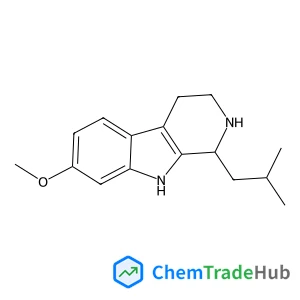
1-Isobutyl-7-methoxy-2,3,4,9-tetrahydro-1H-beta-carboline
CAS Number:
175975-76-5
Molecular Formula:
C16H22N2O
![5'-Fluoro-[2,3'-biindolinylidene]-2',3-dione structure](https://static.chemtradehub.com/structs/251/251903-00-1-9cb1.webp "5'-Fluoro-[2,3'-biindolinylidene]-2',3-dione structure")
Recommended Suppliers





Disclaimer
This page provides academic journal information for reference and research purposes only. We are not affiliated with any journal publishers and do not handle publication submissions. For publication-related inquiries, please contact the respective journal publishers directly.
If you notice any inaccuracies in the information displayed, please contact us at support@chemtradehub.com. We will promptly review and address your concerns.