












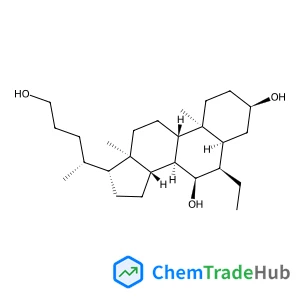
(3alpha,5beta,6alpha,7alpha)-6-Ethylcholane-3,7,24-triol
CAS Number:
1537866-49-1
Molecular Formula:
C26H46O3
Lin Li, Hang Li
The past decades have witnessed significant advancements in the growth of two-dimensional (2D) materials, offering a wide range of potential applications in the fields of electronics, optoelectronics, energy storage, sensors, catalysis, and biomedical treatments. Epitaxial heterostructures based on 2D materials, including vertical heterostructures, lateral structures, and superlattices, have emerged as novel material systems to manipulate the intrinsic properties and unlock new functionalities. Therefore, the development of controllable preparation methods for tailored epitaxial heterostructures serves as a fundamental basis for extensive property investigation and further application exploration. However, this pursuit presents formidable challenges due to the incomplete understanding of growth mechanisms and limited designable strategies. Chemical vapor deposition (CVD) is deemed as a promising and versatile platform for the controlled synthesis of 2D materials, especially with regard to achieving lattice matching, a critical factor in epitaxial growth. Consequently, CVD holds potential to overcome these hurdles. In this Feature Article, we present our recent breakthroughs in the controllable preparation of 2D epitaxial heterostructures using CVD. Our focus revolves around the processes of morphology engineering, interface engineering, size and density engineering, and striking the delicate balance between growth and etching. Using molten metals or alloys as primary catalysts, we have achieved remarkable control over the fabrication of graphene/hexagonal boron nitride (hBN) super-ordered arrays, enabled multistage etching of graphene/hBN heterostructures, and successfully realized the construction of graphene/MXene heterostructures. Furthermore, our research endeavors encompass both bottom-up and top-down fabrication methods, offering a novel perspective on the synthesis of 2D epitaxial heterostructures. The resulting products hold immense potential for enhancing the efficiency of critical reactions such as oxygen reduction, CO2 reduction, and hydrogen evolution reactions. By presenting our methodologies for obtaining 2D epitaxial heterostructures through CVD, we aspire to inspire fellow researchers in this field to devise more feasible and controllable fabrication techniques while also fostering the exploration of diverse heterostructure configurations. Together, these advancements will undoubtedly pave the way for further breakthroughs in atomic manufacturing and novel applications.
Ziling Ma, Yuanhua Wang
DOI: 10.1039/C8OB01997E
Ruby Nagelkerke, Gregory R. J. Thatcher, Erwin Buncel
DOI: 10.1039/B208408B
Madhu Ramesh, Pandeeswar Makam, Chandrashekhar Voshavar, Harshavardhan Khare, Kolla Rajasekhar, Suryanarayanarao Ramakumar, Thimmaiah Govindaraju
DOI: 10.1039/C8OB01691G
Yadong Pang, Ryoto Kojima, Hajime Ito
DOI: 10.1039/C8OB01778F
Mu Chen, Jia-Qing Cao, Song Ang, Ting-Ni Zeng, Ni-Ping Li, Tang-Jia Yang, Jun-Shan Liu, Yan Wu, Wen-Cai Ye, Lei Wang
DOI: 10.1039/D1QO01629F
Fangyi Li, Changfu Qiu, Guangwei Yin, Chunhua Wang, Zheng Li
DOI: 10.1039/C8OB01941J
Tine Risgaard, Kurt V. Gothelf, Karl Anker Jørgensen
DOI: 10.1039/B208859M
David Hall, Henry S. Rzepa
DOI: 10.1039/B210415F
Jing Xu, Da-Jun Zheng, Mi-Mi Su, Yan-Chi Chen, Qing-Cai Jiao
DOI: 10.1039/C8OB01908H
Jason P. Holland, Harald Scherer, Stephan Maus, Tobias Stemler, Hendrik Bohnenberger, Samer Ezziddin, Philipp Kurz
DOI: 10.1039/C8OB01981A
N-(4-Methoxybenzyl)-2-pyridinamine (CAS: 52818-63-0) is increasingly being used ...
When handling Ethyl 4-(2-chlorophenyl)-1,3-thiazole-2-carboxylate, appropriate p...
Diethyldiselane (CAS: 628-39-7) is classified under the Globally Harmonized Syst...
The market for oxocopper (CAS: 12053-18-8) is primarily driven by its use in cat...
The market for 5-{[(2-Methyl-2-propanyl)oxy]carbonyl}-5-azaspiro[2.4]heptane-7-c...
2-(1-Pyrrolidinyl)-4-pyridinamine is a chemical compound with the CAS number 359...
2-(3-Pyridinyl)-1-azabicyclo[2.2.2]octane (CAS: 91556-75-1) is a crystalline sol...
(S)-Alpha-allyl-proline hydrochloride is usually synthesized via a Wittig reacti...
3-Methyl-1,2-oxazole-5-carboxylic acid (CAS: 4857-42-5) is an organic compound w...
Lys-SMCC-DM1 is synthesized via a multi-step process involving the coupling of S...

ChemComm publishes urgent research which is of outstanding significance and interest to experts in the field, while also appealing to the journal’s broad chemistry readership. Our communication format is ideally suited to short, urgent studies that are of such importance that they require accelerated publication. Our scope covers all topics in chemistry, and research at the interface of chemistry and other disciplines (such as materials science, nanoscience, physics, engineering and biology) where there is a significant novelty in the chemistry aspects. Major topic areas covered include: Analytical Chemistry Catalysis Chemical Biology and medicinal chemistry Computational Chemistry and Machine Learning Energy and sustainable chemistry Environmental Chemistry Green Chemistry Inorganic Chemistry Materials Chemistry Nanoscience Organic Chemistry Physical Chemistry Polymer Chemistry Supramolecular Chemistry
![1,10-bis(3,5-dimethylphenyl)-12-hydroxy-4,5,6,7-tetrahydroiindeno[7,1-de:1',7'-fg][1,3,2]dioxaphosphocine 12-oxide structure](https://static.chemtradehub.com/structs/141/1412439-82-7-b9a9.webp "1,10-bis(3,5-dimethylphenyl)-12-hydroxy-4,5,6,7-tetrahydroiindeno[7,1-de:1',7'-fg][1,3,2]dioxaphosphocine 12-oxide structure")
![(2R,6S)-6-[(Benzyloxy)methyl]-4-{[(2-methyl-2-propanyl)oxy]carbonyl}-2-morpholinecarboxylic acid structure](https://static.chemtradehub.com/structs/109/1093085-91-6-3382.webp "(2R,6S)-6-[(Benzyloxy)methyl]-4-{[(2-methyl-2-propanyl)oxy]carbonyl}-2-morpholinecarboxylic acid structure")




