












Optimized synthesis and indium complex formation with the bifunctional chelator NODIA-Me
Literature Information
Publication Date
2018-09-24
DOI
10.1039/C8OB01981A
Impact Factor
3.876
Authors
Jason P. Holland, Harald Scherer, Stephan Maus, Tobias Stemler, Hendrik Bohnenberger, Samer Ezziddin, Philipp Kurz
View Original
Abstract
The bifunctional chelator NODIA-Me holds promise for radiopharmaceutical development. NODIA-Me is based on the macrocycle TACN (1,4,7-triazacyclononane) and incorporates two additional methylimidazole arms for metal chelation and an acetic acid residue for bioconjugation. The original two step synthesis was less than optimal due to low yields and the requirement of semi-preparative RP-HPLC purifications. Here, the overall yield for the preparation of NODIA-Me was improved two- to five-fold via two synthetic routes using different protection/deprotection techniques. This way, it was possible (1) to prepare of NODIA-Me on multi-gram scale and (2) to avoid time-consuming HPLC purifications. Inspired by recent results with nat/68Ga3+, preliminary studies on the radiolabeling properties and complex formation of NODIA-Me with nat/111In3+ were performed. Quantitative radiochemical yields were achieved at ambient temperature providing molar activities of ∼30 MBq nmol−1, which could be increased to ∼240 MBq nmol−1 at 95 °C. At r.t., pH 5.5 was optimal for 111In-labeling, but quantitative yields were also achieved in the pH range from 5.5 to 8.2, when the reaction temperature was increased. Stability tests of 111In complexes in vitro revealed high kinetic stabilities in serum and ligand challenge experiments, which is a consequence of the formation of rigid 1 : 1 indium chelates as shown by NMR studies in solution. In summary, the new synthetic routes afford the BFC NODIA-Me in high yields and on large scale. Further, 111In complexation experiments broaden the scope of our chelating system for radiopharmaceutical applications.
Related Literature
Photo-responsive gel droplet as a nano- or pico-litre container comprising a supramolecular hydrogel
Shinji Matsumoto, Satoshi Yamaguchi, Atsuhiko Wada, Toshihiro Matsui, Masato Ikeda
2008-02-25
Communication
DOI: 10.1039/B719004B
Inhibition and dispersion of proteobacterial biofilms
Justin J. Richards, Robert W. Huigens III, T. Eric Ballard, Anne Basso, John Cavanagh, Christian Melander
2008-02-08
Communication
DOI: 10.1039/B719802G
A new enantiopure unsaturated dicarboxylate as a 4-connected unit in a flexible homochiral PtS-type framework
Jian Zhang, Xianhui Bu
2008-02-11
Communication
DOI: 10.1039/B719368H
Macromolecular complexation of poly(methylenephosphine) to gold(i): a facile route to highly metallated polymers
Bronwyn H. Gillon, Brian O. Patrick, Derek P. Gates
2008-03-28
Communication
DOI: 10.1039/B719199E
Unimolecular binary half-adders with orthogonal chemical inputs
Lu Zhang, Wesley A. Whitfield, Lei Zhu
2008-02-20
Communication
DOI: 10.1039/B719644J
Template-controlled topochemical photodimerization based on “organometallic macrocycles” through single-crystal to single-crystal transformation
Ying-Feng Han, Yue-Jian Lin, Wei-Guo Jia, Guo-Liang Wang, Guo-Xin Jin
2008-02-11
Communication
DOI: 10.1039/B717554J
Fluorescence microscopy coupled to electrochemistry: a powerful tool for the controlled electrochemical switch of fluorescent molecules
Fabien Miomandre, Rachel Meallet-Renault, Jean-Jacques Vachon, Robert Bernard Pansu, Pierre Audebert
2008-02-19
Communication
DOI: 10.1039/B718899D
Palladium-catalyzed three-component coupling of arynes with allylic acetates or halides and terminal alkynes promoted by cuprous iodide
Sivakolundu Bhuvaneswari, Masilamani Jeganmohan, Ming-Che Yang, Chien-Hong Cheng
2008-03-03
Communication
DOI: 10.1039/B800118A
You might also like
Compound Q&A
What is the market or research trend for N-(4-Methoxybenzyl)-2-pyridinamine (CAS: 52818-63-0)?
N-(4-Methoxybenzyl)-2-pyridinamine (CAS: 52818-63-0) is increasingly being used ...
52818-63-0N-(4-Methoxybenzyl)-...
Compound Q&A
What precautions should be taken when handling Ethyl 4-(2-chlorophenyl)-1,3-thiazole-2-carboxylate (CAS: 1050507-06-6)?
When handling Ethyl 4-(2-chlorophenyl)-1,3-thiazole-2-carboxylate, appropriate p...
1050507-06-6Ethyl 4-(2-chlorophe...
Compound Q&A
What regulatory guidelines apply to diethyldiselane (CAS: 628-39-7)?
Diethyldiselane (CAS: 628-39-7) is classified under the Globally Harmonized Syst...
628-39-7Diethyldiselane
Compound Q&A
What is the market or research trend for oxocopper (CAS: 12053-18-8)?
The market for oxocopper (CAS: 12053-18-8) is primarily driven by its use in cat...
12053-18-8oxocopper; oxo-(oxoc...
Compound Q&A
What is the market or research trend for 5-{[(2-Methyl-2-propanyl)oxy]carbonyl}-5-azaspiro[2.4]heptane-7-carboxylic acid?
The market for 5-{[(2-Methyl-2-propanyl)oxy]carbonyl}-5-azaspiro[2.4]heptane-7-c...
1268519-54-55-{[(2-Methyl-2-prop...
Compound Q&A
What is 2-(1-Pyrrolidinyl)-4-pyridinamine (CAS: 35981-63-6)?
2-(1-Pyrrolidinyl)-4-pyridinamine is a chemical compound with the CAS number 359...
35981-63-62-(1-Pyrrolidinyl)-4...
Compound Q&A
What are the physical and chemical properties of 2-(3-Pyridinyl)-1-azabicyclo[2.2.2]octane (CAS: 91556-75-1)?
2-(3-Pyridinyl)-1-azabicyclo[2.2.2]octane (CAS: 91556-75-1) is a crystalline sol...
91556-75-12-(3-Pyridinyl)-1-az...
Compound Q&A
How is (S)-Alpha-allyl-proline hydrochloride (CAS: 129704-91-2) typically synthesized?
(S)-Alpha-allyl-proline hydrochloride is usually synthesized via a Wittig reacti...
129704-91-2(S)-Alpha-allyl-prol...
Compound Q&A
What is 3-Methyl-1,2-oxazole-5-carboxylic acid (CAS: 4857-42-5)?
3-Methyl-1,2-oxazole-5-carboxylic acid (CAS: 4857-42-5) is an organic compound w...
4857-42-53-Methyl-1,2-oxazole...
Compound Q&A
How is Lys-SMCC-DM1 (CAS: 1281816-04-3) typically synthesized?
Lys-SMCC-DM1 is synthesized via a multi-step process involving the coupling of S...
1281816-04-3Lys-SMCC-DM1
Source Journal
Organic & Biomolecular Chemistry

CiteScore:
3.4
Self-citation Rate:
10.3%
Articles per Year:
1041
Organic & Biomolecular Chemistry (OBC) publishes original and high impact research and reviews in organic chemistry. We welcome research that shows new or significantly improved protocols or methodologies in total synthesis, synthetic methodology or physical and theoretical organic chemistry as well as research that shows a significant advance in the organic chemistry or molecular design aspects of chemical biology, catalysis, supramolecular and macromolecular chemistry, theoretical chemistry, mechanism-oriented physical organic chemistry, medicinal chemistry or natural products. Articles published in the journal should report new work which makes a highly-significant impact in the field. Routine and incremental work is generally not suitable for publication in the journal. More details about key areas of our scope are below. In all cases authors should include in their article clear rationale for why their research has been carried out.
Recommended Compounds
![1-oxaspiro[4.4]nonan-6-one structure](https://static.chemtradehub.com/structs/134/134179-01-4-e051.webp "1-oxaspiro[4.4]nonan-6-one structure")
![1-(1-Benzyl-1,2,3,6-tetrahydropyridin-4-yl)-1H-benzo[d]imidazol-2(3H)-one structure](https://static.chemtradehub.com/structs/603/60373-71-9-7dfb.webp "1-(1-Benzyl-1,2,3,6-tetrahydropyridin-4-yl)-1H-benzo[d]imidazol-2(3H)-one structure")
1-(1-Benzyl-1,2,3,6-tetrahydropyridin-4-yl)-1H-benzo[d]imidazol-2(3H)-one
CAS Number:
60373-71-9
Molecular Formula:
C19H19N3O
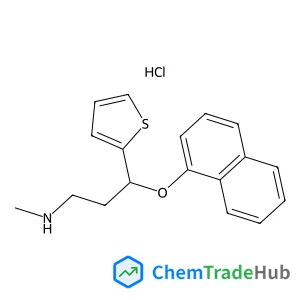
N-Methyl-3-(1-naphthyloxy)-3-(2-thienyl)-1-propanamine hydrochloride (1:1)
CAS Number:
1188266-11-6
Molecular Formula:
C18H20ClNOS
Recommended Suppliers





Disclaimer
This page provides academic journal information for reference and research purposes only. We are not affiliated with any journal publishers and do not handle publication submissions. For publication-related inquiries, please contact the respective journal publishers directly.
If you notice any inaccuracies in the information displayed, please contact us at support@chemtradehub.com. We will promptly review and address your concerns.