












Copper(i)-catalysed stereoselective debromoborylation of aliphatic 1,1-dibromo-1-alkenes with bis(pinacolato)diboron
Literature Information
Publication Date
2018-08-15
DOI
10.1039/C8OB01778F
Impact Factor
3.876
Authors
Yadong Pang, Ryoto Kojima, Hajime Ito
View Original
Abstract
A stereoselective debromoborylation of aliphatic 1,1-dibromo-1-alkenes to prepare (Z)-1-bromo-1-alkenylboronate esters using copper(I) catalysts was developed. The debromoborylation of various aliphatic 1,1-dibromo-1-alkenes in the presence of a copper(I) catalyst and bis(pinacolato)diboron proceeded smoothly to produce (Z)-1-bromo-1-alkenylboronate esters in good yields with only Z geometry.
Related Literature
A dinuclear ruthenium(ii) complex that functions as a label-free colorimetric sensor for DNA
Veronica Gonzalez, Tom Wilson, Izumi Kurihara, Arata Imai, Jim A. Thomas, Joe Otsuki
2008-03-20
Communication
DOI: 10.1039/B802073F
Role and substrate specificity of the Streptomyces coelicolor RedH enzyme in undecylprodiginine biosynthesis
Stuart W. Haynes, Paulina K. Sydor, Anna E. Stanley, Lijiang Song, Gregory L. Challis
2008-03-14
Communication
DOI: 10.1039/B801677A
Mutual induced coordination in halogen-bonded anionic assemblies with (6,3) cation-templated topologies
Pierangelo Metrangolo, Frank Meyer, Tullio Pilati, Giancarlo Terraneo
2008-01-14
Communication
DOI: 10.1039/B716879A
An unusual dianion equivalent from acylsilanes for the synthesis of substituted β-keto esters
Chris V. Galliford, Karl A. Scheidt
2008-03-10
Communication
DOI: 10.1039/B801597J
Blue light-emitting and hole-transporting amorphous molecular materials based on diarylaminobiphenyl-functionalized bimesitylenes
Jarugu Narasimha Moorthy, Parthasarathy Venkatakrishnan, Duo-Fong Huang, Tahsin J. Chow
2008-03-05
Communication
DOI: 10.1039/B718250C
Photoinduced CO release, cellular uptake and cytotoxicity of a tris(pyrazolyl)methane (tpm) manganese tricarbonyl complex
Johanna Niesel, Antonio Pinto, Harmel W. Peindy N'Dongo, Klaus Merz, Ingo Ott, Ronald Gust, Ulrich Schatzschneider
2008-02-08
Communication
DOI: 10.1039/B719075A
Chemical modifications of AFM tips for the study of molecular recognition events
Régis Barattin, Normand Voyer
2008-02-29
Feature Article
DOI: 10.1039/B614328H
One-step solid-state thermolysis of a metal–organic framework: a simple and facile route to large-scale of multiwalled carbon nanotubes
Linyun Chen, Junfeng Bai, Chunzhao Wang, Yi Pan, Manfred Scheer, Xiaozeng You
2008-01-31
Communication
DOI: 10.1039/B718476J
You might also like
Compound Q&A
What is the market or research trend for N-(4-Methoxybenzyl)-2-pyridinamine (CAS: 52818-63-0)?
N-(4-Methoxybenzyl)-2-pyridinamine (CAS: 52818-63-0) is increasingly being used ...
52818-63-0N-(4-Methoxybenzyl)-...
Compound Q&A
What precautions should be taken when handling Ethyl 4-(2-chlorophenyl)-1,3-thiazole-2-carboxylate (CAS: 1050507-06-6)?
When handling Ethyl 4-(2-chlorophenyl)-1,3-thiazole-2-carboxylate, appropriate p...
1050507-06-6Ethyl 4-(2-chlorophe...
Compound Q&A
What regulatory guidelines apply to diethyldiselane (CAS: 628-39-7)?
Diethyldiselane (CAS: 628-39-7) is classified under the Globally Harmonized Syst...
628-39-7Diethyldiselane
Compound Q&A
What is the market or research trend for oxocopper (CAS: 12053-18-8)?
The market for oxocopper (CAS: 12053-18-8) is primarily driven by its use in cat...
12053-18-8oxocopper; oxo-(oxoc...
Compound Q&A
What is the market or research trend for 5-{[(2-Methyl-2-propanyl)oxy]carbonyl}-5-azaspiro[2.4]heptane-7-carboxylic acid?
The market for 5-{[(2-Methyl-2-propanyl)oxy]carbonyl}-5-azaspiro[2.4]heptane-7-c...
1268519-54-55-{[(2-Methyl-2-prop...
Compound Q&A
What is 2-(1-Pyrrolidinyl)-4-pyridinamine (CAS: 35981-63-6)?
2-(1-Pyrrolidinyl)-4-pyridinamine is a chemical compound with the CAS number 359...
35981-63-62-(1-Pyrrolidinyl)-4...
Compound Q&A
What are the physical and chemical properties of 2-(3-Pyridinyl)-1-azabicyclo[2.2.2]octane (CAS: 91556-75-1)?
2-(3-Pyridinyl)-1-azabicyclo[2.2.2]octane (CAS: 91556-75-1) is a crystalline sol...
91556-75-12-(3-Pyridinyl)-1-az...
Compound Q&A
How is (S)-Alpha-allyl-proline hydrochloride (CAS: 129704-91-2) typically synthesized?
(S)-Alpha-allyl-proline hydrochloride is usually synthesized via a Wittig reacti...
129704-91-2(S)-Alpha-allyl-prol...
Compound Q&A
What is 3-Methyl-1,2-oxazole-5-carboxylic acid (CAS: 4857-42-5)?
3-Methyl-1,2-oxazole-5-carboxylic acid (CAS: 4857-42-5) is an organic compound w...
4857-42-53-Methyl-1,2-oxazole...
Compound Q&A
How is Lys-SMCC-DM1 (CAS: 1281816-04-3) typically synthesized?
Lys-SMCC-DM1 is synthesized via a multi-step process involving the coupling of S...
1281816-04-3Lys-SMCC-DM1
Source Journal
Organic & Biomolecular Chemistry

CiteScore:
3.4
Self-citation Rate:
10.3%
Articles per Year:
1041
Organic & Biomolecular Chemistry (OBC) publishes original and high impact research and reviews in organic chemistry. We welcome research that shows new or significantly improved protocols or methodologies in total synthesis, synthetic methodology or physical and theoretical organic chemistry as well as research that shows a significant advance in the organic chemistry or molecular design aspects of chemical biology, catalysis, supramolecular and macromolecular chemistry, theoretical chemistry, mechanism-oriented physical organic chemistry, medicinal chemistry or natural products. Articles published in the journal should report new work which makes a highly-significant impact in the field. Routine and incremental work is generally not suitable for publication in the journal. More details about key areas of our scope are below. In all cases authors should include in their article clear rationale for why their research has been carried out.
Recommended Compounds
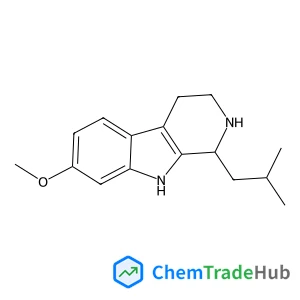
1-Isobutyl-7-methoxy-2,3,4,9-tetrahydro-1H-beta-carboline
CAS Number:
175975-76-5
Molecular Formula:
C16H22N2O
![1-[6-(1H-Imidazol-1-yl)-3-pyridinyl]methanamine structure](https://static.chemtradehub.com/structs/914/914637-08-4-8825.webp "1-[6-(1H-Imidazol-1-yl)-3-pyridinyl]methanamine structure")

(3alpha,5beta,6alpha,7alpha)-6-Ethylcholane-3,7,24-triol
CAS Number:
1537866-49-1
Molecular Formula:
C26H46O3
Recommended Suppliers






Disclaimer
This page provides academic journal information for reference and research purposes only. We are not affiliated with any journal publishers and do not handle publication submissions. For publication-related inquiries, please contact the respective journal publishers directly.
If you notice any inaccuracies in the information displayed, please contact us at support@chemtradehub.com. We will promptly review and address your concerns.