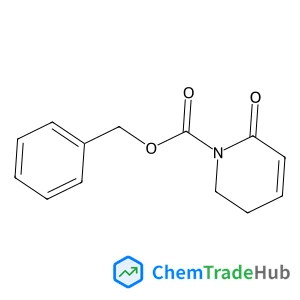
Benzyl 6-oxo-3,6-dihydro-1(2H)-pyridinecarboxylate
CAS Number:
725746-35-0
Molecular Formula:
C13H13NO3
Mu Chen, Jia-Qing Cao, Song Ang, Ting-Ni Zeng, Ni-Ping Li, Tang-Jia Yang, Jun-Shan Liu, Yan Wu, Wen-Cai Ye, Lei Wang
Six rearranged sesquiterpenoid dimers and monomers with four types of new skeletons, meso-eugenunilone A (meso-1), (+)- and (−)-eugenunilones B−F [(+)- and (−)-2–6], along with two new biogenetically related members (+)- and (−)-eugenunilones G−H [(+)- and (−)-7 and 8] and a known one (9), were isolated from the fruits of Eugenia uniflora. Compounds 1 and 2 were two unprecedented dimers with caged tricyclo[4.4.0.02,8]decane units. Compounds 3 and 4 represent the first examples of sesquiterpenoids possessing a caged tricyclo[4.3.1.03,7]decane core and an isopentyl substituted bicyclo[3.2.1]octane backbone, respectively, while compounds 5 and 6 share a tricyclo[4.4.0.02,10]decane scaffold which is found in nature for the first time. In particular, compounds 2–9 were successfully separated into eight pairs of optically pure enantiomers by chiral HPLC separation. Their structures and absolute configurations were unambiguously established by a combination of spectroscopic data, X-ray diffraction analysis, and electronic circular dichroism (ECD) calculations. A hypothetical biogenetic pathway for these new compounds was proposed. It is interesting that these diverse frameworks were all derived from the same bicyclic precursor (9). In addition, compounds 2, 4, and 6 showed moderate anti-inflammatory effects in zebrafish acute inflammatory models.

NDT & E International

Biocatalysis and Biotransformation

Main Group Chemistry

Bioorganic & Medicinal Chemistry

Medicinal Chemistry Research

Critical Reviews in Solid State and Materials Sciences

Herald of the Russian Academy of Sciences

Electroanalysis

Heteroatom Chemistry

Bioorganic & Medicinal Chemistry Letters
Ying-Feng Han, Yue-Jian Lin, Wei-Guo Jia, Guo-Liang Wang, Guo-Xin Jin
DOI: 10.1039/B717554J
Hideyuki Yoshiyama, Norio Shibata, Takefumi Sato, Shuichi Nakamura, Takeshi Toru
DOI: 10.1039/B800918J
Meiyan Fu, Yi Xiao, Xuhong Qian, Defeng Zhao, Yufang Xu
DOI: 10.1039/B718544H
Matthew J. Fuchter, Catherine J. Smith, Alistair Boyer, Simon Saubern, John H. Ryan, Andrew B. Holmes
DOI: 10.1039/B801537F
Chuan-Feng Chen, Zhi-Tang Huang
DOI: 10.1039/B800258D
Sankar Muniappan, Sophia Lipstman, Israel Goldberg
DOI: 10.1039/B719625C
Veronica Gonzalez, Tom Wilson, Izumi Kurihara, Arata Imai, Jim A. Thomas, Joe Otsuki
DOI: 10.1039/B802073F
DOI: 10.1039/B718628B
Jye-Shane Yang, Jyu-Lun Yan
DOI: 10.1039/B713428M
N-(4-Methoxybenzyl)-2-pyridinamine (CAS: 52818-63-0) is increasingly being used ...
When handling Ethyl 4-(2-chlorophenyl)-1,3-thiazole-2-carboxylate, appropriate p...
Diethyldiselane (CAS: 628-39-7) is classified under the Globally Harmonized Syst...
The market for oxocopper (CAS: 12053-18-8) is primarily driven by its use in cat...
The market for 5-{[(2-Methyl-2-propanyl)oxy]carbonyl}-5-azaspiro[2.4]heptane-7-c...
2-(1-Pyrrolidinyl)-4-pyridinamine is a chemical compound with the CAS number 359...
2-(3-Pyridinyl)-1-azabicyclo[2.2.2]octane (CAS: 91556-75-1) is a crystalline sol...
(S)-Alpha-allyl-proline hydrochloride is usually synthesized via a Wittig reacti...
3-Methyl-1,2-oxazole-5-carboxylic acid (CAS: 4857-42-5) is an organic compound w...
Lys-SMCC-DM1 is synthesized via a multi-step process involving the coupling of S...

Organic Chemistry Frontiers publishes high-quality research from across organic chemistry. Emphases are placed on studies that make significant contributions to the field of organic chemistry by reporting either new or significantly improved protocols or methodologies. Topics include, but are not limited to the following: Organic synthesis Development of synthetic methodologies Catalysis Natural products Functional organic materials Supramolecular and macromolecular chemistry Physical and computational organic chemistry
![1-(1-Benzyl-1,2,3,6-tetrahydropyridin-4-yl)-1H-benzo[d]imidazol-2(3H)-one structure](https://static.chemtradehub.com/structs/603/60373-71-9-7dfb.webp "1-(1-Benzyl-1,2,3,6-tetrahydropyridin-4-yl)-1H-benzo[d]imidazol-2(3H)-one structure")
![N-{15-[(2,5-Dioxo-1-pyrrolidinyl)oxy]-15-oxo-3,6,9,12-tetraoxapentadec-1-yl}-2-(2-propyn-1-yloxy)acetamide structure](https://static.chemtradehub.com/structs/210/2101206-92-0-2eb5.webp "N-{15-[(2,5-Dioxo-1-pyrrolidinyl)oxy]-15-oxo-3,6,9,12-tetraoxapentadec-1-yl}-2-(2-propyn-1-yloxy)acetamide structure")