












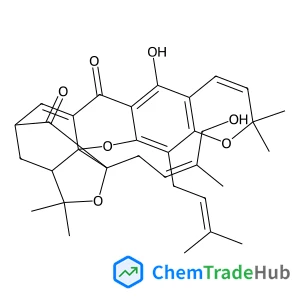
Metal- and base-free synthesis of functionalized α,α-difluoroimines via electrophilic fluorination of N-substituted enamines
Literature Information
Publication Date
2018-09-13
DOI
10.1039/C8OB01941J
Impact Factor
3.876
Authors
Fangyi Li, Changfu Qiu, Guangwei Yin, Chunhua Wang, Zheng Li
View Original
Abstract
A metal- and base-free synthesis of functionalized α,α-difluoroimines is presented. The reaction features mild conditions, high E/Z control and broad functional group tolerance. The utility of the products was demonstrated through valuable synthetic transformations.
Related Literature
Rapid formation of metal–organic nano-capsules gives new insight into the self-assembly process‡
Nicholas P. Power, John E. Warren, Jerry L. Atwood
2008-02-27
Communication
DOI: 10.1039/B719769A
Chromonic liquid crystals: properties and applications as functional materials
Suk-Wah Tam-Chang, Liming Huang
2008-01-07
Feature Article
DOI: 10.1039/B714319B
Chemoenzymatic synthesis of prodigiosin analogues—exploring the substrate specificity of PigC
Suresh R. Chawrai, Neil R. Williamson, George P. C. Salmond, Finian J. Leeper
2008-02-05
Communication
DOI: 10.1039/B719353J
A near-infrared dye for multichannel imaging
Wellington Pham, Lauren Cassell, Amelie Gillman, Dmitry Koktysh, John C. Gore
2008-02-28
Communication
DOI: 10.1039/B719028J
Construction of aryl-substituted triquinanes through the interrupted Nazarov reaction
Curtis J. Rieder, Ryan J. Fradette, F. G. West
2008-02-25
Communication
DOI: 10.1039/B800800K
Use of ionic liquids (ILs) for the IL-anion size-dependent formation of Cr, Mo and W nanoparticles from metal carbonyl M(CO)6 precursors
Engelbert Redel, Ralf Thomann, Christoph Janiak
2008-03-14
Communication
DOI: 10.1039/B718055A
Synthesis of iron oxide nanoparticles in a microfluidic device: preliminary results in a coaxial flow millichannel
Ali Abou Hassan, Olivier Sandre, Valérie Cabuil, Patrick Tabeling
2008-02-18
Communication
DOI: 10.1039/B719550H
Preparation of silyl substituted crotylzinc reagents and their highly diastereoselectiveaddition to carbonyl compounds
Matthew D. Helm, Peter Mayer, Paul Knochel
2008-03-19
Communication
DOI: 10.1039/B802157K
Cu-catalyzed stereoselective conjugate addition of arylboronic acids to alkynoates
Yoshihiko Yamamoto, Naohiro Kirai, Yu Harada
2008-03-25
Communication
DOI: 10.1039/B802231C
You might also like
Compound Q&A
What is the market or research trend for N-(4-Methoxybenzyl)-2-pyridinamine (CAS: 52818-63-0)?
N-(4-Methoxybenzyl)-2-pyridinamine (CAS: 52818-63-0) is increasingly being used ...
52818-63-0N-(4-Methoxybenzyl)-...
Compound Q&A
What precautions should be taken when handling Ethyl 4-(2-chlorophenyl)-1,3-thiazole-2-carboxylate (CAS: 1050507-06-6)?
When handling Ethyl 4-(2-chlorophenyl)-1,3-thiazole-2-carboxylate, appropriate p...
1050507-06-6Ethyl 4-(2-chlorophe...
Compound Q&A
What regulatory guidelines apply to diethyldiselane (CAS: 628-39-7)?
Diethyldiselane (CAS: 628-39-7) is classified under the Globally Harmonized Syst...
628-39-7Diethyldiselane
Compound Q&A
What is the market or research trend for oxocopper (CAS: 12053-18-8)?
The market for oxocopper (CAS: 12053-18-8) is primarily driven by its use in cat...
12053-18-8oxocopper; oxo-(oxoc...
Compound Q&A
What is the market or research trend for 5-{[(2-Methyl-2-propanyl)oxy]carbonyl}-5-azaspiro[2.4]heptane-7-carboxylic acid?
The market for 5-{[(2-Methyl-2-propanyl)oxy]carbonyl}-5-azaspiro[2.4]heptane-7-c...
1268519-54-55-{[(2-Methyl-2-prop...
Compound Q&A
What is 2-(1-Pyrrolidinyl)-4-pyridinamine (CAS: 35981-63-6)?
2-(1-Pyrrolidinyl)-4-pyridinamine is a chemical compound with the CAS number 359...
35981-63-62-(1-Pyrrolidinyl)-4...
Compound Q&A
What are the physical and chemical properties of 2-(3-Pyridinyl)-1-azabicyclo[2.2.2]octane (CAS: 91556-75-1)?
2-(3-Pyridinyl)-1-azabicyclo[2.2.2]octane (CAS: 91556-75-1) is a crystalline sol...
91556-75-12-(3-Pyridinyl)-1-az...
Compound Q&A
How is (S)-Alpha-allyl-proline hydrochloride (CAS: 129704-91-2) typically synthesized?
(S)-Alpha-allyl-proline hydrochloride is usually synthesized via a Wittig reacti...
129704-91-2(S)-Alpha-allyl-prol...
Compound Q&A
What is 3-Methyl-1,2-oxazole-5-carboxylic acid (CAS: 4857-42-5)?
3-Methyl-1,2-oxazole-5-carboxylic acid (CAS: 4857-42-5) is an organic compound w...
4857-42-53-Methyl-1,2-oxazole...
Compound Q&A
How is Lys-SMCC-DM1 (CAS: 1281816-04-3) typically synthesized?
Lys-SMCC-DM1 is synthesized via a multi-step process involving the coupling of S...
1281816-04-3Lys-SMCC-DM1
Source Journal
Organic & Biomolecular Chemistry

CiteScore:
3.4
Self-citation Rate:
10.3%
Articles per Year:
1041
Organic & Biomolecular Chemistry (OBC) publishes original and high impact research and reviews in organic chemistry. We welcome research that shows new or significantly improved protocols or methodologies in total synthesis, synthetic methodology or physical and theoretical organic chemistry as well as research that shows a significant advance in the organic chemistry or molecular design aspects of chemical biology, catalysis, supramolecular and macromolecular chemistry, theoretical chemistry, mechanism-oriented physical organic chemistry, medicinal chemistry or natural products. Articles published in the journal should report new work which makes a highly-significant impact in the field. Routine and incremental work is generally not suitable for publication in the journal. More details about key areas of our scope are below. In all cases authors should include in their article clear rationale for why their research has been carried out.
Recommended Compounds
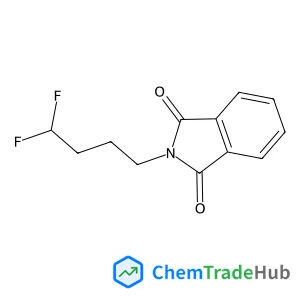
2-(4,4-Difluorobutyl)-1H-isoindole-1,3(2H)-dione
CAS Number:
1265341-14-7
Molecular Formula:
C12H11F2NO2
![1-[6-(1H-Imidazol-1-yl)-3-pyridinyl]methanamine structure](https://static.chemtradehub.com/structs/914/914637-08-4-8825.webp "1-[6-(1H-Imidazol-1-yl)-3-pyridinyl]methanamine structure")
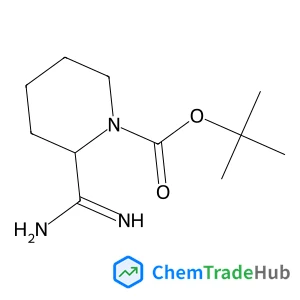
2-Methyl-2-propanyl 2-carbamimidoyl-1-piperidinecarboxylate
CAS Number:
1258640-98-0
Molecular Formula:
C11H21N3O2
![N-{[(2-Methyl-2-propanyl)oxy]carbonyl}-L-methionylglycine structure](https://static.chemtradehub.com/structs/234/23446-03-9-e1e5.webp "N-{[(2-Methyl-2-propanyl)oxy]carbonyl}-L-methionylglycine structure")
N-{[(2-Methyl-2-propanyl)oxy]carbonyl}-L-methionylglycine
CAS Number:
23446-03-9
Molecular Formula:
C12H22N2O5S
Recommended Suppliers





Disclaimer
This page provides academic journal information for reference and research purposes only. We are not affiliated with any journal publishers and do not handle publication submissions. For publication-related inquiries, please contact the respective journal publishers directly.
If you notice any inaccuracies in the information displayed, please contact us at support@chemtradehub.com. We will promptly review and address your concerns.