Front cover

Literature Information

Publication Date 2021-10-19
DOI 10.1039/D1PY90133H
Impact Factor 5.582
Authors


View Original

Abstract

A graphical abstract is available for this content

Related Literature

Back cover

Front/Back Matter

DOI: 10.1039/B817550K

Synthesis of 3-hydroxy-1-alkenylboronates viaphosphine stabilized borylzirconacyclopropenes‡

Alina Botvinik, Abraham Rubinstein, Morris Srebnik

2008-09-29 Communication

DOI: 10.1039/B811287H

In vivo studies of a platinum(ii) metallointercalator

Dianne M. Fisher, Ronald R. Fenton, Janice R. Aldrich-Wright

2008-09-26 Communication

DOI: 10.1039/B811723C

(κ2-P,S)Pt(benzyl) complexes derived from 1/3-PiPr2-2-StBu-indene: facile synthesis of carbanion- and borate-containing zwitterions

Kevin D. Hesp, Robert McDonald, Michael J. Ferguson, Gabriele Schatte, Mark Stradiotto

2008-10-06 Communication

DOI: 10.1039/B813421A

Click chemistry assembly of G-quadruplex ligands incorporating a diarylurea scaffold and triazole linkers

William C. Drewe, Stephen Neidle

2008-09-30 Communication

DOI: 10.1039/B814576H

Molecular BioSystems issue 11 contents pages

Front/Back Matter

DOI: 10.1039/B817179N

A two-step spin crossover mononuclear iron(ii) complex with a [HS–LS–LS] intermediate phase

Sylvestre Bonnet, Maxime A. Siegler, José Sánchez Costa, Gábor Molnár, Azzedine Bousseksou, Anthony L. Spek, Patrick Gamez, Jan Reedijk

2008-09-29 Communication

DOI: 10.1039/B811746B

A non-oxide sol–gel route to synthesise silicon imidonitride monolithic gels and high surface area aerogels

Shereen Hassan, Andrew L. Hector, Jason R. Hyde, Ali Kalaji, David C. Smith

2008-09-12 Communication

DOI: 10.1039/B810317H

Synthesis and reactions of the first fluoroalkylated Ni(ii) N-confused porphyrins

Hua-Wei Jiang, Qing-Yun Chen, Ji-Chang Xiao, Yu-Cheng Gu

2008-09-22 Communication

DOI: 10.1039/B811831K

You might also like

Compound Q&A

What are the main uses of 1H-Indazole-6-carbonitrile (CAS: 141290-59-7)?

1H-Indazole-6-carbonitrile finds applications in pharmaceuticals, where it serve...

141290-59-71H-Indazole-6-carbon...
Compound Q&A

How should waste containing Dioctyl (2E)-2-butenedioate (CAS: 2997-85-5) be handled?

Waste containing Dioctyl (2E)-2-butenedioate (CAS: 2997-85-5) should be collecte...

2997-85-5Dioctyl (2E)-2-buten...
Compound Q&A

What industries use Sodium [(1,2-benzoxazol-3-ylmethyl)sulfonyl]azanide (CAS: 68291-98-5)?

Sodium [(1,2-benzoxazol-3-ylmethyl)sulfonyl]azanide is primarily used in pharmac...

68291-98-5Sodium [(1,2-benzoxa...
Compound Q&A

Are there alternatives to Dimethyl 4-(4,4,5,5-tetramethyl-1,3,2-dioxaborolan-2-yl)-2,6-pyridinedicarboxylate (CAS: 741709-66-0) in synthesis?

Dimethyl 4-(4,4,5,5-tetramethyl-1,3,2-dioxaborolan-2-yl)-2,6-pyridinedicarboxyla...

741709-66-0Dimethyl 4-(4,4,5,5-...
Compound Q&A

How should waste containing 2-Fluoro-6-hydrazinopyridine (CAS: 80714-39-2) be handled?

Waste containing 2-Fluoro-6-hydrazinopyridine (CAS: 80714-39-2) should be manage...

80714-39-22-Fluoro-6-hydrazino...
Compound Q&A

What is 6-Formyl-2-pyridinecarboxylic acid (CAS: 499214-11-8)?

6-Formyl-2-pyridinecarboxylic acid is an organic compound with the molecular for...

499214-11-86-Formyl-2-pyridinec...
900874-91-13-(3,4-dimethoxyphen...
Compound Q&A

How is 9H-Tribenzo[b,d,f]azepine (CAS: 29875-73-8) typically synthesized?

9H-Tribenzo[b,d,f]azepine is typically synthesized via a multi-step process invo...

29875-73-89H-Tribenzo[b,d,f]az...
Compound Q&A

How is 1-Cyclopropyl-7-ethoxy-6-fluoro-8-methoxy-4-oxo-1,4-dihydro-3-quinolinecarboxylic acid (CAS: 1797982-51-4) typically synthesized?

1-Cyclopropyl-7-ethoxy-6-fluoro-8-methoxy-4-oxo-1,4-dihydro-3-quinolinecarboxyli...

1797982-51-41-Cyclopropyl-7-etho...
Compound Q&A

How should waste containing Methyl 3-oxo-1,2,3,4-tetrahydro-6-quinoxalinecarboxylate (CAS: 671820-52-3) be handled?

Waste containing Methyl 3-oxo-1,2,3,4-tetrahydro-6-quinoxalinecarboxylate (CAS: ...

671820-52-3Methyl 3-oxo-1,2,3,4...

Source Journal

Polymer Chemistry

Polymer Chemistry
CiteScore: 8.6
Self-citation Rate: 7.3%
Articles per Year: 457

Polymer Chemistry welcomes submissions in all areas of polymer science that have a strong focus on macromolecular chemistry. Manuscripts may cover a broad range of fields, yet no direct application focus is required.
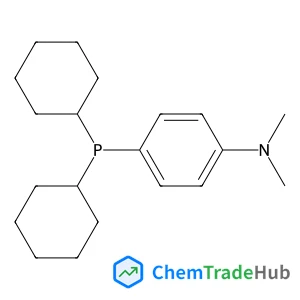
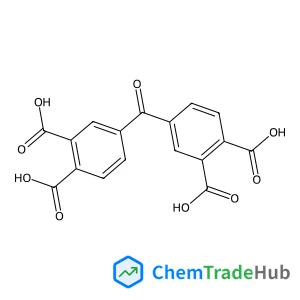
Recommended Compounds

Recommended Suppliers

Disclaimer
This page provides academic journal information for reference and research purposes only. We are not affiliated with any journal publishers and do not handle publication submissions. For publication-related inquiries, please contact the respective journal publishers directly.
If you notice any inaccuracies in the information displayed, please contact us at support@chemtradehub.com. We will promptly review and address your concerns.