












Back cover
Literature Information
Publication Date
DOI
10.1039/B817550K
Impact Factor
6.222
Authors
View Original
Abstract
The first page of this article is displayed as the abstract.
Related Literature
Living cationic polymerisation of styrene in an ionic liquid
R. Vijayaraghavan, D. R. MacFarlane
2004-02-13
Communication
DOI: 10.1039/B315100J
Insights into the reactivity and structure of silylene phosphonium ions
Rudolf Pietschnig
2004-01-30
Communication
DOI: 10.1039/B315001A
Nucleic acid binding properties of thyminyl and adeninyl pyrrolidine-amideoligonucleotide mimics (POM)
T. H. Samuel Tan, David T. Hickman, Jordi Morral, Ian G. Beadham, Jason Micklefield
2004-01-28
Communication
DOI: 10.1039/B315768G
Easy access to diastereomerically pure platinacycles
Concepción López, Amparo Caubet, Sonia Pérez, Xavier Solans, Mercè Font-Bardía
2004-01-27
Communication
DOI: 10.1039/B315157C
Novel imprinted soluble microgels with hydrolytic catalytic activity
Stacey C. Maddock, Pamela Pasetto, Marina Resmini
2004-02-06
Communication
DOI: 10.1039/B312631E
Inherent helicity in an extended tris-bipyridyl molecular cage
David F. Perkins, Leonard F. Lindoy, George V. Meehan, Peter Turner
2003-11-20
Communication
DOI: 10.1039/B312716H
Preparation and electrochemical behaviour of hydrophobic vitamin B12 covalently immobilized onto platinum electrode
Hisashi Shimakoshi, Mami Tokunaga, Keita Kuroiwa, Nobuo Kimizuka, Yoshio Hisaeda
2003-12-02
Communication
DOI: 10.1039/B309457J
Heterogeneous colorimetric sensor for mercuric salts
Emilio Palomares, Ramón Vilar, James R. Durrant
2004-01-19
Communication
DOI: 10.1039/B314138A
Exploration of the pentacyano-cyclo-pentadienide ion, C5(CN)5−, as a weakly coordinating anion and potential superacid conjugate base. Silylation and protonation
Christopher Richardson, Christopher A. Reed
2004-02-16
Communication
DOI: 10.1039/B316122F
Stabilization of D5h and C2v valence tautomers of the croconate dianion
Chi-Keung Lam, Mei-Fun Cheng, Chi-Lun Li, Jie-Peng Zhang, Xiao-Ming Chen, Wai-Kee Li, Thomas C. W. Mak
2003-12-18
Communication
DOI: 10.1039/B312545A
You might also like
Compound Q&A
What are the main uses of 1H-Indazole-6-carbonitrile (CAS: 141290-59-7)?
1H-Indazole-6-carbonitrile finds applications in pharmaceuticals, where it serve...
141290-59-71H-Indazole-6-carbon...
Compound Q&A
How should waste containing Dioctyl (2E)-2-butenedioate (CAS: 2997-85-5) be handled?
Waste containing Dioctyl (2E)-2-butenedioate (CAS: 2997-85-5) should be collecte...
2997-85-5Dioctyl (2E)-2-buten...
Compound Q&A
What industries use Sodium [(1,2-benzoxazol-3-ylmethyl)sulfonyl]azanide (CAS: 68291-98-5)?
Sodium [(1,2-benzoxazol-3-ylmethyl)sulfonyl]azanide is primarily used in pharmac...
68291-98-5Sodium [(1,2-benzoxa...
Compound Q&A
Are there alternatives to Dimethyl 4-(4,4,5,5-tetramethyl-1,3,2-dioxaborolan-2-yl)-2,6-pyridinedicarboxylate (CAS: 741709-66-0) in synthesis?
Dimethyl 4-(4,4,5,5-tetramethyl-1,3,2-dioxaborolan-2-yl)-2,6-pyridinedicarboxyla...
741709-66-0Dimethyl 4-(4,4,5,5-...
Compound Q&A
How should waste containing 2-Fluoro-6-hydrazinopyridine (CAS: 80714-39-2) be handled?
Waste containing 2-Fluoro-6-hydrazinopyridine (CAS: 80714-39-2) should be manage...
80714-39-22-Fluoro-6-hydrazino...
Compound Q&A
What is 6-Formyl-2-pyridinecarboxylic acid (CAS: 499214-11-8)?
6-Formyl-2-pyridinecarboxylic acid is an organic compound with the molecular for...
499214-11-86-Formyl-2-pyridinec...
Compound Q&A
What is the market or research trend for 3-(3,4-dimethoxyphenyl)-2,5-dimethyl-N-(2-morpholin-4-ylethyl)pyrazolo[1,5-a]pyrimidin-7-amine (CAS: 900874-91-1)?
Research trends for this compound indicate a focus on its potential applications...
900874-91-13-(3,4-dimethoxyphen...
Compound Q&A
How is 9H-Tribenzo[b,d,f]azepine (CAS: 29875-73-8) typically synthesized?
9H-Tribenzo[b,d,f]azepine is typically synthesized via a multi-step process invo...
29875-73-89H-Tribenzo[b,d,f]az...
Compound Q&A
How is 1-Cyclopropyl-7-ethoxy-6-fluoro-8-methoxy-4-oxo-1,4-dihydro-3-quinolinecarboxylic acid (CAS: 1797982-51-4) typically synthesized?
1-Cyclopropyl-7-ethoxy-6-fluoro-8-methoxy-4-oxo-1,4-dihydro-3-quinolinecarboxyli...
1797982-51-41-Cyclopropyl-7-etho...
Compound Q&A
How should waste containing Methyl 3-oxo-1,2,3,4-tetrahydro-6-quinoxalinecarboxylate (CAS: 671820-52-3) be handled?
Waste containing Methyl 3-oxo-1,2,3,4-tetrahydro-6-quinoxalinecarboxylate (CAS: ...
671820-52-3Methyl 3-oxo-1,2,3,4...
Source Journal
Chemical Communications

CiteScore:
8.6
Self-citation Rate:
4.7%
Articles per Year:
2458
ChemComm publishes urgent research which is of outstanding significance and interest to experts in the field, while also appealing to the journal’s broad chemistry readership. Our communication format is ideally suited to short, urgent studies that are of such importance that they require accelerated publication. Our scope covers all topics in chemistry, and research at the interface of chemistry and other disciplines (such as materials science, nanoscience, physics, engineering and biology) where there is a significant novelty in the chemistry aspects. Major topic areas covered include: Analytical Chemistry Catalysis Chemical Biology and medicinal chemistry Computational Chemistry and Machine Learning Energy and sustainable chemistry Environmental Chemistry Green Chemistry Inorganic Chemistry Materials Chemistry Nanoscience Organic Chemistry Physical Chemistry Polymer Chemistry Supramolecular Chemistry
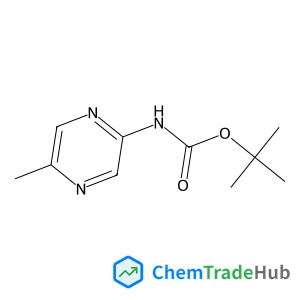
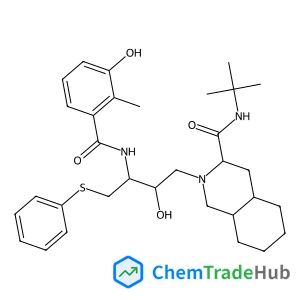
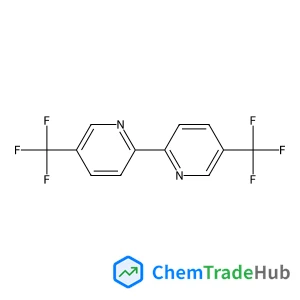
Recommended Compounds
Recommended Suppliers




Disclaimer
This page provides academic journal information for reference and research purposes only. We are not affiliated with any journal publishers and do not handle publication submissions. For publication-related inquiries, please contact the respective journal publishers directly.
If you notice any inaccuracies in the information displayed, please contact us at support@chemtradehub.com. We will promptly review and address your concerns.