


Combining CROP and ATRP to synthesize pH-responsive poly(2-ethyl-2-oxazoline-b-4-vinylpyridine) block copolymers
Literature Information
Publication Date
2021-07-20
DOI
10.1039/D1PY00730K
Impact Factor
5.582
Authors
Rafael Natal Lima de Menezes, Maria Isabel Felisberti
View Original
Abstract
Herein, we present the synthesis and characterization of block copolymers based on poly(2-ethyl-2-oxazoline), a biocompatible and stealth polymer that has drawn considerable attention in biomedical-related applications, and poly(4-vinylpyridine), a polydentate ligand and pH-responsive polymer, with interesting characteristics for application as optical, magnetic, electronic, catalytic and conductive materials, as well as in the biomedical field. Poly(2-ethyl-2-oxazoline-b-4-vinylpyridine) block copolymers were synthesized by the cationic ring-opening polymerization (CROP) of 2-ethyl-2-oxazoline (EtOx) followed by atom transfer radical polymerization (ATRP) of 4-vinylpyridine (4VP). P(EtOx-b-4VP) polymers with 4VP molar fractions ranging from 0.40 to 0.71 were obtained. These polymers presented a narrow molar mass dispersity (≈1.2) and molar mass in the range of 6.4–10.5 kDa. The thermal properties of P(EtOx-b-4VP) were evaluated by differential scanning calorimetry (DSC) and their implication in the self-assembly in solution is discussed. The critical micellar concentration in water was determined by fluorescence spectroscopy and the self-assembly of P(EtOx-b-4VP) in water/DMF and basic aqueous solutions was studied by turbidimetry and dynamic light scattering (DLS). The morphology of the resulting structures was assessed by cryogenic transmission electron microscopy (cryo-TEM). Depending on the composition of polymer and solution, different structures, namely micelles, vesicles and worm-like micelles, can be formed. Concerning the interesting properties of PEtOx (stealth behavior and biocompatibility), as well as P4VP (pH-responsive polydentate ligand), these materials show potential for application in drug delivery, diagnostic imaging and as templates for inorganic materials.
Recommended Journals

Biocatalysis and Biotransformation

Journal of Chemical Sciences

Chinese Journal of Chemistry

Heteroatom Chemistry

Journal of Asian Natural Products Research

Critical Reviews in Solid State and Materials Sciences

Acta Metallurgica Sinica-English Letters

Electroanalysis

Colloid Journal

Bioorganic & Medicinal Chemistry Letters
Related Literature
Electron-rich heteroaromatic conjugated bipyridine based ruthenium sensitizer for efficient dye-sensitized solar cells
Alessandro Abbotto, Claudia Barolo, Luca Bellotto, Filippo De Angelis, Michael Grätzel, Norberto Manfredi, Chiara Marinzi, Simona Fantacci, Jun-Ho Yum, Mohammad K. Nazeeruddin
2008-09-16
Communication
DOI: 10.1039/B811378E
Coordination networks derived from germanium(ii) thioether macrocyclic complexes—the first authenticated chalcogenoether complexes of Ge(ii)
Fei Cheng, Andrew L. Hector, William Levason, Gillian Reid, Michael Webster, Wenjian Zhang
2008-09-22
Communication
DOI: 10.1039/B809444F
Stabilization of CeO2nanoparticles in a CO2 rich solvent
Martin J. Hollamby, Kieran Trickett, Ana Vesperinas, Carl Rivett, David C. Steytler, Zoe Schnepp, Jon Jones, Richard K. Heenan, Robert M. Richardson, Otto Glatter, Julian Eastoe
2008-09-29
Communication
DOI: 10.1039/B811563J
Enantiomerically purebicyclo[3.3.1]nona-2,6-diene as the sole source of enantioselectivity in BIPHEP-Rh asymmetric hydrogenation
Tharmalingam Punniyamurthy, Monika Mayr, Alexander S. Dorofeev, Carole J. R. Bataille, Silvia Gosiewska, Bao Nguyen, Andrew R. Cowley, John M. Brown
2008-09-12
Communication
DOI: 10.1039/B807669C
Molecularly imprinted cavities template the macrocyclization of tetrapeptides
Dar-Fu Tai, Yee-Fung Lin
2008-09-29
Communication
DOI: 10.1039/B813439A
Rhodium-catalysed cyclisation reaction of allenynes with arylboronic acids
Tomoya Miura, Keita Ueda, Yusuke Takahashi, Masahiro Murakami
2008-09-16
Communication
DOI: 10.1039/B810665G
In vivo studies of a platinum(ii) metallointercalator
Dianne M. Fisher, Ronald R. Fenton, Janice R. Aldrich-Wright
2008-09-26
Communication
DOI: 10.1039/B811723C
Click chemistry assembly of G-quadruplex ligands incorporating a diarylurea scaffold and triazole linkers
William C. Drewe, Stephen Neidle
2008-09-30
Communication
DOI: 10.1039/B814576H
You might also like
Compound Q&A
What are the main uses of 1H-Indazole-6-carbonitrile (CAS: 141290-59-7)?
1H-Indazole-6-carbonitrile finds applications in pharmaceuticals, where it serve...
141290-59-71H-Indazole-6-carbon...
Compound Q&A
How should waste containing Dioctyl (2E)-2-butenedioate (CAS: 2997-85-5) be handled?
Waste containing Dioctyl (2E)-2-butenedioate (CAS: 2997-85-5) should be collecte...
2997-85-5Dioctyl (2E)-2-buten...
Compound Q&A
What industries use Sodium [(1,2-benzoxazol-3-ylmethyl)sulfonyl]azanide (CAS: 68291-98-5)?
Sodium [(1,2-benzoxazol-3-ylmethyl)sulfonyl]azanide is primarily used in pharmac...
68291-98-5Sodium [(1,2-benzoxa...
Compound Q&A
Are there alternatives to Dimethyl 4-(4,4,5,5-tetramethyl-1,3,2-dioxaborolan-2-yl)-2,6-pyridinedicarboxylate (CAS: 741709-66-0) in synthesis?
Dimethyl 4-(4,4,5,5-tetramethyl-1,3,2-dioxaborolan-2-yl)-2,6-pyridinedicarboxyla...
741709-66-0Dimethyl 4-(4,4,5,5-...
Compound Q&A
How should waste containing 2-Fluoro-6-hydrazinopyridine (CAS: 80714-39-2) be handled?
Waste containing 2-Fluoro-6-hydrazinopyridine (CAS: 80714-39-2) should be manage...
80714-39-22-Fluoro-6-hydrazino...
Compound Q&A
What is 6-Formyl-2-pyridinecarboxylic acid (CAS: 499214-11-8)?
6-Formyl-2-pyridinecarboxylic acid is an organic compound with the molecular for...
499214-11-86-Formyl-2-pyridinec...
Compound Q&A
What is the market or research trend for 3-(3,4-dimethoxyphenyl)-2,5-dimethyl-N-(2-morpholin-4-ylethyl)pyrazolo[1,5-a]pyrimidin-7-amine (CAS: 900874-91-1)?
Research trends for this compound indicate a focus on its potential applications...
900874-91-13-(3,4-dimethoxyphen...
Compound Q&A
How is 9H-Tribenzo[b,d,f]azepine (CAS: 29875-73-8) typically synthesized?
9H-Tribenzo[b,d,f]azepine is typically synthesized via a multi-step process invo...
29875-73-89H-Tribenzo[b,d,f]az...
Compound Q&A
How is 1-Cyclopropyl-7-ethoxy-6-fluoro-8-methoxy-4-oxo-1,4-dihydro-3-quinolinecarboxylic acid (CAS: 1797982-51-4) typically synthesized?
1-Cyclopropyl-7-ethoxy-6-fluoro-8-methoxy-4-oxo-1,4-dihydro-3-quinolinecarboxyli...
1797982-51-41-Cyclopropyl-7-etho...
Compound Q&A
How should waste containing Methyl 3-oxo-1,2,3,4-tetrahydro-6-quinoxalinecarboxylate (CAS: 671820-52-3) be handled?
Waste containing Methyl 3-oxo-1,2,3,4-tetrahydro-6-quinoxalinecarboxylate (CAS: ...
671820-52-3Methyl 3-oxo-1,2,3,4...
Source Journal
Polymer Chemistry

CiteScore:
8.6
Self-citation Rate:
7.3%
Articles per Year:
457
Polymer Chemistry welcomes submissions in all areas of polymer science that have a strong focus on macromolecular chemistry. Manuscripts may cover a broad range of fields, yet no direct application focus is required.
Recommended Compounds

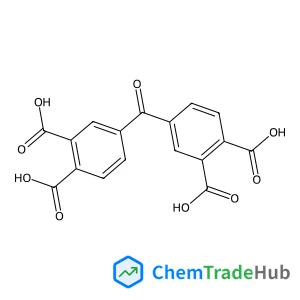
![Benzeneacetic acid, 2-[(2,6-dichlorophenyl)amino]-, compd. with 1-pyrrolidineethanol (1:1) structure](https://static.chemtradehub.com/structs/119/119623-66-4-5301.webp "Benzeneacetic acid, 2-[(2,6-dichlorophenyl)amino]-, compd. with 1-pyrrolidineethanol (1:1) structure")
Benzeneacetic acid, 2-[(2,6-dichlorophenyl)amino]-, compd. with 1-pyrrolidineethanol (1:1)
CAS Number:
119623-66-4
Molecular Formula:
C20H24Cl2N2O3
Recommended Suppliers




Disclaimer
This page provides academic journal information for reference and research purposes only. We are not affiliated with any journal publishers and do not handle publication submissions. For publication-related inquiries, please contact the respective journal publishers directly.
If you notice any inaccuracies in the information displayed, please contact us at support@chemtradehub.com. We will promptly review and address your concerns.