












Contents and Chemical Biology
Literature Information
Publication Date
DOI
10.1039/B817178P
Impact Factor
6.222
Authors
View Original
Abstract
The first page of this article is displayed as the abstract.
Related Literature
A comparative study of polymers containing naphthodifuranone and benzodifuranone units in the main chain
Haichang Zhang, Jun Zhang, Bernd Tieke
2013-09-30
Paper
DOI: 10.1039/C3PY01101A
RAFT/MADIX (co)polymerization of vinyl trifluoroacetate: a means to many ends
Jean-Daniel Marty, Mathias Destarac
2013-10-01
Paper
DOI: 10.1039/C3PY01109G
(Meth)acrylic monomers with heteroatom-containing ester side chains: a systematic PLP-SEC and polymerization study
Marek Stach, Anna Chovancová, Andrea M. Misske, Igor Lacík
2013-09-03
Paper
DOI: 10.1039/C3PY00948C
Copper-mediated living radical polymerization (SET-LRP) of lipophilic monomers from multi-functional initiators: reducing star–star coupling at high molecular weights and high monomer conversions
Christopher Waldron, Athina Anastasaki, Ronan McHale, Paul Wilson, Zaidong Li, Tim Smith, David M. Haddleton
2013-10-01
Paper
DOI: 10.1039/C3PY01241G
Poly(ionic liquid)s-based nanocomposite polyelectrolytes with tunable ionic conductivity prepared via SI-ATRP
Ping Wang, Yin-Ning Zhou, Jiang-Shui Luo, Zheng-Hong Luo
2013-09-18
Paper
DOI: 10.1039/C3PY01025B
Synthesis of water-soluble polyisocyanates with the oligo(ethylene glycol) side-chain as new thermoresponsive polymers
Naoya Sakai, Mingoo Jin, Shin-ichiro Sato, Toshifumi Satoh, Toyoji Kakuchi
2013-10-02
Paper
DOI: 10.1039/C3PY00972F
Polymer-modified gold nanoparticles via RAFT polymerization: a detailed study for a biosensing application
Masaki Takara, Masayuki Toyoshima, Hirokazu Seto, Yu Hoshino, Yoshiko Miura
2013-09-20
Paper
DOI: 10.1039/C3PY01001E
On the effect of using RAFT and FRP for the bulk synthesis of acrylic and methacrylic molecularly imprinted polymers
Carlo Gonzato, Pamela Pasetto, Fahmi Bedoui, Pierre-Emmanuel Mazeran, Karsten Haupt
2013-10-24
Paper
DOI: 10.1039/C3PY01246H
Microporous organic polymers with acetal linkages: synthesis, characterization, and gas sorption properties
Li-Min Zhang, Tao Wang, Bao-Hang Han
2013-08-22
Paper
DOI: 10.1039/C3PY00854A
You might also like
Compound Q&A
What are the main uses of 1H-Indazole-6-carbonitrile (CAS: 141290-59-7)?
1H-Indazole-6-carbonitrile finds applications in pharmaceuticals, where it serve...
141290-59-71H-Indazole-6-carbon...
Compound Q&A
How should waste containing Dioctyl (2E)-2-butenedioate (CAS: 2997-85-5) be handled?
Waste containing Dioctyl (2E)-2-butenedioate (CAS: 2997-85-5) should be collecte...
2997-85-5Dioctyl (2E)-2-buten...
Compound Q&A
What industries use Sodium [(1,2-benzoxazol-3-ylmethyl)sulfonyl]azanide (CAS: 68291-98-5)?
Sodium [(1,2-benzoxazol-3-ylmethyl)sulfonyl]azanide is primarily used in pharmac...
68291-98-5Sodium [(1,2-benzoxa...
Compound Q&A
Are there alternatives to Dimethyl 4-(4,4,5,5-tetramethyl-1,3,2-dioxaborolan-2-yl)-2,6-pyridinedicarboxylate (CAS: 741709-66-0) in synthesis?
Dimethyl 4-(4,4,5,5-tetramethyl-1,3,2-dioxaborolan-2-yl)-2,6-pyridinedicarboxyla...
741709-66-0Dimethyl 4-(4,4,5,5-...
Compound Q&A
How should waste containing 2-Fluoro-6-hydrazinopyridine (CAS: 80714-39-2) be handled?
Waste containing 2-Fluoro-6-hydrazinopyridine (CAS: 80714-39-2) should be manage...
80714-39-22-Fluoro-6-hydrazino...
Compound Q&A
What is 6-Formyl-2-pyridinecarboxylic acid (CAS: 499214-11-8)?
6-Formyl-2-pyridinecarboxylic acid is an organic compound with the molecular for...
499214-11-86-Formyl-2-pyridinec...
Compound Q&A
What is the market or research trend for 3-(3,4-dimethoxyphenyl)-2,5-dimethyl-N-(2-morpholin-4-ylethyl)pyrazolo[1,5-a]pyrimidin-7-amine (CAS: 900874-91-1)?
Research trends for this compound indicate a focus on its potential applications...
900874-91-13-(3,4-dimethoxyphen...
Compound Q&A
How is 9H-Tribenzo[b,d,f]azepine (CAS: 29875-73-8) typically synthesized?
9H-Tribenzo[b,d,f]azepine is typically synthesized via a multi-step process invo...
29875-73-89H-Tribenzo[b,d,f]az...
Compound Q&A
How is 1-Cyclopropyl-7-ethoxy-6-fluoro-8-methoxy-4-oxo-1,4-dihydro-3-quinolinecarboxylic acid (CAS: 1797982-51-4) typically synthesized?
1-Cyclopropyl-7-ethoxy-6-fluoro-8-methoxy-4-oxo-1,4-dihydro-3-quinolinecarboxyli...
1797982-51-41-Cyclopropyl-7-etho...
Compound Q&A
How should waste containing Methyl 3-oxo-1,2,3,4-tetrahydro-6-quinoxalinecarboxylate (CAS: 671820-52-3) be handled?
Waste containing Methyl 3-oxo-1,2,3,4-tetrahydro-6-quinoxalinecarboxylate (CAS: ...
671820-52-3Methyl 3-oxo-1,2,3,4...
Source Journal
Chemical Communications

CiteScore:
8.6
Self-citation Rate:
4.7%
Articles per Year:
2458
ChemComm publishes urgent research which is of outstanding significance and interest to experts in the field, while also appealing to the journal’s broad chemistry readership. Our communication format is ideally suited to short, urgent studies that are of such importance that they require accelerated publication. Our scope covers all topics in chemistry, and research at the interface of chemistry and other disciplines (such as materials science, nanoscience, physics, engineering and biology) where there is a significant novelty in the chemistry aspects. Major topic areas covered include: Analytical Chemistry Catalysis Chemical Biology and medicinal chemistry Computational Chemistry and Machine Learning Energy and sustainable chemistry Environmental Chemistry Green Chemistry Inorganic Chemistry Materials Chemistry Nanoscience Organic Chemistry Physical Chemistry Polymer Chemistry Supramolecular Chemistry
Recommended Compounds
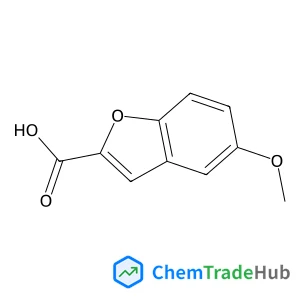
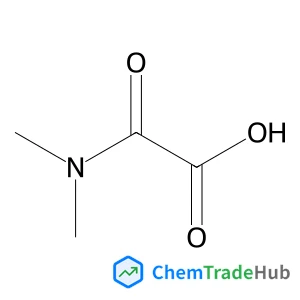
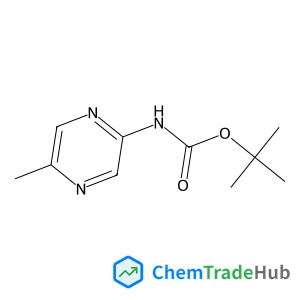
Recommended Suppliers





Disclaimer
This page provides academic journal information for reference and research purposes only. We are not affiliated with any journal publishers and do not handle publication submissions. For publication-related inquiries, please contact the respective journal publishers directly.
If you notice any inaccuracies in the information displayed, please contact us at support@chemtradehub.com. We will promptly review and address your concerns.