












Demonstration of neutron radiation-induced nucleation of supercooled water
Literature Information
Publication Date
2021-05-13
DOI
10.1039/D1CP01083B
Impact Factor
3.676
Authors
Matthew Szydagis, Cecilia Levy, Yujia Huang, Alvine C. Kamaha, Corwin C. Knight, Gregory R. C. Rischbieter
View Original
Abstract
We present here direct evidence for neutrons causing nucleation of supercooled water. Highly purified water (20 nm filtration) is cooled to well below freezing (as low as −20 °C) with a radioactive calibration source of neutrons/gamma-rays either present or removed during each of many control cooling runs for the same volume of water. When it is primarily neutrons irradiating the sample bulk, the non-equilibrium freezing point (also known as the “supercooling point”) is, on average, +0.7 °C warmer than the control equivalent, with a statistical significance of greater than 5 Sigma, with systematic uncertainty included. This effect is not observed with water in the presence of gamma-rays instead of neutrons. While these neutrons should have theoretically had sufficient energy to mount the energy barrier, corroborating our results, their raising of supercooling temperature has never been reported experimentally to the best of our knowledge. The potential to use deeply supercooled solutions, not only water, as metastable detectors for radiation and perhaps dark matter or neutrino physics presents now a new avenue for exploration.
Related Literature
Copper sulfide nanostripe patterns at the Au(111)/electrolyte interface studied by in situSTM
Daniel Friebel, Christian Schlaup, Peter Broekmann, Klaus Wandelt
2007-02-22
Paper
DOI: 10.1039/B616586A
Can “microwave effects” be explained by enhanced diffusion?
Christian Antonio, Rowan T. Deam
2007-04-26
Paper
DOI: 10.1039/B617358F
Ultrafast dynamics in complex fluids observed through the ultrafast optically-heterodyne-detected optical-Kerr-effect (OHD-OKE)
Neil T. Hunt, Andrew A. Jaye, Stephen R. Meech
2007-02-07
Invited Article
DOI: 10.1039/B616078F
Tuning plasmons on nano-structured substrates for NIR-SERS
Sumeet Mahajan, Mamdouh Abdelsalam, Yoshiro Suguwara, Suzanne Cintra, Andrea Russell, Jeremy Baumberg, Philip Bartlett
2006-11-23
Paper
DOI: 10.1039/B611803H
Particle size dependent adsorption and reaction kinetics on reduced and partially oxidized Pd nanoparticles
T. Schalow, B. Brandt, D. E. Starr, M. Laurin, S. K. Shaikhutdinov, S. Schauermann, J. Libuda, H.-J. Freund
2007-01-23
Paper
DOI: 10.1039/B614546A
Modelling of morphology and proton transport in PFSA membranes
James A. Elliott, Stephen J. Paddison
2007-03-30
Invited Article
DOI: 10.1039/B701234A
Kinetics of NaCl nucleation in supercritical water investigated by molecular dynamics simulations
Norbert Lümmen, Bjørn Kvamme
2007-06-05
Paper
DOI: 10.1039/B703430J
Energy-directed tree search: an efficient systematic algorithm for finding the lowest energy conformation of molecules
Ekaterina I. Izgorodina, Ching Yeh Lin, Michelle L. Coote
2007-04-04
Paper
DOI: 10.1039/B700938K
You might also like
Compound Q&A
What is the market or research trend for N-(4-Methoxybenzyl)-2-pyridinamine (CAS: 52818-63-0)?
N-(4-Methoxybenzyl)-2-pyridinamine (CAS: 52818-63-0) is increasingly being used ...
52818-63-0N-(4-Methoxybenzyl)-...
Compound Q&A
What precautions should be taken when handling Ethyl 4-(2-chlorophenyl)-1,3-thiazole-2-carboxylate (CAS: 1050507-06-6)?
When handling Ethyl 4-(2-chlorophenyl)-1,3-thiazole-2-carboxylate, appropriate p...
1050507-06-6Ethyl 4-(2-chlorophe...
Compound Q&A
What regulatory guidelines apply to diethyldiselane (CAS: 628-39-7)?
Diethyldiselane (CAS: 628-39-7) is classified under the Globally Harmonized Syst...
628-39-7Diethyldiselane
Compound Q&A
What is the market or research trend for oxocopper (CAS: 12053-18-8)?
The market for oxocopper (CAS: 12053-18-8) is primarily driven by its use in cat...
12053-18-8oxocopper; oxo-(oxoc...
Compound Q&A
What is the market or research trend for 5-{[(2-Methyl-2-propanyl)oxy]carbonyl}-5-azaspiro[2.4]heptane-7-carboxylic acid?
The market for 5-{[(2-Methyl-2-propanyl)oxy]carbonyl}-5-azaspiro[2.4]heptane-7-c...
1268519-54-55-{[(2-Methyl-2-prop...
Compound Q&A
What is 2-(1-Pyrrolidinyl)-4-pyridinamine (CAS: 35981-63-6)?
2-(1-Pyrrolidinyl)-4-pyridinamine is a chemical compound with the CAS number 359...
35981-63-62-(1-Pyrrolidinyl)-4...
Compound Q&A
What are the physical and chemical properties of 2-(3-Pyridinyl)-1-azabicyclo[2.2.2]octane (CAS: 91556-75-1)?
2-(3-Pyridinyl)-1-azabicyclo[2.2.2]octane (CAS: 91556-75-1) is a crystalline sol...
91556-75-12-(3-Pyridinyl)-1-az...
Compound Q&A
How is (S)-Alpha-allyl-proline hydrochloride (CAS: 129704-91-2) typically synthesized?
(S)-Alpha-allyl-proline hydrochloride is usually synthesized via a Wittig reacti...
129704-91-2(S)-Alpha-allyl-prol...
Compound Q&A
What is 3-Methyl-1,2-oxazole-5-carboxylic acid (CAS: 4857-42-5)?
3-Methyl-1,2-oxazole-5-carboxylic acid (CAS: 4857-42-5) is an organic compound w...
4857-42-53-Methyl-1,2-oxazole...
Compound Q&A
How is Lys-SMCC-DM1 (CAS: 1281816-04-3) typically synthesized?
Lys-SMCC-DM1 is synthesized via a multi-step process involving the coupling of S...
1281816-04-3Lys-SMCC-DM1
Source Journal
Physical Chemistry Chemical Physics

CiteScore:
5.5
Self-citation Rate:
10.3%
Articles per Year:
3036
Physical Chemistry Chemical Physics (PCCP) is an international journal co-owned by 19 physical chemistry and physics societies from around the world. This journal publishes original, cutting-edge research in physical chemistry, chemical physics and biophysical chemistry. To be suitable for publication in PCCP, articles must include significant innovation and/or insight into physical chemistry; this is the most important criterion that reviewers and Editors will judge against when evaluating submissions. The journal has a broad scope and welcomes contributions spanning experiment, theory, computation and data science. Topical coverage includes spectroscopy, dynamics, kinetics, statistical mechanics, thermodynamics, electrochemistry, catalysis, surface science, quantum mechanics, quantum computing and machine learning. Interdisciplinary research areas such as polymers and soft matter, materials, nanoscience, energy, surfaces/interfaces, and biophysical chemistry are welcomed if they demonstrate significant innovation and/or insight into physical chemistry. Joined experimental/theoretical studies are particularly appreciated when complementary and based on up-to-date approaches.
Recommended Compounds
![1-(1-Benzyl-1,2,3,6-tetrahydropyridin-4-yl)-1H-benzo[d]imidazol-2(3H)-one structure](https://static.chemtradehub.com/structs/603/60373-71-9-7dfb.webp "1-(1-Benzyl-1,2,3,6-tetrahydropyridin-4-yl)-1H-benzo[d]imidazol-2(3H)-one structure")
1-(1-Benzyl-1,2,3,6-tetrahydropyridin-4-yl)-1H-benzo[d]imidazol-2(3H)-one
CAS Number:
60373-71-9
Molecular Formula:
C19H19N3O
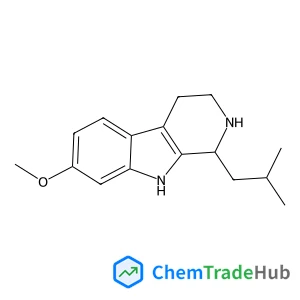
1-Isobutyl-7-methoxy-2,3,4,9-tetrahydro-1H-beta-carboline
CAS Number:
175975-76-5
Molecular Formula:
C16H22N2O
Recommended Suppliers





Disclaimer
This page provides academic journal information for reference and research purposes only. We are not affiliated with any journal publishers and do not handle publication submissions. For publication-related inquiries, please contact the respective journal publishers directly.
If you notice any inaccuracies in the information displayed, please contact us at support@chemtradehub.com. We will promptly review and address your concerns.