


Tuning plasmons on nano-structured substrates for NIR-SERS
Literature Information
Publication Date
2006-11-23
DOI
10.1039/B611803H
Impact Factor
3.676
Authors
Sumeet Mahajan, Mamdouh Abdelsalam, Yoshiro Suguwara, Suzanne Cintra, Andrea Russell, Jeremy Baumberg, Philip Bartlett
View Original
Abstract
Surface-Enhanced Raman Spectroscopy (SERS) is a very sensitive and selective technique for detecting surface species. Colloidal crystal-templated ‘inverse opal’ nanostructured gold films have been demonstrated to be excellent SERS substrates by various researchers around the globe. However, visible excitation laser sources commonly used in SERS experiments can cause photochemical reactions on the surface as well as fluorescence from the adsorbed molecules. A way to circumvent this possibility is the use of Near Infra-Red (NIR) laser sources. This demands appropriate design of substrates for NIR-SERS in order to obtain maximum enhancement of signals from analytes. In the current paper, we use systematic variation of sphere size and electrochemical control over film height to tune plasmons on such nanovoid substrates. We use plasmon maps as a tool for predicting NIR-SERS enhancements recorded with a 1064 nm laser source for benzenethiol as the probe molecule. Direct correlation is observed between Raman enhancements and plasmonic resonances with ingoing and outcoming radiation. Our study demonstrates the feasibility of plasmon engineering and the predictive power of their mapping on our substrates. It also demonstrates the ability to design reproducible NIR-SERS substrates and its empirical fruition.
Recommended Journals

Crystallography Reports

Drug Discovery Today

Russian Chemical Bulletin

Chemistry Education Research and Practice

Journal of Natural Medicines

Journal of Peptide Science

Russian Journal of Organic Chemistry

New Journal of Chemistry

Current Opinion in Colloid & Interface Science

Russian Journal of Applied Chemistry
Related Literature
Impacts of performing electrolysis during organocatalyzed atom transfer radical polymerization
Daniel A. Corbin, Blaine G. McCarthy, Garret M. Miyake
2020-06-30
Paper
DOI: 10.1039/D0PY00643B
Biobased poly(ester-co-glycoside) from reactive natural Brønsted acidic deep eutectic solvent analogue
Gabriel Duaux, Etienne Fleury, Daniel Portinha
2021-08-27
Paper
DOI: 10.1039/D1PY00990G
Multi-responsive poly(oligo(ethylene glycol)methyl methacrylate)-co-poly(2-(diisopropylamino)ethyl methacrylate) hyperbranched copolymers via reversible addition fragmentation chain transfer polymerization
Dimitrios Selianitis, Stergios Pispas
2021-11-03
Paper
DOI: 10.1039/D1PY01320C
Folded amphiphilic homopolymer micelles in water: uniform self-assembly beyond amphiphilic random copolymers
Yoshihiko Kimura, Makoto Ouchi, Takaya Terashima
2020-07-06
Paper
DOI: 10.1039/D0PY00685H
Incorporating semiflexible linkers into double-cable conjugated polymers via a click reaction
Zhaofan Yang, Shijie Liang, Baiqiao Liu, Jing Wang, Fan Yang, Qiaomei Chen, Chengyi Xiao, Zheng Tang, Weiwei Li
2021-11-09
Paper
DOI: 10.1039/D1PY01188J
Tailoring polymer dispersity by mixing ATRP initiators
Kostas Parkatzidis, Manon Rolland, Nghia P. Truong, Athina Anastasaki
2021-09-21
Communication
DOI: 10.1039/D1PY01044A
One-pot synthesis of amphiphilic multiblock poly(2-oxazoline)s via para-fluoro-thiol click reactions
Tieshuai Zhao, Ben Drain, Gokhan Yilmaz, C. Remzi Becer
2021-09-20
Paper
DOI: 10.1039/D1PY00944C
Ring opening polymerization of macrocyclic oligoesters derived from renewable sources
Antxon Martínez de Ilarduya, Sebastián Muñoz Guerra
2020-03-17
Review Article
DOI: 10.1039/D0PY00258E
Aluminum-catalyzed statistical copolymerization of mono-, tri- and penta-fluorophenyl glycidyl ether with ethylene oxide and epichlorohydrin
Fang Guo, Ming Deng, Fan Li, Shoulong Chen
2021-09-06
Paper
DOI: 10.1039/D1PY00938A
You might also like
Compound Q&A
What is the market or research trend for N-(4-Methoxybenzyl)-2-pyridinamine (CAS: 52818-63-0)?
N-(4-Methoxybenzyl)-2-pyridinamine (CAS: 52818-63-0) is increasingly being used ...
52818-63-0N-(4-Methoxybenzyl)-...
Compound Q&A
What precautions should be taken when handling Ethyl 4-(2-chlorophenyl)-1,3-thiazole-2-carboxylate (CAS: 1050507-06-6)?
When handling Ethyl 4-(2-chlorophenyl)-1,3-thiazole-2-carboxylate, appropriate p...
1050507-06-6Ethyl 4-(2-chlorophe...
Compound Q&A
What regulatory guidelines apply to diethyldiselane (CAS: 628-39-7)?
Diethyldiselane (CAS: 628-39-7) is classified under the Globally Harmonized Syst...
628-39-7Diethyldiselane
Compound Q&A
What is the market or research trend for oxocopper (CAS: 12053-18-8)?
The market for oxocopper (CAS: 12053-18-8) is primarily driven by its use in cat...
12053-18-8oxocopper; oxo-(oxoc...
Compound Q&A
What is the market or research trend for 5-{[(2-Methyl-2-propanyl)oxy]carbonyl}-5-azaspiro[2.4]heptane-7-carboxylic acid?
The market for 5-{[(2-Methyl-2-propanyl)oxy]carbonyl}-5-azaspiro[2.4]heptane-7-c...
1268519-54-55-{[(2-Methyl-2-prop...
Compound Q&A
What is 2-(1-Pyrrolidinyl)-4-pyridinamine (CAS: 35981-63-6)?
2-(1-Pyrrolidinyl)-4-pyridinamine is a chemical compound with the CAS number 359...
35981-63-62-(1-Pyrrolidinyl)-4...
Compound Q&A
What are the physical and chemical properties of 2-(3-Pyridinyl)-1-azabicyclo[2.2.2]octane (CAS: 91556-75-1)?
2-(3-Pyridinyl)-1-azabicyclo[2.2.2]octane (CAS: 91556-75-1) is a crystalline sol...
91556-75-12-(3-Pyridinyl)-1-az...
Compound Q&A
How is (S)-Alpha-allyl-proline hydrochloride (CAS: 129704-91-2) typically synthesized?
(S)-Alpha-allyl-proline hydrochloride is usually synthesized via a Wittig reacti...
129704-91-2(S)-Alpha-allyl-prol...
Compound Q&A
What is 3-Methyl-1,2-oxazole-5-carboxylic acid (CAS: 4857-42-5)?
3-Methyl-1,2-oxazole-5-carboxylic acid (CAS: 4857-42-5) is an organic compound w...
4857-42-53-Methyl-1,2-oxazole...
Compound Q&A
How is Lys-SMCC-DM1 (CAS: 1281816-04-3) typically synthesized?
Lys-SMCC-DM1 is synthesized via a multi-step process involving the coupling of S...
1281816-04-3Lys-SMCC-DM1
Source Journal
Physical Chemistry Chemical Physics

CiteScore:
5.5
Self-citation Rate:
10.3%
Articles per Year:
3036
Physical Chemistry Chemical Physics (PCCP) is an international journal co-owned by 19 physical chemistry and physics societies from around the world. This journal publishes original, cutting-edge research in physical chemistry, chemical physics and biophysical chemistry. To be suitable for publication in PCCP, articles must include significant innovation and/or insight into physical chemistry; this is the most important criterion that reviewers and Editors will judge against when evaluating submissions. The journal has a broad scope and welcomes contributions spanning experiment, theory, computation and data science. Topical coverage includes spectroscopy, dynamics, kinetics, statistical mechanics, thermodynamics, electrochemistry, catalysis, surface science, quantum mechanics, quantum computing and machine learning. Interdisciplinary research areas such as polymers and soft matter, materials, nanoscience, energy, surfaces/interfaces, and biophysical chemistry are welcomed if they demonstrate significant innovation and/or insight into physical chemistry. Joined experimental/theoretical studies are particularly appreciated when complementary and based on up-to-date approaches.
Recommended Compounds
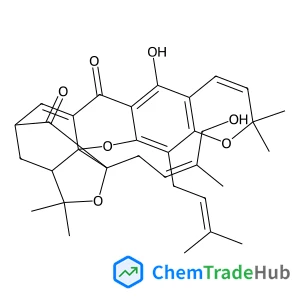
![1-[6-(1H-Imidazol-1-yl)-3-pyridinyl]methanamine structure](https://static.chemtradehub.com/structs/914/914637-08-4-8825.webp "1-[6-(1H-Imidazol-1-yl)-3-pyridinyl]methanamine structure")
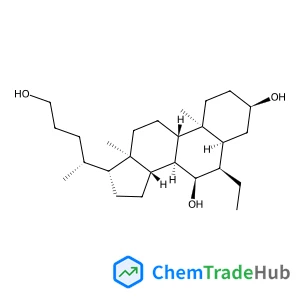
(3alpha,5beta,6alpha,7alpha)-6-Ethylcholane-3,7,24-triol
CAS Number:
1537866-49-1
Molecular Formula:
C26H46O3
Recommended Suppliers




Disclaimer
This page provides academic journal information for reference and research purposes only. We are not affiliated with any journal publishers and do not handle publication submissions. For publication-related inquiries, please contact the respective journal publishers directly.
If you notice any inaccuracies in the information displayed, please contact us at support@chemtradehub.com. We will promptly review and address your concerns.