


![1-oxaspiro[4.4]nonan-6-one structure](https://static.chemtradehub.com/structs/134/134179-01-4-e051.webp "1-oxaspiro[4.4]nonan-6-one structure")
Kinetics of NaCl nucleation in supercritical water investigated by molecular dynamics simulations
Literature Information
Publication Date
2007-06-05
DOI
10.1039/B703430J
Impact Factor
3.676
Authors
Norbert Lümmen, Bjørn Kvamme
View Original
Abstract
At system pressures between 17 MPa and 25 MPa the nucleation and growth of NaCl nanoparticles in water at supercritical conditions was investigated by molecular dynamics simulations at different system temperatures and system densities. Our results show that particle formation takes place within a few hundred picoseconds after the jump from ambient to supercritical conditions. After nucleation a phase of growth by adding monomers is followed by growth via cluster–cluster collisions. We present results on the time development of distributions of cluster sizes, cluster compositions, and cluster temperatures as well as radial distribution functions and nucleation rates.
Recommended Journals

Russian Journal of Organic Chemistry

Russian Journal of Bioorganic Chemistry

Journal of Saudi Chemical Society

New Journal of Chemistry

Crystallography Reports

Russian Journal of General Chemistry

Journal of Peptide Science

Russian Journal of Coordination Chemistry

Chemical Communications

Russian Journal of Applied Chemistry
Related Literature
Block copolymers comprising degradable poly(2-ethyl-2-oxazoline) analogues via copper-free click chemistry
2021-08-20
Paper
DOI: 10.1039/D1PY00853F
Imidazole based dual photo/thermal initiators for highly efficient radical polymerization under air with a metal-free approach‡
2021-10-22
Communication
DOI: 10.1039/D1PY01079D
Structure–property relations of amphiphilic poly(furfuryl glycidyl ether)-block-poly(ethylene glycol) macromonomers at the air–water interface
Alexander Holm, Alexander Southan, Curtis W. Frank
2020-07-30
Paper
DOI: 10.1039/D0PY00697A
Intrinsic flame retardant phosphonate-based vitrimers as a recyclable alternative for commodity polymers in composite materials
Jens C. Markwart, Alexander Battig, Tobias Urbaniak, Katharina Haag, Katharina Koschek, Bernhard Schartel, Frederik R. Wurm
2020-06-08
Paper
DOI: 10.1039/D0PY00275E
Synthesis of fused conjugated polymers containing imidazo[2,1-b]thiazole units by multicomponent one-pot polymerization
Ru Dong, Qi Chen, Xuediao Cai, Qi Zhang, Zhike Liu
2020-07-14
Paper
DOI: 10.1039/D0PY00680G
Biobased poly(ester-co-glycoside) from reactive natural Brønsted acidic deep eutectic solvent analogue
Gabriel Duaux, Etienne Fleury, Daniel Portinha
2021-08-27
Paper
DOI: 10.1039/D1PY00990G
High-performance polyamides with engineered disorder
Julien Cretenoud, Sandor Balog, Véronique Michaud, Jean-Marc Chenal, Olivier Lame, Christopher J. G. Plummer, Holger Frauenrath
2021-10-15
Paper
DOI: 10.1039/D1PY01225H
Polymer actuators based on covalent adaptable networks
Yahe Wu, Yan Ji
2020-05-14
Review Article
DOI: 10.1039/D0PY00075B
Impacts of performing electrolysis during organocatalyzed atom transfer radical polymerization
Daniel A. Corbin, Blaine G. McCarthy, Garret M. Miyake
2020-06-30
Paper
DOI: 10.1039/D0PY00643B
You might also like
Compound Q&A
What is the market or research trend for N-(4-Methoxybenzyl)-2-pyridinamine (CAS: 52818-63-0)?
N-(4-Methoxybenzyl)-2-pyridinamine (CAS: 52818-63-0) is increasingly being used ...
52818-63-0N-(4-Methoxybenzyl)-...
Compound Q&A
What precautions should be taken when handling Ethyl 4-(2-chlorophenyl)-1,3-thiazole-2-carboxylate (CAS: 1050507-06-6)?
When handling Ethyl 4-(2-chlorophenyl)-1,3-thiazole-2-carboxylate, appropriate p...
1050507-06-6Ethyl 4-(2-chlorophe...
Compound Q&A
What regulatory guidelines apply to diethyldiselane (CAS: 628-39-7)?
Diethyldiselane (CAS: 628-39-7) is classified under the Globally Harmonized Syst...
628-39-7Diethyldiselane
Compound Q&A
What is the market or research trend for oxocopper (CAS: 12053-18-8)?
The market for oxocopper (CAS: 12053-18-8) is primarily driven by its use in cat...
12053-18-8oxocopper; oxo-(oxoc...
Compound Q&A
What is the market or research trend for 5-{[(2-Methyl-2-propanyl)oxy]carbonyl}-5-azaspiro[2.4]heptane-7-carboxylic acid?
The market for 5-{[(2-Methyl-2-propanyl)oxy]carbonyl}-5-azaspiro[2.4]heptane-7-c...
1268519-54-55-{[(2-Methyl-2-prop...
Compound Q&A
What is 2-(1-Pyrrolidinyl)-4-pyridinamine (CAS: 35981-63-6)?
2-(1-Pyrrolidinyl)-4-pyridinamine is a chemical compound with the CAS number 359...
35981-63-62-(1-Pyrrolidinyl)-4...
Compound Q&A
What are the physical and chemical properties of 2-(3-Pyridinyl)-1-azabicyclo[2.2.2]octane (CAS: 91556-75-1)?
2-(3-Pyridinyl)-1-azabicyclo[2.2.2]octane (CAS: 91556-75-1) is a crystalline sol...
91556-75-12-(3-Pyridinyl)-1-az...
Compound Q&A
How is (S)-Alpha-allyl-proline hydrochloride (CAS: 129704-91-2) typically synthesized?
(S)-Alpha-allyl-proline hydrochloride is usually synthesized via a Wittig reacti...
129704-91-2(S)-Alpha-allyl-prol...
Compound Q&A
What is 3-Methyl-1,2-oxazole-5-carboxylic acid (CAS: 4857-42-5)?
3-Methyl-1,2-oxazole-5-carboxylic acid (CAS: 4857-42-5) is an organic compound w...
4857-42-53-Methyl-1,2-oxazole...
Compound Q&A
How is Lys-SMCC-DM1 (CAS: 1281816-04-3) typically synthesized?
Lys-SMCC-DM1 is synthesized via a multi-step process involving the coupling of S...
1281816-04-3Lys-SMCC-DM1
Source Journal
Physical Chemistry Chemical Physics

CiteScore:
5.5
Self-citation Rate:
10.3%
Articles per Year:
3036
Physical Chemistry Chemical Physics (PCCP) is an international journal co-owned by 19 physical chemistry and physics societies from around the world. This journal publishes original, cutting-edge research in physical chemistry, chemical physics and biophysical chemistry. To be suitable for publication in PCCP, articles must include significant innovation and/or insight into physical chemistry; this is the most important criterion that reviewers and Editors will judge against when evaluating submissions. The journal has a broad scope and welcomes contributions spanning experiment, theory, computation and data science. Topical coverage includes spectroscopy, dynamics, kinetics, statistical mechanics, thermodynamics, electrochemistry, catalysis, surface science, quantum mechanics, quantum computing and machine learning. Interdisciplinary research areas such as polymers and soft matter, materials, nanoscience, energy, surfaces/interfaces, and biophysical chemistry are welcomed if they demonstrate significant innovation and/or insight into physical chemistry. Joined experimental/theoretical studies are particularly appreciated when complementary and based on up-to-date approaches.
Recommended Compounds
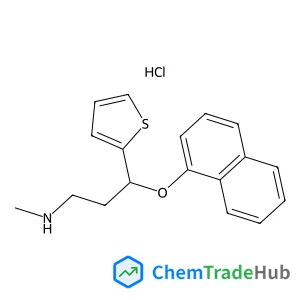
N-Methyl-3-(1-naphthyloxy)-3-(2-thienyl)-1-propanamine hydrochloride (1:1)
CAS Number:
1188266-11-6
Molecular Formula:
C18H20ClNOS
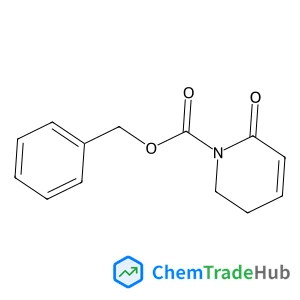
Benzyl 6-oxo-3,6-dihydro-1(2H)-pyridinecarboxylate
CAS Number:
725746-35-0
Molecular Formula:
C13H13NO3
![1,10-bis(3,5-dimethylphenyl)-12-hydroxy-4,5,6,7-tetrahydroiindeno[7,1-de:1',7'-fg][1,3,2]dioxaphosphocine 12-oxide structure](https://static.chemtradehub.com/structs/141/1412439-82-7-b9a9.webp "1,10-bis(3,5-dimethylphenyl)-12-hydroxy-4,5,6,7-tetrahydroiindeno[7,1-de:1',7'-fg][1,3,2]dioxaphosphocine 12-oxide structure")
1,10-bis(3,5-dimethylphenyl)-12-hydroxy-4,5,6,7-tetrahydroiindeno[7,1-de:1',7'-fg][1,3,2]dioxaphosphocine 12-oxide
CAS Number:
1412439-82-7
Molecular Formula:
C33H31O4P
Recommended Suppliers



Disclaimer
This page provides academic journal information for reference and research purposes only. We are not affiliated with any journal publishers and do not handle publication submissions. For publication-related inquiries, please contact the respective journal publishers directly.
If you notice any inaccuracies in the information displayed, please contact us at support@chemtradehub.com. We will promptly review and address your concerns.