



Ultrafast dynamics in complex fluids observed through the ultrafast optically-heterodyne-detected optical-Kerr-effect (OHD-OKE)
Literature Information
Publication Date
2007-02-07
DOI
10.1039/B616078F
Impact Factor
3.676
Authors
Neil T. Hunt, Andrew A. Jaye, Stephen R. Meech
View Original
Abstract
The ultrafast molecular dynamics of complex fluids have been recorded using the optically-heterodyne-detected optical-Kerr-effect (OHD-OKE). The OHD-OKE method is reviewed and some recent refinements to the method are described. Applications to a range of complex fluids, including microemulsions, polymer melts and solutions, liquid crystal and ionic liquids are surveyed. The level of detail attainable with the OHD-OKE method in these complex fluids is discussed. The prospects for future experiments are discussed.
Recommended Journals

Crystallography Reports

Drug Discovery Today

Acta Materialia

Saudi Pharmaceutical Journal

Chemistry Education Research and Practice

Current Opinion in Solid State & Materials Science

Current Opinion in Colloid & Interface Science

Journal of Saudi Chemical Society

Russian Journal of Organic Chemistry

Russian Journal of Applied Chemistry
Related Literature
Biobased poly(ester-co-glycoside) from reactive natural Brønsted acidic deep eutectic solvent analogue
Gabriel Duaux, Etienne Fleury, Daniel Portinha
2021-08-27
Paper
DOI: 10.1039/D1PY00990G
Self-healable functional polymers based on Diels–Alder ‘click chemistry’ involving substituted furan and triazolinedione derivatives: a simple and very fast approach
Prantik Mondal, Gourhari Jana, Tuhin Subhra Pal, Nikhil K. Singha
2021-09-27
Paper
DOI: 10.1039/D1PY00910A
Tuning the thermoresponsive properties of PEG-based fluorinated polymers and stimuli responsive drug release for switchable 19F magnetic resonance imaging
Nyoman D. Kurniawan
2021-09-08
Paper
DOI: 10.1039/D1PY00602A
High-performance polyamides with engineered disorder
Julien Cretenoud, Sandor Balog, Véronique Michaud, Jean-Marc Chenal, Olivier Lame, Christopher J. G. Plummer, Holger Frauenrath
2021-10-15
Paper
DOI: 10.1039/D1PY01225H
Alginate-based diblock polymers: preparation, characterization and Ca-induced self-assembly
Amalie Solberg, Ingrid V. Mo, Finn L. Aachmann, Christophe Schatz, Bjørn E. Christensen
2021-09-09
Paper
DOI: 10.1039/D1PY00727K
Cross-linking approaches for block copolymer nano-assemblies via RAFT-mediated polymerization-induced self-assembly
Shenzhen Li, Guang Han
2020-06-09
Minireview
DOI: 10.1039/D0PY00627K
Tailoring polymer dispersity by mixing ATRP initiators
Kostas Parkatzidis, Manon Rolland, Nghia P. Truong, Athina Anastasaki
2021-09-21
Communication
DOI: 10.1039/D1PY01044A
You might also like
Compound Q&A
What is the market or research trend for N-(4-Methoxybenzyl)-2-pyridinamine (CAS: 52818-63-0)?
N-(4-Methoxybenzyl)-2-pyridinamine (CAS: 52818-63-0) is increasingly being used ...
52818-63-0N-(4-Methoxybenzyl)-...
Compound Q&A
What precautions should be taken when handling Ethyl 4-(2-chlorophenyl)-1,3-thiazole-2-carboxylate (CAS: 1050507-06-6)?
When handling Ethyl 4-(2-chlorophenyl)-1,3-thiazole-2-carboxylate, appropriate p...
1050507-06-6Ethyl 4-(2-chlorophe...
Compound Q&A
What regulatory guidelines apply to diethyldiselane (CAS: 628-39-7)?
Diethyldiselane (CAS: 628-39-7) is classified under the Globally Harmonized Syst...
628-39-7Diethyldiselane
Compound Q&A
What is the market or research trend for oxocopper (CAS: 12053-18-8)?
The market for oxocopper (CAS: 12053-18-8) is primarily driven by its use in cat...
12053-18-8oxocopper; oxo-(oxoc...
Compound Q&A
What is the market or research trend for 5-{[(2-Methyl-2-propanyl)oxy]carbonyl}-5-azaspiro[2.4]heptane-7-carboxylic acid?
The market for 5-{[(2-Methyl-2-propanyl)oxy]carbonyl}-5-azaspiro[2.4]heptane-7-c...
1268519-54-55-{[(2-Methyl-2-prop...
Compound Q&A
What is 2-(1-Pyrrolidinyl)-4-pyridinamine (CAS: 35981-63-6)?
2-(1-Pyrrolidinyl)-4-pyridinamine is a chemical compound with the CAS number 359...
35981-63-62-(1-Pyrrolidinyl)-4...
Compound Q&A
What are the physical and chemical properties of 2-(3-Pyridinyl)-1-azabicyclo[2.2.2]octane (CAS: 91556-75-1)?
2-(3-Pyridinyl)-1-azabicyclo[2.2.2]octane (CAS: 91556-75-1) is a crystalline sol...
91556-75-12-(3-Pyridinyl)-1-az...
Compound Q&A
How is (S)-Alpha-allyl-proline hydrochloride (CAS: 129704-91-2) typically synthesized?
(S)-Alpha-allyl-proline hydrochloride is usually synthesized via a Wittig reacti...
129704-91-2(S)-Alpha-allyl-prol...
Compound Q&A
What is 3-Methyl-1,2-oxazole-5-carboxylic acid (CAS: 4857-42-5)?
3-Methyl-1,2-oxazole-5-carboxylic acid (CAS: 4857-42-5) is an organic compound w...
4857-42-53-Methyl-1,2-oxazole...
Compound Q&A
How is Lys-SMCC-DM1 (CAS: 1281816-04-3) typically synthesized?
Lys-SMCC-DM1 is synthesized via a multi-step process involving the coupling of S...
1281816-04-3Lys-SMCC-DM1
Source Journal
Physical Chemistry Chemical Physics

CiteScore:
5.5
Self-citation Rate:
10.3%
Articles per Year:
3036
Physical Chemistry Chemical Physics (PCCP) is an international journal co-owned by 19 physical chemistry and physics societies from around the world. This journal publishes original, cutting-edge research in physical chemistry, chemical physics and biophysical chemistry. To be suitable for publication in PCCP, articles must include significant innovation and/or insight into physical chemistry; this is the most important criterion that reviewers and Editors will judge against when evaluating submissions. The journal has a broad scope and welcomes contributions spanning experiment, theory, computation and data science. Topical coverage includes spectroscopy, dynamics, kinetics, statistical mechanics, thermodynamics, electrochemistry, catalysis, surface science, quantum mechanics, quantum computing and machine learning. Interdisciplinary research areas such as polymers and soft matter, materials, nanoscience, energy, surfaces/interfaces, and biophysical chemistry are welcomed if they demonstrate significant innovation and/or insight into physical chemistry. Joined experimental/theoretical studies are particularly appreciated when complementary and based on up-to-date approaches.
Recommended Compounds
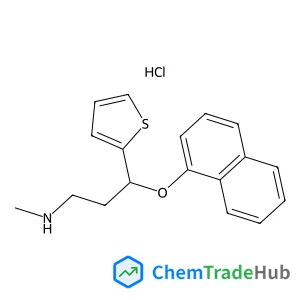
N-Methyl-3-(1-naphthyloxy)-3-(2-thienyl)-1-propanamine hydrochloride (1:1)
CAS Number:
1188266-11-6
Molecular Formula:
C18H20ClNOS
![(2R,6S)-6-[(Benzyloxy)methyl]-4-{[(2-methyl-2-propanyl)oxy]carbonyl}-2-morpholinecarboxylic acid structure](https://static.chemtradehub.com/structs/109/1093085-91-6-3382.webp "(2R,6S)-6-[(Benzyloxy)methyl]-4-{[(2-methyl-2-propanyl)oxy]carbonyl}-2-morpholinecarboxylic acid structure")
(2R,6S)-6-[(Benzyloxy)methyl]-4-{[(2-methyl-2-propanyl)oxy]carbonyl}-2-morpholinecarboxylic acid
CAS Number:
1093085-91-6
Molecular Formula:
C18H25NO6
Recommended Suppliers






Disclaimer
This page provides academic journal information for reference and research purposes only. We are not affiliated with any journal publishers and do not handle publication submissions. For publication-related inquiries, please contact the respective journal publishers directly.
If you notice any inaccuracies in the information displayed, please contact us at support@chemtradehub.com. We will promptly review and address your concerns.