












Ascorbic acid functionalized anti-aggregated Au nanoparticles for ultrafast MEF and SERS detection of tartrazine: an ultra-wide piecewise linear range study
Literature Information
Publication Date
2021-12-30
DOI
10.1039/D1AN02139G
Impact Factor
4.616
Authors
Mengru Li, Ran Li, Bo Han, Haojie Ma, Xueyan Hou, Yulong Kang, Yuqi Zhang, Ji-Jiang Wang
View Original
Abstract
Tartrazine, as a synthetic food colorant, is harmful to health upon excessive intake. In this study, we developed a simple, sensitive and ultrafast method to detect tartrazine effectively. Specifically, we successfully used ascorbic acid-functionalized anti-aggregated Au nanoparticles (AuNPs) as enhanced substrates to detect tartrazine in drinks using metal enhanced fluorescence (MEF) and surface-enhanced Raman scattering (SERS) piecewise linearly. The fluorescence intensity and Raman signals of the tartrazine solution enhanced after the addition of AuNPs. There was a good linear correlation between the fluorescence intensity and the concentration of tartrazine from 2.0 μM to 40.0 μM, and the limit of detection (LoD) was 15.4 nM. In addition, the Raman intensity also increased linearly with an increase in the concentration of tartrazine in a wide range (1.0 × 10⁻⁵ μM to 1.0 × 10⁻¹ μM) and a lower LoD (0.8 pM) was achieved compared with the results from the fluorescence technique. Both fluorescence and SERS can immediately detect tartrazine in drinks after the substrate was mixed with analytes. Hence, the as-prepared anti-aggregated AuNPs as substrate material achieved a highly sensitive, selective and ultrafast detection of tartrazine via fluorescence and Raman techniques in a wide detection range, providing a novel strategy for the detection of food additives.
Related Literature
Probing the kinetic energy-release dynamics of H-atom products from the gas-phase reaction of O(3P) with vinyl radical C2H3
Su-Chan Jang, Jong-Ho Choi
2014-10-01
Paper
DOI: 10.1039/C4CP03046J
On the dual character of charged metal–molecule hybrids and the opposite behaviour of the forward and reverse CT processes
J. Roman-Perez, S. P. Centeno, M. R. López-Ramírez, J. F. Arenas, J. Soto, I. López-Tocón, J. C. Otero
2014-09-17
Communication
DOI: 10.1039/C4CP03984J
Atomic charge transfer-counter polarization effects determine infrared CH intensities of hydrocarbons: a quantum theory of atoms in molecules model
Arnaldo F. Silva, Wagner E. Richter, Helen G. C. Meneses, Roy E. Bruns
2014-09-25
Paper
DOI: 10.1039/C4CP02922D
Ordered mesoporous ferrosilicate materials with highly dispersed iron oxide nanoparticles and investigation of their unique magnetic properties
Pavuluri Srinivasu, Koppoju Suresh, Gopal Datt, Ashutosh C. Abhayankar, Pothuraju Nageswara Rao, Mannepalli Lakshmi Kantam, Suresh K. Bhargava, Jing Tang, Yusuke Yamauchi
2014-09-19
Communication
DOI: 10.1039/C4CP03216K
Where does the Raman optical activity of [Rh(en)3]3+ come from? Insight from a combined experimental and theoretical approach
Marie Humbert-Droz, Patric Oulevey, Latévi Max Lawson Daku, Sandra Luber, Hans Hagemann, Thomas Bürgi
2014-09-18
Paper
DOI: 10.1039/C4CP02145B
Optical trapping and Raman spectroscopy of solid particles
J. C. J. Camp, J. McGregor, I. M. Watson, R. A. Cox, M. Kalberer, A. D. Ward, F. D. Pope
2014-04-29
Paper
DOI: 10.1039/C4CP00994K
Responses of polar organic compounds to different ionic environments in aqueous media are interrelated
L. A. Ferreira, A. Chervenak, S. Placko, A. Kestranek, P. P. Madeira, B. Y. Zaslavsky
2014-09-15
Paper
DOI: 10.1039/C4CP02084G
Fuel mediated solution combustion synthesis of ZnO supported gold clusters and nanoparticles and their catalytic activity and in vitro cytotoxicity
T. Inakhunbi Chanu, Thangavelu Muthukumar, Periakaruppan T. Manoharan
2014-09-16
Paper
DOI: 10.1039/C4CP03393K
You might also like
Compound Q&A
What is the market or research trend for N-(4-Methoxybenzyl)-2-pyridinamine (CAS: 52818-63-0)?
N-(4-Methoxybenzyl)-2-pyridinamine (CAS: 52818-63-0) is increasingly being used ...
52818-63-0N-(4-Methoxybenzyl)-...
Compound Q&A
What precautions should be taken when handling Ethyl 4-(2-chlorophenyl)-1,3-thiazole-2-carboxylate (CAS: 1050507-06-6)?
When handling Ethyl 4-(2-chlorophenyl)-1,3-thiazole-2-carboxylate, appropriate p...
1050507-06-6Ethyl 4-(2-chlorophe...
Compound Q&A
What regulatory guidelines apply to diethyldiselane (CAS: 628-39-7)?
Diethyldiselane (CAS: 628-39-7) is classified under the Globally Harmonized Syst...
628-39-7Diethyldiselane
Compound Q&A
What is the market or research trend for oxocopper (CAS: 12053-18-8)?
The market for oxocopper (CAS: 12053-18-8) is primarily driven by its use in cat...
12053-18-8oxocopper; oxo-(oxoc...
Compound Q&A
What is the market or research trend for 5-{[(2-Methyl-2-propanyl)oxy]carbonyl}-5-azaspiro[2.4]heptane-7-carboxylic acid?
The market for 5-{[(2-Methyl-2-propanyl)oxy]carbonyl}-5-azaspiro[2.4]heptane-7-c...
1268519-54-55-{[(2-Methyl-2-prop...
Compound Q&A
What is 2-(1-Pyrrolidinyl)-4-pyridinamine (CAS: 35981-63-6)?
2-(1-Pyrrolidinyl)-4-pyridinamine is a chemical compound with the CAS number 359...
35981-63-62-(1-Pyrrolidinyl)-4...
Compound Q&A
What are the physical and chemical properties of 2-(3-Pyridinyl)-1-azabicyclo[2.2.2]octane (CAS: 91556-75-1)?
2-(3-Pyridinyl)-1-azabicyclo[2.2.2]octane (CAS: 91556-75-1) is a crystalline sol...
91556-75-12-(3-Pyridinyl)-1-az...
Compound Q&A
How is (S)-Alpha-allyl-proline hydrochloride (CAS: 129704-91-2) typically synthesized?
(S)-Alpha-allyl-proline hydrochloride is usually synthesized via a Wittig reacti...
129704-91-2(S)-Alpha-allyl-prol...
Compound Q&A
What is 3-Methyl-1,2-oxazole-5-carboxylic acid (CAS: 4857-42-5)?
3-Methyl-1,2-oxazole-5-carboxylic acid (CAS: 4857-42-5) is an organic compound w...
4857-42-53-Methyl-1,2-oxazole...
Compound Q&A
How is Lys-SMCC-DM1 (CAS: 1281816-04-3) typically synthesized?
Lys-SMCC-DM1 is synthesized via a multi-step process involving the coupling of S...
1281816-04-3Lys-SMCC-DM1
Source Journal
Analyst

CiteScore:
7.8
Self-citation Rate:
5.6%
Articles per Year:
653
Analyst publishes analytical and bioanalytical research that reports premier fundamental discoveries and inventions, and the applications of those discoveries, unconfined by traditional discipline barriers.
Recommended Compounds
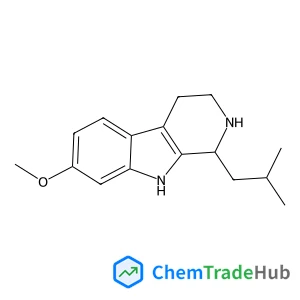
1-Isobutyl-7-methoxy-2,3,4,9-tetrahydro-1H-beta-carboline
CAS Number:
175975-76-5
Molecular Formula:
C16H22N2O
![1-[6-(1H-Imidazol-1-yl)-3-pyridinyl]methanamine structure](https://static.chemtradehub.com/structs/914/914637-08-4-8825.webp "1-[6-(1H-Imidazol-1-yl)-3-pyridinyl]methanamine structure")
Recommended Suppliers





Disclaimer
This page provides academic journal information for reference and research purposes only. We are not affiliated with any journal publishers and do not handle publication submissions. For publication-related inquiries, please contact the respective journal publishers directly.
If you notice any inaccuracies in the information displayed, please contact us at support@chemtradehub.com. We will promptly review and address your concerns.