


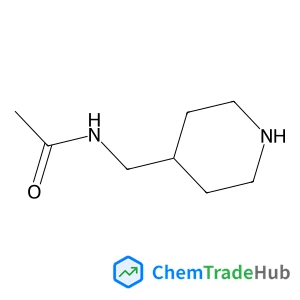
Probing the kinetic energy-release dynamics of H-atom products from the gas-phase reaction of O(3P) with vinyl radical C2H3
Literature Information
Publication Date
2014-10-01
DOI
10.1039/C4CP03046J
Impact Factor
3.676
Authors
Su-Chan Jang, Jong-Ho Choi
View Original
Abstract
The gas-phase radical–radical reaction dynamics of ground-state atomic oxygen O(3P) with vinyl radicals C2H3 has been studied by combining the results of vacuum-ultraviolet laser-induced fluorescence spectroscopy in a crossed beam configuration with ab initio calculations. The two radical reactants O(3P) and C2H3 were produced by photolysis of NO2 and supersonic flash pyrolysis of C2H3I, respectively. Doppler profile analysis of the kinetic energy release of the nascent H-atom products from the title reaction O(3P) + C2H3 → H(2S) + CH2CO (ketene) revealed that the average translational energy of the products and the average fraction of the total available energy were 7.03 ± 0.30 kcal mol−1 and 7.2%. The empirical data combined with CBS-QB3 level ab initio theory and statistical calculations demonstrated that the title oxygen–hydrogen exchange reaction is a major reaction channel, through an addition–elimination mechanism involving the formation of a short-lived, dynamical complex on the doublet potential energy surface. On the basis of systematic comparison with several exchange reactions of hydrocarbon radicals, the observed kinetic energy release can be explained in terms of the weak impulse at the moment of decomposition in the loose transition state with a product-like geometry and a small reverse barrier along the exit channel.
Recommended Journals

Molecular Pharmacology

Science Progress

Pharmacological Reviews

Journal of Organometallic Chemistry

Journal of Medicinal Chemistry

Nature

Journal of Catalysis

Proceedings of the National Academy of Sciences of the United States of America

Organic Preparations and Procedures International

Kinetics and Catalysis
Related Literature
Electronic and vibrational properties of a MOF-5 metal–organic framework: ZnO quantum dot behaviour
S. Bordiga, C. Lamberti, G. Ricchiardi, L. Regli, F. Bonino, A. Damin, K.-P. Lillerud, M. Bjorgen, A. Zecchina
2004-09-01
Communication
DOI: 10.1039/B407246D
High efficiency mer-iridium complexes for organic light-emitting diodes
Cheng-Hsien Yang, Kai-Hung Fang, Chun-Hung Chen, I-Wen Sun
2004-08-23
Communication
DOI: 10.1039/B406958G
Hierarchical self-assembly in polymeric complexes: Towards functional materials
Olli Ikkala, Gerrit ten Brinke
2004-09-16
Feature Article
DOI: 10.1039/B403983A
Photo-reversible Pb2+-complexation of thermosensitive poly(N-isopropyl acrylamide-co-spiropyran acrylate) in water
Takayuki Suzuki, Tatsuya Kato, Hiraku Shinozaki
2004-08-13
Communication
DOI: 10.1039/B407342H
Water-in-water mesophases for templating inorganics
Andreas Taubert, Ernst Furrer, Wolfgang Meier
2004-09-02
Communication
DOI: 10.1039/B405610H
A facile synthesis of single-crystal mullite nanobelts
Chuanbao Cao, Xu Xiang, Hesun Zhu
2004-09-24
Communication
DOI: 10.1039/B409087J
Low-temperature synthetic method for size-controlled CdSe nanocrystals: utilization of boron selenide
Nora Iancu, Renu Sharma, Dong-Kyun Seo
2004-09-01
Communication
DOI: 10.1039/B408702J
Efficient boron removal by using mesoporous matrices grafted with saccharides
Gertrudis Rodríguez-López, M. Dolores Marcos, Ramón Martínez-Máñez, Félix Sancenón, Juan Soto, Luis A. Villaescusa, Danile Beltrán, Pedro Amorós
2004-08-19
Communication
DOI: 10.1039/B406611A
The mechanism of the oxidative addition of aryl halides to Pd-catalysts: a DFT investigation
Lukas J. Gooßen, Debasis Koley, Holger Hermann, Walter Thiel
2004-08-20
Communication
DOI: 10.1039/B409144B
Donor–acceptor nanoensembles of soluble carbon nanotubes
G. N. A. Rahman, Jeff Ramey, Massimo Marcaccio, Demis Paolucci, Francesco Paolucci, Shuhui Qin, Warren T. Ford, Domenico Balbinot, Norbert Jux, Nikos Tagmatarchis, Maurizio Prato
2004-08-10
Communication
DOI: 10.1039/B406933A
You might also like
Compound Q&A
What is the market or research trend for N-(4-Methoxybenzyl)-2-pyridinamine (CAS: 52818-63-0)?
N-(4-Methoxybenzyl)-2-pyridinamine (CAS: 52818-63-0) is increasingly being used ...
52818-63-0N-(4-Methoxybenzyl)-...
Compound Q&A
What precautions should be taken when handling Ethyl 4-(2-chlorophenyl)-1,3-thiazole-2-carboxylate (CAS: 1050507-06-6)?
When handling Ethyl 4-(2-chlorophenyl)-1,3-thiazole-2-carboxylate, appropriate p...
1050507-06-6Ethyl 4-(2-chlorophe...
Compound Q&A
What regulatory guidelines apply to diethyldiselane (CAS: 628-39-7)?
Diethyldiselane (CAS: 628-39-7) is classified under the Globally Harmonized Syst...
628-39-7Diethyldiselane
Compound Q&A
What is the market or research trend for oxocopper (CAS: 12053-18-8)?
The market for oxocopper (CAS: 12053-18-8) is primarily driven by its use in cat...
12053-18-8oxocopper; oxo-(oxoc...
Compound Q&A
What is the market or research trend for 5-{[(2-Methyl-2-propanyl)oxy]carbonyl}-5-azaspiro[2.4]heptane-7-carboxylic acid?
The market for 5-{[(2-Methyl-2-propanyl)oxy]carbonyl}-5-azaspiro[2.4]heptane-7-c...
1268519-54-55-{[(2-Methyl-2-prop...
Compound Q&A
What is 2-(1-Pyrrolidinyl)-4-pyridinamine (CAS: 35981-63-6)?
2-(1-Pyrrolidinyl)-4-pyridinamine is a chemical compound with the CAS number 359...
35981-63-62-(1-Pyrrolidinyl)-4...
Compound Q&A
What are the physical and chemical properties of 2-(3-Pyridinyl)-1-azabicyclo[2.2.2]octane (CAS: 91556-75-1)?
2-(3-Pyridinyl)-1-azabicyclo[2.2.2]octane (CAS: 91556-75-1) is a crystalline sol...
91556-75-12-(3-Pyridinyl)-1-az...
Compound Q&A
How is (S)-Alpha-allyl-proline hydrochloride (CAS: 129704-91-2) typically synthesized?
(S)-Alpha-allyl-proline hydrochloride is usually synthesized via a Wittig reacti...
129704-91-2(S)-Alpha-allyl-prol...
Compound Q&A
What is 3-Methyl-1,2-oxazole-5-carboxylic acid (CAS: 4857-42-5)?
3-Methyl-1,2-oxazole-5-carboxylic acid (CAS: 4857-42-5) is an organic compound w...
4857-42-53-Methyl-1,2-oxazole...
Compound Q&A
How is Lys-SMCC-DM1 (CAS: 1281816-04-3) typically synthesized?
Lys-SMCC-DM1 is synthesized via a multi-step process involving the coupling of S...
1281816-04-3Lys-SMCC-DM1
Source Journal
Physical Chemistry Chemical Physics

CiteScore:
5.5
Self-citation Rate:
10.3%
Articles per Year:
3036
Physical Chemistry Chemical Physics (PCCP) is an international journal co-owned by 19 physical chemistry and physics societies from around the world. This journal publishes original, cutting-edge research in physical chemistry, chemical physics and biophysical chemistry. To be suitable for publication in PCCP, articles must include significant innovation and/or insight into physical chemistry; this is the most important criterion that reviewers and Editors will judge against when evaluating submissions. The journal has a broad scope and welcomes contributions spanning experiment, theory, computation and data science. Topical coverage includes spectroscopy, dynamics, kinetics, statistical mechanics, thermodynamics, electrochemistry, catalysis, surface science, quantum mechanics, quantum computing and machine learning. Interdisciplinary research areas such as polymers and soft matter, materials, nanoscience, energy, surfaces/interfaces, and biophysical chemistry are welcomed if they demonstrate significant innovation and/or insight into physical chemistry. Joined experimental/theoretical studies are particularly appreciated when complementary and based on up-to-date approaches.
Recommended Compounds
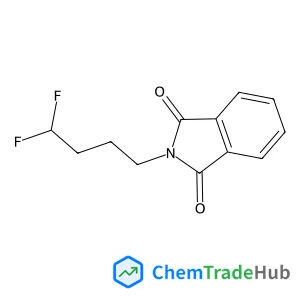
2-(4,4-Difluorobutyl)-1H-isoindole-1,3(2H)-dione
CAS Number:
1265341-14-7
Molecular Formula:
C12H11F2NO2
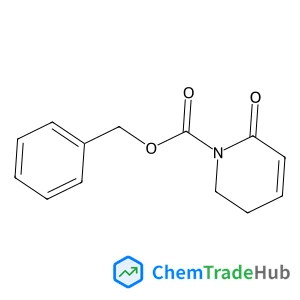
Benzyl 6-oxo-3,6-dihydro-1(2H)-pyridinecarboxylate
CAS Number:
725746-35-0
Molecular Formula:
C13H13NO3
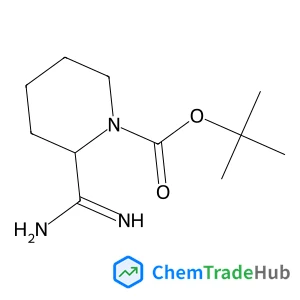
2-Methyl-2-propanyl 2-carbamimidoyl-1-piperidinecarboxylate
CAS Number:
1258640-98-0
Molecular Formula:
C11H21N3O2
Recommended Suppliers





Disclaimer
This page provides academic journal information for reference and research purposes only. We are not affiliated with any journal publishers and do not handle publication submissions. For publication-related inquiries, please contact the respective journal publishers directly.
If you notice any inaccuracies in the information displayed, please contact us at support@chemtradehub.com. We will promptly review and address your concerns.