












Responses of polar organic compounds to different ionic environments in aqueous media are interrelated
Literature Information
Publication Date
2014-09-15
DOI
10.1039/C4CP02084G
Impact Factor
3.676
Authors
L. A. Ferreira, A. Chervenak, S. Placko, A. Kestranek, P. P. Madeira, B. Y. Zaslavsky
View Original
Abstract
Solubilities of 17 polar organic compounds in aqueous solutions of Na2SO4, NaCl, NaClO4, and NaSCN at the salt concentrations of up to 1.0–2.0 M were determined and the Setschenow constant, ksalt, values were estimated. It was found that NaClO4 may display both salting-in and salting-out effects depending on the particular compound structure. The Setschenow constant values for all the polar compounds examined in different salt solutions are found to be interrelated. Similar relationships were observed for partition coefficients of nonionic organic compounds in aqueous polyethylene glycol–sodium sulfate two-phase systems in the presence of different salt additives reported previously [Ferreira et al., J. Chromatogr. A, 2011, 1218, 5031], and for the effects of different salts on optical rotation of amino acids reported by Rossi et al. [J. Phys. Chem. B, 2007, 111, 10510]. In order to explain the observed relationships it is suggested that all the effects observed originate as responses of the compounds to the presence of a given ionic environment and its interaction with the compounds by forming direct or solvent-separated ionic pairs. The response is compound-specific and its strength is determined by the compound structure and the type (and concentration) of ions inducing the response.
Recommended Journals
Related Literature
Metal-chelating nanoparticles as selective fluorescent sensor for Cu2+
Rachel Méallet-Renault, Robert Pansu, Sonia Amigoni-Gerbier, Chantal Larpent
2004-09-07
Communication
DOI: 10.1039/B407766K
A samarium cyclooctatetraene complex as catalyst for hydroamination/cyclisation catalysis
Agustino Zulys, Tarun K. Panda, Michael T. Gamer, Peter W. Roesky
2004-09-30
Communication
DOI: 10.1039/B410918J
A new approach to bioconjugates for proteins and peptides (“pegylation”) utilising living radical polymerisation
François Lecolley, Lei Tao, Giuseppe Mantovani, Ian Durkin, Sylvie Lautru, David M. Haddleton
2004-07-28
Communication
DOI: 10.1039/B407712A
A p-phosphinophenolate ligand for the palladium-catalysed arylation of alkenes
Eiji Shirakawa, Keijiro Ishii, Teruhisa Tsuchimoto
2004-10-19
Communication
DOI: 10.1039/B411125G
A C3-symmetric molecular scaffold for the construction of large receptors
Gebhard Haberhauer, Thomas Oeser, Frank Rominger
2004-08-06
Communication
DOI: 10.1039/B406335J
Highlights from the 39th ESF/EUCHEM Conference on Stereochemistry, Bürgenstock, Switzerland, April 2004
David R. Spring
2004-09-28
Conference Report
DOI: 10.1039/B409495F
Role of pore curvature on the thermal stability of gold nanoparticles in mesoporous silica
Mangesh T. Bore, Hien N. Pham, Timothy L. Ward, Abhaya K. Datye
2004-10-04
Communication
DOI: 10.1039/B407575G
Biomimetic thermo-responsive star diblock gelators
Yuting Li, Ravin Narain, Yinghua Ma, Andrew L. Lewis, Steven P. Armes
2004-10-18
Communication
DOI: 10.1039/B410150B
Water-in-water mesophases for templating inorganics
Andreas Taubert, Ernst Furrer, Wolfgang Meier
2004-09-02
Communication
DOI: 10.1039/B405610H
A regioregular polyalkylthiophene bearing covalently-linked biotin, and its interaction with avidin in solution and in thin films
Fouzi Mouffouk, Simon J. Higgins, Stewart J. Brown, Naser Sedghi, Bill Eccleston, Stuart Reeman
2004-09-06
Communication
DOI: 10.1039/B408935A
You might also like
Compound Q&A
How should waste containing 6-Chloro-5-(2'-hydroxy-3'-methoxy-4-biphenylyl)-3-(3-methoxyphenyl)-1H-pyrrolo[3,2-d]pyrimidine-2,4(3H,5H)-dione (CAS: 1346607-05-3) be handled?
Waste containing 6-Chloro-5-(2'-hydroxy-3'-methoxy-4-biphenylyl)-3-(3-methoxyphe...
1346607-05-36-Chloro-5-(2'-hydro...
Compound Q&A
What are the main uses of (3alpha,5alpha)-3-Hydroxypregnane-11,20-dione (CAS: 23930-19-0)?
(3alpha,5alpha)-3-Hydroxypregnane-11,20-dione is primarily used in the pharmaceu...
23930-19-0(3alpha,5alpha)-3-Hy...
Compound Q&A
What is the market or research trend for 4-Amino-6-chloro-2-pyridinecarboxylic acid (CAS: 546141-56-4)?
The market for 4-Amino-6-chloro-2-pyridinecarboxylic acid (CAS: 546141-56-4) is ...
546141-56-44-Amino-6-chloro-2-p...
Compound Q&A
Are there alternatives to (2-Benzoylethyl)trimethylammonium chloride (CAS: 24472-88-6) in synthesis?
Alternatives to (2-Benzoylethyl)trimethylammonium chloride (CAS: 24472-88-6) in ...
24472-88-6(2-Benzoylethyl)trim...
Compound Q&A
Is N-[4-Nitro-3-(trifluoromethyl)phenyl]acetamide (CAS: 393-12-4) safe?
N-[4-Nitro-3-(trifluoromethyl)phenyl]acetamide (CAS: 393-12-4) is generally safe...
393-12-4N-[4-Nitro-3-(triflu...
Compound Q&A
Are there alternatives to [(4R,5R,6S)-5-hydroxy-10-imino-3,7-dioxa-1,9-diazatricyclo[6.4.0.02,6]dodeca-8,11-dien-4-yl]methyl dihydrogen phosphate (CAS: 39679-56-6) in synthesis?
Alternative reagents such as other phosphates or similar functional groups can b...
39679-56-6[(4R,5R,6S)-5-hydrox...
Compound Q&A
Are there alternatives to N,N'-Bis(3-aminopropyl)-1,3-propanediamine (CAS: 4605-14-5) in synthesis?
There are alternatives to N,N'-Bis(3-aminopropyl)-1,3-propanediamine (CAS: 4605-...
4605-14-5N,N'-Bis(3-aminoprop...
Compound Q&A
What precautions should be taken when handling Aluminium trihexadecanoate (CAS: 555-35-1)?
When handling Aluminium trihexadecanoate, it is important to use appropriate per...
555-35-1Aluminium trihexadec...
Compound Q&A
What is (1,1-Dioxido-3-oxo-1,2-benzothiazol-2(3H)-yl)acetic acid (CAS: 52188-11-1)?
(1,1-Dioxido-3-oxo-1,2-benzothiazol-2(3H)-yl)acetic acid is a chemical compound ...
52188-11-1(1,1-Dioxido-3-oxo-1...
Compound Q&A
Are there alternatives to 5,5-dimethyloxolan-2-one (CAS: 3123-97-5) in synthesis?
Several alternatives to 5,5-dimethyloxolan-2-one (CAS: 3123-97-5) can be used in...
3123-97-55,5-dimethyloxolan-2...
Source Journal
Physical Chemistry Chemical Physics

CiteScore:
5.5
Self-citation Rate:
10.3%
Articles per Year:
3036
Physical Chemistry Chemical Physics (PCCP) is an international journal co-owned by 19 physical chemistry and physics societies from around the world. This journal publishes original, cutting-edge research in physical chemistry, chemical physics and biophysical chemistry. To be suitable for publication in PCCP, articles must include significant innovation and/or insight into physical chemistry; this is the most important criterion that reviewers and Editors will judge against when evaluating submissions. The journal has a broad scope and welcomes contributions spanning experiment, theory, computation and data science. Topical coverage includes spectroscopy, dynamics, kinetics, statistical mechanics, thermodynamics, electrochemistry, catalysis, surface science, quantum mechanics, quantum computing and machine learning. Interdisciplinary research areas such as polymers and soft matter, materials, nanoscience, energy, surfaces/interfaces, and biophysical chemistry are welcomed if they demonstrate significant innovation and/or insight into physical chemistry. Joined experimental/theoretical studies are particularly appreciated when complementary and based on up-to-date approaches.
Recommended Compounds
![1-[6-(1H-Imidazol-1-yl)-3-pyridinyl]methanamine structure](https://static.chemtradehub.com/structs/914/914637-08-4-8825.webp "1-[6-(1H-Imidazol-1-yl)-3-pyridinyl]methanamine structure")
![1,10-bis(3,5-dimethylphenyl)-12-hydroxy-4,5,6,7-tetrahydroiindeno[7,1-de:1',7'-fg][1,3,2]dioxaphosphocine 12-oxide structure](https://static.chemtradehub.com/structs/141/1412439-82-7-b9a9.webp "1,10-bis(3,5-dimethylphenyl)-12-hydroxy-4,5,6,7-tetrahydroiindeno[7,1-de:1',7'-fg][1,3,2]dioxaphosphocine 12-oxide structure")
1,10-bis(3,5-dimethylphenyl)-12-hydroxy-4,5,6,7-tetrahydroiindeno[7,1-de:1',7'-fg][1,3,2]dioxaphosphocine 12-oxide
CAS Number:
1412439-82-7
Molecular Formula:
C33H31O4P
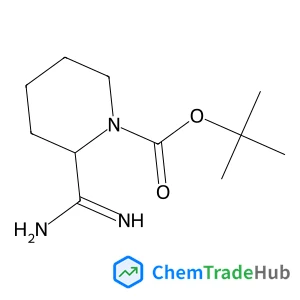
2-Methyl-2-propanyl 2-carbamimidoyl-1-piperidinecarboxylate
CAS Number:
1258640-98-0
Molecular Formula:
C11H21N3O2
Recommended Suppliers






Disclaimer
This page provides academic journal information for reference and research purposes only. We are not affiliated with any journal publishers and do not handle publication submissions. For publication-related inquiries, please contact the respective journal publishers directly.
If you notice any inaccuracies in the information displayed, please contact us at support@chemtradehub.com. We will promptly review and address your concerns.