












![1-[6-(1H-Imidazol-1-yl)-3-pyridinyl]methanamine structure](https://static.chemtradehub.com/structs/914/914637-08-4-8825.webp "1-[6-(1H-Imidazol-1-yl)-3-pyridinyl]methanamine structure")
On the dual character of charged metal–molecule hybrids and the opposite behaviour of the forward and reverse CT processes
Literature Information
Publication Date
2014-09-17
DOI
10.1039/C4CP03984J
Impact Factor
3.676
Authors
J. Roman-Perez, S. P. Centeno, M. R. López-Ramírez, J. F. Arenas, J. Soto, I. López-Tocón, J. C. Otero
View Original
Abstract
DFT calculations predict two different electronic structures of metal–molecule hybrids which are selected depending on the surface charge. While the metal-to-molecule CT states are very sensitive to the charge, the energies of the reverse molecule-to-metal CT processes are surprisingly not modified at all by the charge of the metal.
Related Literature
The isomerisation of (Z)-3-[2H1]-phenylprop-2-enone as a measure of the rate of hydroperoxide addition in Weitz–Scheffer and Juliá–Colonna epoxidations
David R. Kelly, Eva Caroff, Robert W. Flood, William Heal, Stanley M. Roberts
2004-08-25
Communication
DOI: 10.1039/B404389H
A novel strategy for the preparation of arylhydroxylamines: chemoselective reduction of aromatic nitro compounds using bakers' yeast
Feng Li, Jingnan Cui, Rong Zhang
2004-09-07
Communication
DOI: 10.1039/B408566C
Mechanism of hydrogen transfer to imines from a hydroxycyclopentadienyl ruthenium hydride. Support for a stepwise mechanism
Joseph S. M. Samec, Alida H. Éll, Jan-E. Bäckvall
2004-10-06
Communication
DOI: 10.1039/B410698A
Photochemical polymerization of thiophene derivatives in aqueous solution
Sergey A. Piletsky, Elena V. Piletska, Kal Karim, Frank Davis, Seamus P. J. Higson, Anthony P. F. Turner
2004-08-20
Communication
DOI: 10.1039/B408387C
A robust, porous, cationic silver(i) 3,5-diphenyl-1,2,4-triazolate framework with a uninodal 49.66 net
Guang Yang, Raphael G. Raptis
2004-08-13
Communication
DOI: 10.1039/B404269G
A samarium cyclooctatetraene complex as catalyst for hydroamination/cyclisation catalysis
Agustino Zulys, Tarun K. Panda, Michael T. Gamer, Peter W. Roesky
2004-09-30
Communication
DOI: 10.1039/B410918J
Racemic d,l-asparagine causes enantiomeric excess of other coexisting racemic d,l-amino acids during recrystallization: a hypothesis accounting for the origin of l-amino acids in the biosphere
Shosuke Kojo, Hiromi Uchino, Mayu Yoshimura, Kyoko Tanaka
2004-09-07
Communication
DOI: 10.1039/B409941A
Mono- and bis(tetrathiafulvaleno)hexadehydro[12]annulenes
Kenji Hara, Masashi Hasegawa, Yoshiyuki Kuwatani, Hideo Enozawa, Masahiko Iyoda
2004-08-13
Communication
DOI: 10.1039/B407200F
Synthesis and characterization of electron-rich nickel tris-carbene complexes‡
Xile Hu, Ingrid Castro-Rodriguez, Karsten Meyer
2004-08-23
Communication
DOI: 10.1039/B409241D
Practical asymmetric synthesis of β-hydroxy-β-trifluoromethylated ketonesvia the first example of the in situ generation of trifluoro-acetaldehyde and its successive asymmetric carbon–carbon bond formation reaction with chiral imines
Kazumasa Funabiki, Wataru Hashimoto, Masaki Matsui
2004-08-13
Communication
DOI: 10.1039/B408226E
You might also like
Compound Q&A
How should waste containing 6-Chloro-5-(2'-hydroxy-3'-methoxy-4-biphenylyl)-3-(3-methoxyphenyl)-1H-pyrrolo[3,2-d]pyrimidine-2,4(3H,5H)-dione (CAS: 1346607-05-3) be handled?
Waste containing 6-Chloro-5-(2'-hydroxy-3'-methoxy-4-biphenylyl)-3-(3-methoxyphe...
1346607-05-36-Chloro-5-(2'-hydro...
Compound Q&A
What are the main uses of (3alpha,5alpha)-3-Hydroxypregnane-11,20-dione (CAS: 23930-19-0)?
(3alpha,5alpha)-3-Hydroxypregnane-11,20-dione is primarily used in the pharmaceu...
23930-19-0(3alpha,5alpha)-3-Hy...
Compound Q&A
What is the market or research trend for 4-Amino-6-chloro-2-pyridinecarboxylic acid (CAS: 546141-56-4)?
The market for 4-Amino-6-chloro-2-pyridinecarboxylic acid (CAS: 546141-56-4) is ...
546141-56-44-Amino-6-chloro-2-p...
Compound Q&A
Are there alternatives to (2-Benzoylethyl)trimethylammonium chloride (CAS: 24472-88-6) in synthesis?
Alternatives to (2-Benzoylethyl)trimethylammonium chloride (CAS: 24472-88-6) in ...
24472-88-6(2-Benzoylethyl)trim...
Compound Q&A
Is N-[4-Nitro-3-(trifluoromethyl)phenyl]acetamide (CAS: 393-12-4) safe?
N-[4-Nitro-3-(trifluoromethyl)phenyl]acetamide (CAS: 393-12-4) is generally safe...
393-12-4N-[4-Nitro-3-(triflu...
Compound Q&A
Are there alternatives to [(4R,5R,6S)-5-hydroxy-10-imino-3,7-dioxa-1,9-diazatricyclo[6.4.0.02,6]dodeca-8,11-dien-4-yl]methyl dihydrogen phosphate (CAS: 39679-56-6) in synthesis?
Alternative reagents such as other phosphates or similar functional groups can b...
39679-56-6[(4R,5R,6S)-5-hydrox...
Compound Q&A
Are there alternatives to N,N'-Bis(3-aminopropyl)-1,3-propanediamine (CAS: 4605-14-5) in synthesis?
There are alternatives to N,N'-Bis(3-aminopropyl)-1,3-propanediamine (CAS: 4605-...
4605-14-5N,N'-Bis(3-aminoprop...
Compound Q&A
What precautions should be taken when handling Aluminium trihexadecanoate (CAS: 555-35-1)?
When handling Aluminium trihexadecanoate, it is important to use appropriate per...
555-35-1Aluminium trihexadec...
Compound Q&A
What is (1,1-Dioxido-3-oxo-1,2-benzothiazol-2(3H)-yl)acetic acid (CAS: 52188-11-1)?
(1,1-Dioxido-3-oxo-1,2-benzothiazol-2(3H)-yl)acetic acid is a chemical compound ...
52188-11-1(1,1-Dioxido-3-oxo-1...
Compound Q&A
Are there alternatives to 5,5-dimethyloxolan-2-one (CAS: 3123-97-5) in synthesis?
Several alternatives to 5,5-dimethyloxolan-2-one (CAS: 3123-97-5) can be used in...
3123-97-55,5-dimethyloxolan-2...
Source Journal
Physical Chemistry Chemical Physics

CiteScore:
5.5
Self-citation Rate:
10.3%
Articles per Year:
3036
Physical Chemistry Chemical Physics (PCCP) is an international journal co-owned by 19 physical chemistry and physics societies from around the world. This journal publishes original, cutting-edge research in physical chemistry, chemical physics and biophysical chemistry. To be suitable for publication in PCCP, articles must include significant innovation and/or insight into physical chemistry; this is the most important criterion that reviewers and Editors will judge against when evaluating submissions. The journal has a broad scope and welcomes contributions spanning experiment, theory, computation and data science. Topical coverage includes spectroscopy, dynamics, kinetics, statistical mechanics, thermodynamics, electrochemistry, catalysis, surface science, quantum mechanics, quantum computing and machine learning. Interdisciplinary research areas such as polymers and soft matter, materials, nanoscience, energy, surfaces/interfaces, and biophysical chemistry are welcomed if they demonstrate significant innovation and/or insight into physical chemistry. Joined experimental/theoretical studies are particularly appreciated when complementary and based on up-to-date approaches.
Recommended Compounds
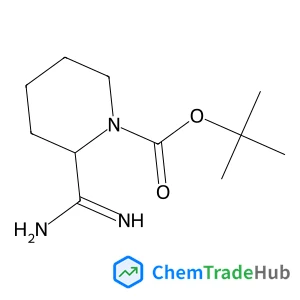
2-Methyl-2-propanyl 2-carbamimidoyl-1-piperidinecarboxylate
CAS Number:
1258640-98-0
Molecular Formula:
C11H21N3O2
Recommended Suppliers






Disclaimer
This page provides academic journal information for reference and research purposes only. We are not affiliated with any journal publishers and do not handle publication submissions. For publication-related inquiries, please contact the respective journal publishers directly.
If you notice any inaccuracies in the information displayed, please contact us at support@chemtradehub.com. We will promptly review and address your concerns.