












DPA-substituted coumarins as chemosensors for zinc(ii): modulation of the chemosensory characteristics by variation of the position of the chelate on the coumarin
Literature Information
Publication Date
2004-04-01
DOI
10.1039/B403448A
Impact Factor
6.222
Authors
Nathaniel C. Lim, Christian Brückner
View Original
Abstract
The sensory capabilities of two novel di(2-picolyl)amine (DPA)-substituted coumarins are described and it is shown that the variation of the point of attachment of the DPA group to the coumarin framework controls their sensing behavior: the 4-substituted system is a CHEF-type sensor that shows a significant increase in fluorescence intensity upon Zn2+ binding, whereas the 3-substituted system is a ratiometric sensor.
Related Literature
Seaurchin-like hierarchical NiCo2O4@NiMoO4 core–shell nanomaterials for high performance supercapacitors
Qiang Zhang, Yanghua Deng, Zhonghua Hu, Yafei Liu, Mingming Yao, Peipei Liu
2014-09-12
Paper
DOI: 10.1039/C4CP02928C
Complexation of DNA with ruthenium organometallic compounds: the high complexation ratio limit
Stéphane Despax, Fuchao Jia, Michel Pfeffer, Pascal Hébraud
2014-03-28
Paper
DOI: 10.1039/C4CP00726C
Remarkable enhancement of the photoreactivity of a polyfluoroalkyl azobenzene derivative in an organic–inorganic nano-layered microenvironment
Vivek Ramakrishnan, Shin Sasamoto
2014-09-09
Paper
DOI: 10.1039/C4CP03549F
Entropy reduction in unfolded peptides (and proteins) due to conformational preferences of amino acid residues
Reinhard Schweitzer-Stenner, Siobhan E. Toal
2014-09-09
Paper
DOI: 10.1039/C4CP02108H
On subthreshold ionization of helium droplets, ejection of He+, and the role of anions
Michael Renzler, Matthias Daxner, Nikolaus Weinberger, Stephan Denifl, Paul Scheier
2014-09-12
Communication
DOI: 10.1039/C4CP03236E
Photoisomerization and structural dynamics of two nitrosylruthenium complexes: a joint study by NMR and nonlinear IR spectroscopies
Jianru Wang, Yan Zhao, Xiaoyan Qiao
2014-09-09
Paper
DOI: 10.1039/C4CP02298J
Responses of polar organic compounds to different ionic environments in aqueous media are interrelated
L. A. Ferreira, A. Chervenak, S. Placko, A. Kestranek, P. P. Madeira, B. Y. Zaslavsky
2014-09-15
Paper
DOI: 10.1039/C4CP02084G
Lithium cation conducting TDI anion-based ionic liquids
Leszek Niedzicki, Ewelina Karpierz, Maciej Zawadzki, Maciej Dranka, Marta Kasprzyk, Aldona Zalewska, Marek Marcinek, Janusz Zachara, Urszula Domańska, Władysław Wieczorek
2014-03-17
Paper
DOI: 10.1039/C3CP55354J
Polarisation charge switching through the motion of metal atoms trapped in fullerene cages
G. Raggi, A. J. Stace, E. Bichoutskaia
2014-09-24
Paper
DOI: 10.1039/C4CP02672A
Probing the kinetic energy-release dynamics of H-atom products from the gas-phase reaction of O(3P) with vinyl radical C2H3
Su-Chan Jang, Jong-Ho Choi
2014-10-01
Paper
DOI: 10.1039/C4CP03046J
You might also like
Compound Q&A
What is the market or research trend for N-(4-Methoxybenzyl)-2-pyridinamine (CAS: 52818-63-0)?
N-(4-Methoxybenzyl)-2-pyridinamine (CAS: 52818-63-0) is increasingly being used ...
52818-63-0N-(4-Methoxybenzyl)-...
Compound Q&A
What precautions should be taken when handling Ethyl 4-(2-chlorophenyl)-1,3-thiazole-2-carboxylate (CAS: 1050507-06-6)?
When handling Ethyl 4-(2-chlorophenyl)-1,3-thiazole-2-carboxylate, appropriate p...
1050507-06-6Ethyl 4-(2-chlorophe...
Compound Q&A
What regulatory guidelines apply to diethyldiselane (CAS: 628-39-7)?
Diethyldiselane (CAS: 628-39-7) is classified under the Globally Harmonized Syst...
628-39-7Diethyldiselane
Compound Q&A
What is the market or research trend for oxocopper (CAS: 12053-18-8)?
The market for oxocopper (CAS: 12053-18-8) is primarily driven by its use in cat...
12053-18-8oxocopper; oxo-(oxoc...
Compound Q&A
What is the market or research trend for 5-{[(2-Methyl-2-propanyl)oxy]carbonyl}-5-azaspiro[2.4]heptane-7-carboxylic acid?
The market for 5-{[(2-Methyl-2-propanyl)oxy]carbonyl}-5-azaspiro[2.4]heptane-7-c...
1268519-54-55-{[(2-Methyl-2-prop...
Compound Q&A
What is 2-(1-Pyrrolidinyl)-4-pyridinamine (CAS: 35981-63-6)?
2-(1-Pyrrolidinyl)-4-pyridinamine is a chemical compound with the CAS number 359...
35981-63-62-(1-Pyrrolidinyl)-4...
Compound Q&A
What are the physical and chemical properties of 2-(3-Pyridinyl)-1-azabicyclo[2.2.2]octane (CAS: 91556-75-1)?
2-(3-Pyridinyl)-1-azabicyclo[2.2.2]octane (CAS: 91556-75-1) is a crystalline sol...
91556-75-12-(3-Pyridinyl)-1-az...
Compound Q&A
How is (S)-Alpha-allyl-proline hydrochloride (CAS: 129704-91-2) typically synthesized?
(S)-Alpha-allyl-proline hydrochloride is usually synthesized via a Wittig reacti...
129704-91-2(S)-Alpha-allyl-prol...
Compound Q&A
What is 3-Methyl-1,2-oxazole-5-carboxylic acid (CAS: 4857-42-5)?
3-Methyl-1,2-oxazole-5-carboxylic acid (CAS: 4857-42-5) is an organic compound w...
4857-42-53-Methyl-1,2-oxazole...
Compound Q&A
How is Lys-SMCC-DM1 (CAS: 1281816-04-3) typically synthesized?
Lys-SMCC-DM1 is synthesized via a multi-step process involving the coupling of S...
1281816-04-3Lys-SMCC-DM1
Source Journal
Chemical Communications

CiteScore:
8.6
Self-citation Rate:
4.7%
Articles per Year:
2458
ChemComm publishes urgent research which is of outstanding significance and interest to experts in the field, while also appealing to the journal’s broad chemistry readership. Our communication format is ideally suited to short, urgent studies that are of such importance that they require accelerated publication. Our scope covers all topics in chemistry, and research at the interface of chemistry and other disciplines (such as materials science, nanoscience, physics, engineering and biology) where there is a significant novelty in the chemistry aspects. Major topic areas covered include: Analytical Chemistry Catalysis Chemical Biology and medicinal chemistry Computational Chemistry and Machine Learning Energy and sustainable chemistry Environmental Chemistry Green Chemistry Inorganic Chemistry Materials Chemistry Nanoscience Organic Chemistry Physical Chemistry Polymer Chemistry Supramolecular Chemistry
Recommended Compounds
![(2R,6S)-6-[(Benzyloxy)methyl]-4-{[(2-methyl-2-propanyl)oxy]carbonyl}-2-morpholinecarboxylic acid structure](https://static.chemtradehub.com/structs/109/1093085-91-6-3382.webp "(2R,6S)-6-[(Benzyloxy)methyl]-4-{[(2-methyl-2-propanyl)oxy]carbonyl}-2-morpholinecarboxylic acid structure")
(2R,6S)-6-[(Benzyloxy)methyl]-4-{[(2-methyl-2-propanyl)oxy]carbonyl}-2-morpholinecarboxylic acid
CAS Number:
1093085-91-6
Molecular Formula:
C18H25NO6
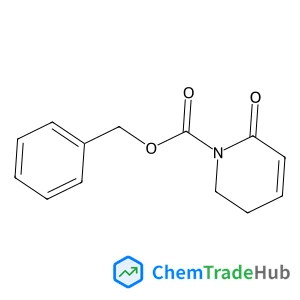
Benzyl 6-oxo-3,6-dihydro-1(2H)-pyridinecarboxylate
CAS Number:
725746-35-0
Molecular Formula:
C13H13NO3
![N-{[(2-Methyl-2-propanyl)oxy]carbonyl}-L-methionylglycine structure](https://static.chemtradehub.com/structs/234/23446-03-9-e1e5.webp "N-{[(2-Methyl-2-propanyl)oxy]carbonyl}-L-methionylglycine structure")
N-{[(2-Methyl-2-propanyl)oxy]carbonyl}-L-methionylglycine
CAS Number:
23446-03-9
Molecular Formula:
C12H22N2O5S
Recommended Suppliers






Disclaimer
This page provides academic journal information for reference and research purposes only. We are not affiliated with any journal publishers and do not handle publication submissions. For publication-related inquiries, please contact the respective journal publishers directly.
If you notice any inaccuracies in the information displayed, please contact us at support@chemtradehub.com. We will promptly review and address your concerns.