(3alpha,5beta,6alpha,7alpha)-6-Ethylcholane-3,7,24-triol
CAS Number:
1537866-49-1
Molecular Formula:
C26H46O3
Yang Zou, Wenlong Liu, Song Gao, Jingli Xie, Qingjin Meng
A novel one-dimensional ladder-like Cu–Ba compound {[Ba(H2O)3(CuL)2]·2H2O}n (H3L = Glycylglycine, N-[1-(2-hydroxyphenyl)propylidene]), has been synthesized and structurally characterized; it exhibits ferromagnetic interaction.
J. E. Newton, J. A. Preece, N. V. Rees, S. L. Horswell
DOI: 10.1039/C4CP00991F
Elayaraja Kolanthai, Rajib Kalsar, Suryasarathi Bose, Satyam Suwas, Kaushik Chatterjee
DOI: 10.1039/C4CP02815E
Dao-Bo Li, Yuan-Yuan Cheng, Ling-Li Li, Wen-Wei Li, Yu-Xi Huang, Dan-Ni Pei, Zhong-Hua Tong, Yang Mu, Han-Qing Yu
DOI: 10.1039/C4CP04065A
Tianshan Zhao, Shunhong Zhang, Yoshiyuki Kawazoe, Puru Jena
DOI: 10.1039/C4CP02758B
Michael Renzler, Matthias Daxner, Nikolaus Weinberger, Stephan Denifl, Paul Scheier
DOI: 10.1039/C4CP03236E
Swati Vartak, Anatoly Golovnev, Ata Roudgar, Michael Eikerling
DOI: 10.1039/C4CP02937B
Jenny G. Vitillo, Elena Groppo, Elisa Gil Bardají, Marcello Baricco, Silvia Bordiga
DOI: 10.1039/C4CP03300K
Jiandong Wu, Guohua Gao, Guangming Wu, Bo Liu, Huiyu Yang, Xiaowei Zhou, Jichao Wang
DOI: 10.1039/C4CP03176H
J. C. J. Camp, J. McGregor, I. M. Watson, R. A. Cox, M. Kalberer, A. D. Ward, F. D. Pope
DOI: 10.1039/C4CP00994K
N-(4-Methoxybenzyl)-2-pyridinamine (CAS: 52818-63-0) is increasingly being used ...
When handling Ethyl 4-(2-chlorophenyl)-1,3-thiazole-2-carboxylate, appropriate p...
Diethyldiselane (CAS: 628-39-7) is classified under the Globally Harmonized Syst...
The market for oxocopper (CAS: 12053-18-8) is primarily driven by its use in cat...
The market for 5-{[(2-Methyl-2-propanyl)oxy]carbonyl}-5-azaspiro[2.4]heptane-7-c...
2-(1-Pyrrolidinyl)-4-pyridinamine is a chemical compound with the CAS number 359...
2-(3-Pyridinyl)-1-azabicyclo[2.2.2]octane (CAS: 91556-75-1) is a crystalline sol...
(S)-Alpha-allyl-proline hydrochloride is usually synthesized via a Wittig reacti...
3-Methyl-1,2-oxazole-5-carboxylic acid (CAS: 4857-42-5) is an organic compound w...
Lys-SMCC-DM1 is synthesized via a multi-step process involving the coupling of S...

ChemComm publishes urgent research which is of outstanding significance and interest to experts in the field, while also appealing to the journal’s broad chemistry readership. Our communication format is ideally suited to short, urgent studies that are of such importance that they require accelerated publication. Our scope covers all topics in chemistry, and research at the interface of chemistry and other disciplines (such as materials science, nanoscience, physics, engineering and biology) where there is a significant novelty in the chemistry aspects. Major topic areas covered include: Analytical Chemistry Catalysis Chemical Biology and medicinal chemistry Computational Chemistry and Machine Learning Energy and sustainable chemistry Environmental Chemistry Green Chemistry Inorganic Chemistry Materials Chemistry Nanoscience Organic Chemistry Physical Chemistry Polymer Chemistry Supramolecular Chemistry
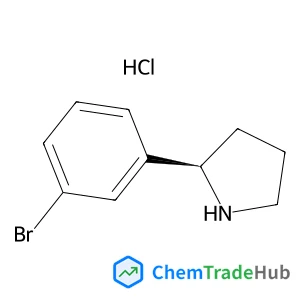
![1-oxaspiro[4.4]nonan-6-one structure](https://static.chemtradehub.com/structs/134/134179-01-4-e051.webp "1-oxaspiro[4.4]nonan-6-one structure")