












Mapping the resources and approaches facilitating computer-aided synthesis planning
Literature Information
Publication Date
2020-08-28
DOI
10.1039/D0QO00946F
Impact Factor
5.281
Authors
Zheng Wang, Wei Zhao, Gefei Hao, Baoan Song
View Original
Abstract
Despite continuously significant breakthroughs in academia, organic synthesis remains the rate-limiting step everywhere, especially in a research environment where budget, manpower, and materials are increasingly restricted. Computer-aided synthesis planning (CASP) is a promising area of research with potential to have a tremendous impact on drug discovery, industrial chemistry, and materials science. Recently, there has been a boom in the growth of synthesis data and the application of artificial intelligence (AI) in CASP has been revitalized. However, a study of the available resources and approaches that can facilitate AI-driven organic synthesis has not been performed. This review critically examines the state of resources and approaches necessary in CASP, including big data, algorithms, and their features, advantages, limitations, and programming barriers. We conclude by outlining routes to lower the threshold for CASP research, as well as addressing research questions for the present and forecasting their role in next-generation CASP systems.
Related Literature
Carbon nanotube-supported gold nanoparticles as efficient catalysts for selective oxidation of cellobiose into gluconic acid in aqueous medium
Xuesong Tan, Weiping Deng, Mi Liu, Qinghong Zhang, Ye Wang
2009-10-14
Communication
DOI: 10.1039/B917224F
Effect of substituents of alloxazine derivatives on the selectivity and affinity for adenine in AP-site-containing DNA duplexes
Burki Rajendar, Arivazhagan Rajendran, Zhiqiang Ye, Eriko Kanai, Yusuke Sato, Marek Sikorski
2010-08-31
Paper
DOI: 10.1039/C0OB00057D
Synthesis of 3-amino-thiochromanes from 4-benzyl 2-thiazolines, via an unprecedented intramolecular electrophilic aromatic substitution
Guillaume Mercey, Remi Legay, Jean-François Lohier, Jana Sopkova-de Oliveira Santos, Jocelyne Levillain, Annie-Claude Gaumont, Mihaela Gulea
2010-04-22
Communication
DOI: 10.1039/C003050C
The highly enantioselective Michael addition of ketones to nitrodienes catalyzed by the efficient organocatalyst system of pyrrolidinyl-thioimidazole and chiral thioureido acid
Zhao-Bo Li, Shu-Ping Luo, Yi Guo, Ai-Bao Xia, Dan-Qian Xu
2010-04-22
Communication
DOI: 10.1039/C002197K
Reusable polystyrene-supported Pdcatalyst for Mizoroki–Heck reactions with extremely low amounts of supported Pd
Carine Diebold, Stéphane Schweizer, Jean-Michel Becht, Claude Le Drian
2010-09-09
Communication
DOI: 10.1039/C0OB00523A
Radiolytic cyclization of stem-and-loop structured oligodeoxynucleotide with neighboring arrangement of α,ω-bis-disulfides
Kazuhito Tanabe, Eiji Matsumoto, Takeo Ito, Sei-ichi Nishimoto
2010-09-03
Paper
DOI: 10.1039/C0OB00275E
Theoretical investigations on the formation of nitrobenzanthrone-DNA Adducts
Volker M. Arlt, David H. Phillips, Jóhannes Reynisson
2011-05-26
Paper
DOI: 10.1039/C1OB05570D
Electrochemistry at carbon nanotubes: perspective and issues
Ioana Dumitrescu, Patrick R. Unwin, Julie V. Macpherson
2009-09-23
Feature Article
DOI: 10.1039/B909734A
New facets of an old ligand: titanium and zirconium complexes of phenylenediamine bis(phenolate) in lactide polymerisation catalysis
Ayellet L. Zelikoff, Jacob Kopilov, Israel Goldberg, Geoffrey W. Coates, Moshe Kol
2009-10-02
Communication
DOI: 10.1039/B915211C
You might also like
Compound Q&A
What industries use (1R,3S)-1,3-Cyclopentanediol (CAS: 16326-97-9)?
(1R,3S)-1,3-Cyclopentanediol finds applications in various industries. In the ph...
16326-97-9(1R,3S)-1,3-Cyclopen...
Compound Q&A
What precautions should be taken when handling N'-[4-(Dimethylamino)phenyl]-N,N-dimethyl-1,4-benzenediamine (CAS: 637-31-0)?
When handling N'-[4-(Dimethylamino)phenyl]-N,N-dimethyl-1,4-benzenediamine, it i...
637-31-0N'-[4-(Dimethylamino...
Compound Q&A
Are there alternatives to 5-(2,4-Difluorophenyl)-2-methoxypyrimidine (CAS: 1352318-16-1) in synthesis?
There are several alternatives to 5-(2,4-Difluorophenyl)-2-methoxypyrimidine in ...
1352318-16-15-(2,4-Difluoropheny...
Compound Q&A
What regulatory guidelines apply to 1-(3-Methoxyphenoxy)propan-2-ol (CAS: 382141-68-6)?
1-(3-Methoxyphenoxy)propan-2-ol (CAS: 382141-68-6) must comply with the Globally...
382141-68-61-(3-Methoxyphenoxy)...
Compound Q&A
Is Tetrodotoxin Citrate (CAS: 18660-81-6) safe?
Tetrodotoxin Citrate is extremely dangerous and should be handled with extreme c...
18660-81-6Tetrodotoxin Citrate
Compound Q&A
What are the main uses of 2-Methyl-2-propanyl [(1R,3S)-3-hydroxycyclopentyl]carbamate (CAS: 225641-84-9)?
2-Methyl-2-propanyl [(1R,3S)-3-hydroxycyclopentyl]carbamate (CAS: 225641-84-9) i...
225641-84-92-Methyl-2-propanyl ...
Compound Q&A
How should waste containing 4-(2-Hydroxyhexafluoroisopropyl)Benzoic Acid (CAS: 16261-80-6) be handled?
Waste containing 4-(2-Hydroxyhexafluoroisopropyl)Benzoic Acid (CAS: 16261-80-6) ...
16261-80-64-(2-Hydroxyhexafluo...
Compound Q&A
How is 2-Methyl-2-proanyl {(2S)-1-[(benzyloxy)amino]-3-hydroxy-3-methyl-1-oxo-2-butanyl}carbamate (CAS: 102507-19-7) typically synthesized?
2-Methyl-2-proanyl {(2S)-1-[(benzyloxy)amino]-3-hydroxy-3-methyl-1-oxo-2-butanyl...
102507-19-72-Methyl-2-propanyl ...
Compound Q&A
What is Benzeneethanamine, α-ethyl-, hydrochloride (1:1) (CAS: 20735-15-3)?
Benzeneethanamine, α-ethyl-, hydrochloride (1:1) is an organic compound with the...
20735-15-3Benzeneethanamine, α...
Compound Q&A
Are there alternatives to 3-{(E)-[4-(Dimethylamino)phenyl]diazenyl}benzoic acid (CAS: 20691-84-3) in synthesis?
In the synthesis of compounds similar to 3-{(E)-[4-(Dimethylamino)phenyl]diazeny...
20691-84-33-{(E)-[4-(Dimethyla...
Source Journal
Organic Chemistry Frontiers

CiteScore:
7.8
Self-citation Rate:
8.7%
Articles per Year:
724
Organic Chemistry Frontiers publishes high-quality research from across organic chemistry. Emphases are placed on studies that make significant contributions to the field of organic chemistry by reporting either new or significantly improved protocols or methodologies. Topics include, but are not limited to the following: Organic synthesis Development of synthetic methodologies Catalysis Natural products Functional organic materials Supramolecular and macromolecular chemistry Physical and computational organic chemistry
Recommended Compounds
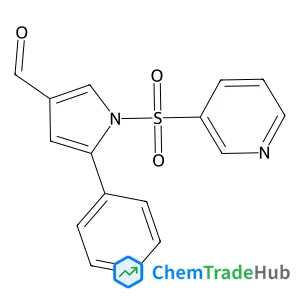
5-Phenyl-1-(pyridin-3-ylsulfonyl)-1H-pyrrole-3-carbaldehyde
CAS Number:
881676-90-0
Molecular Formula:
C16H12N2O3S
![6-Bromo-2,3-dihydro-1H-pyrido[2,3-b][1,4]oxazine structure](https://static.chemtradehub.com/structs/120/1203499-17-5-b4d1.webp "6-Bromo-2,3-dihydro-1H-pyrido[2,3-b][1,4]oxazine structure")
6-Bromo-2,3-dihydro-1H-pyrido[2,3-b][1,4]oxazine
CAS Number:
1203499-17-5
Molecular Formula:
C7H7BrN2O
![2-{[(1R,2S)-2-Aminocyclohexyl]amino}-4-{[3-(2H-1,2,3-triazol-2-yl)phenyl]amino}-5-pyrimidinecarboxamide structure](https://static.chemtradehub.com/structs/137/1370261-96-3-40df.webp "2-{[(1R,2S)-2-Aminocyclohexyl]amino}-4-{[3-(2H-1,2,3-triazol-2-yl)phenyl]amino}-5-pyrimidinecarboxamide structure")
2-{[(1R,2S)-2-Aminocyclohexyl]amino}-4-{[3-(2H-1,2,3-triazol-2-yl)phenyl]amino}-5-pyrimidinecarboxamide
CAS Number:
1370261-96-3
Molecular Formula:
C19H23N9O
Recommended Suppliers




Disclaimer
This page provides academic journal information for reference and research purposes only. We are not affiliated with any journal publishers and do not handle publication submissions. For publication-related inquiries, please contact the respective journal publishers directly.
If you notice any inaccuracies in the information displayed, please contact us at support@chemtradehub.com. We will promptly review and address your concerns.