












Theoretical investigations on the formation of nitrobenzanthrone-DNA Adducts
Literature Information
Publication Date
2011-05-26
DOI
10.1039/C1OB05570D
Impact Factor
3.876
Authors
Volker M. Arlt, David H. Phillips, Jóhannes Reynisson
View Original
Abstract
3-Nitrobenzanthrone (3-NBA) is a potent mutagen and suspected human carcinogen identified in diesel exhaust. The thermochemical formation cascades were calculated for six 3-NBA-derived DNA adducts employing its arylnitrenium ion as precursor using density functional theory (DFT). Clear exothermic pathways were found for four adducts, i.e., 2-(2′-deoxyadenosin-N6-yl)-3-aminobenzanthrone, 2-(2′-deoxyguanosin-N2-yl)-3-aminobenzanthrone, N-(2′-deoxyguanosin-8-yl)-3-aminobenzanthrone and 2-(2′-deoxyguanosin-8-yl)-3-aminobenzanthrone. All four have been observed to be formed in cell-free experimental systems. The formation of N-(2′-deoxyadenosin-8-yl)-3-aminobenzanthrone is predicted to be not thermochemically viable explaining its absence in either in vitro or in vivo model systems. However, 2-(2′-deoxyadenosin-8-yl)-3-aminobenzanthrone, can be formed, albeit not as a major product, and is a viable candidate for an unknown adenine adduct observed experimentally. 2-nitrobenzanthrone (2-NBA), an isomer of 3-NBA, was also included in the calculations; it has a higher abundance in ambient air than 3-NBA, but a much lower genotoxic potency. Similar thermochemical profiles were obtained for the calculated 2-NBA-derived DNA adducts. This leads to the conclusion that enzymatic activation as well as the stability of its arylnitrenium ion are important determinants of 2-NBA genotoxicity.
Recommended Journals
Related Literature
Correction: Increasing efficiency of perovskite solar cells using low concentrating photovoltaic systems
Hasan Baig, Hiroyuki Kanda, Abdullah M. Asiri, Mohammad Khaja Nazeeruddin, Tapas Mallick
2020-07-14
Correction
DOI: 10.1039/D0SE90048F
EndoV/DNA ligase mutation scanning assay using microchip capillary electrophoresis and dual-color laser-induced fluorescence detection
Małgorzata A. Witek, John K. Osiri, Hong Wang, Rondedrick Sinville, Hanna Pincas, Francis Barany
2011-10-07
Paper
DOI: 10.1039/C1AY05366C
Cobalt(ii) ions and cobalt nanoparticle embedded porous organic polymers: an efficient electrocatalyst for water-splitting reactions
Krishnan Giribabu, Murugavel Kathiresan, Kyusik Yun
2020-05-11
Paper
DOI: 10.1039/D0SE00580K
Nano-assembly of ursolic acid with platinum prodrug overcomes multiple deactivation pathways in platinum-resistant ovarian cancer
Yupeng Wang, Zhijian Luo, Dongfang Zhou, Xuefeng Wang
2021-04-03
Paper
DOI: 10.1039/D1BM00087J
An efficient bi-functional permselective separator coated with cubic type-Li7La3Zr2O12 and activated carbon for lithium–sulfur batteries
N. Angulakshmi, R. Baby Dhanalakshmi, Paulina Półrolniczak, Mariusz Walkowiak, Pengfei Xie, Xiaohui Tian, Yingke Zhou, A. Manuel Stephan
2020-05-06
Paper
DOI: 10.1039/D0SE00594K
The influence of ammonium salts on the precipitation of nickel by ammonia
Paper
DOI: 10.1039/AN8992400202
Fluorinated oligothiophene donors for high-performance nonfullerene small-molecule organic solar cells
Yuying Chang, Cenqi Yan, Qianguang Yang, Zhipeng Kan, Ranbir Singh, Manish Kumar, Gang Li, Shirong Lu, Tainan Duan
2020-04-07
Communication
DOI: 10.1039/D0SE00335B
Morphology oriented CuS nanostructures: superior K-ion storage using surface enhanced pseudocapacitive effects
Chandrasekaran Nithya, Gowtham Thiyagaraj
2020-04-28
Paper
DOI: 10.1039/D0SE00469C
Photosensitizing ruthenium(ii)–dye multilayers: photoinduced charge separation and back electron transfer suppression
Nobutaka Yoshimura, Atsushi Kobayashi, Wataru Genno, Takashi Okubo, Masaki Yoshida, Masako Kato
2020-04-23
Paper
DOI: 10.1039/D0SE00151A
You might also like
Compound Q&A
What industries use (1R,3S)-1,3-Cyclopentanediol (CAS: 16326-97-9)?
(1R,3S)-1,3-Cyclopentanediol finds applications in various industries. In the ph...
16326-97-9(1R,3S)-1,3-Cyclopen...
Compound Q&A
What precautions should be taken when handling N'-[4-(Dimethylamino)phenyl]-N,N-dimethyl-1,4-benzenediamine (CAS: 637-31-0)?
When handling N'-[4-(Dimethylamino)phenyl]-N,N-dimethyl-1,4-benzenediamine, it i...
637-31-0N'-[4-(Dimethylamino...
Compound Q&A
Are there alternatives to 5-(2,4-Difluorophenyl)-2-methoxypyrimidine (CAS: 1352318-16-1) in synthesis?
There are several alternatives to 5-(2,4-Difluorophenyl)-2-methoxypyrimidine in ...
1352318-16-15-(2,4-Difluoropheny...
Compound Q&A
What regulatory guidelines apply to 1-(3-Methoxyphenoxy)propan-2-ol (CAS: 382141-68-6)?
1-(3-Methoxyphenoxy)propan-2-ol (CAS: 382141-68-6) must comply with the Globally...
382141-68-61-(3-Methoxyphenoxy)...
Compound Q&A
Is Tetrodotoxin Citrate (CAS: 18660-81-6) safe?
Tetrodotoxin Citrate is extremely dangerous and should be handled with extreme c...
18660-81-6Tetrodotoxin Citrate
Compound Q&A
What are the main uses of 2-Methyl-2-propanyl [(1R,3S)-3-hydroxycyclopentyl]carbamate (CAS: 225641-84-9)?
2-Methyl-2-propanyl [(1R,3S)-3-hydroxycyclopentyl]carbamate (CAS: 225641-84-9) i...
225641-84-92-Methyl-2-propanyl ...
Compound Q&A
How should waste containing 4-(2-Hydroxyhexafluoroisopropyl)Benzoic Acid (CAS: 16261-80-6) be handled?
Waste containing 4-(2-Hydroxyhexafluoroisopropyl)Benzoic Acid (CAS: 16261-80-6) ...
16261-80-64-(2-Hydroxyhexafluo...
Compound Q&A
How is 2-Methyl-2-proanyl {(2S)-1-[(benzyloxy)amino]-3-hydroxy-3-methyl-1-oxo-2-butanyl}carbamate (CAS: 102507-19-7) typically synthesized?
2-Methyl-2-proanyl {(2S)-1-[(benzyloxy)amino]-3-hydroxy-3-methyl-1-oxo-2-butanyl...
102507-19-72-Methyl-2-propanyl ...
Compound Q&A
What is Benzeneethanamine, α-ethyl-, hydrochloride (1:1) (CAS: 20735-15-3)?
Benzeneethanamine, α-ethyl-, hydrochloride (1:1) is an organic compound with the...
20735-15-3Benzeneethanamine, α...
Compound Q&A
Are there alternatives to 3-{(E)-[4-(Dimethylamino)phenyl]diazenyl}benzoic acid (CAS: 20691-84-3) in synthesis?
In the synthesis of compounds similar to 3-{(E)-[4-(Dimethylamino)phenyl]diazeny...
20691-84-33-{(E)-[4-(Dimethyla...
Source Journal
Organic & Biomolecular Chemistry

CiteScore:
3.4
Self-citation Rate:
10.3%
Articles per Year:
1041
Organic & Biomolecular Chemistry (OBC) publishes original and high impact research and reviews in organic chemistry. We welcome research that shows new or significantly improved protocols or methodologies in total synthesis, synthetic methodology or physical and theoretical organic chemistry as well as research that shows a significant advance in the organic chemistry or molecular design aspects of chemical biology, catalysis, supramolecular and macromolecular chemistry, theoretical chemistry, mechanism-oriented physical organic chemistry, medicinal chemistry or natural products. Articles published in the journal should report new work which makes a highly-significant impact in the field. Routine and incremental work is generally not suitable for publication in the journal. More details about key areas of our scope are below. In all cases authors should include in their article clear rationale for why their research has been carried out.
Recommended Compounds
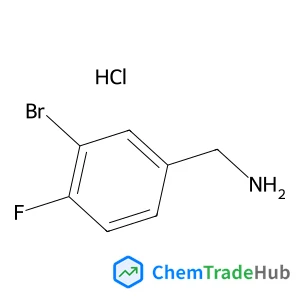
1-(3-Bromo-4-fluorophenyl)methanamine hydrochloride (1:1)
CAS Number:
202865-68-7
Molecular Formula:
C7H8BrClFN
![6-Bromo-2,3-dihydro-1H-pyrido[2,3-b][1,4]oxazine structure](https://static.chemtradehub.com/structs/120/1203499-17-5-b4d1.webp "6-Bromo-2,3-dihydro-1H-pyrido[2,3-b][1,4]oxazine structure")
6-Bromo-2,3-dihydro-1H-pyrido[2,3-b][1,4]oxazine
CAS Number:
1203499-17-5
Molecular Formula:
C7H7BrN2O
Recommended Suppliers






Disclaimer
This page provides academic journal information for reference and research purposes only. We are not affiliated with any journal publishers and do not handle publication submissions. For publication-related inquiries, please contact the respective journal publishers directly.
If you notice any inaccuracies in the information displayed, please contact us at support@chemtradehub.com. We will promptly review and address your concerns.