













Impacts of performing electrolysis during organocatalyzed atom transfer radical polymerization
Literature Information
Publication Date
2020-06-30
DOI
10.1039/D0PY00643B
Impact Factor
5.582
Authors
Daniel A. Corbin, Blaine G. McCarthy, Garret M. Miyake
View Original
Abstract
An electrochemical variant of organocatalyzed atom transfer radical polymerization (O-ATRP) is developed and investigated. Inspired by electrochemically mediated atom transfer radical polymerization (eATRP), potentiostatic electrolysis is used to manipulate the catalyst's redox states in O-ATRP to understand whether deactivation in O-ATRP can be enhanced to improve polymerization control. During the course of this work, several possible side reactions are investigated, and the electrochemical apparatus is optimized to reduce side reactions at the counter electrode. This electrochemically modified O-ATRP method (eO-ATRP) is then studied at different applied potentials, under different irradiation conditions, and with two photoredox catalysts to understand the impact of electrolysis on polymerization control. Ultimately, although electrolysis was successfully used to improve polymerization control in O-ATRP, some additional challenges have been identified. Several key questions are postulated to guide future work in this area.
Related Literature
Surface plasmon resonance imaging for ABH antigen detection on red blood cells and in saliva: secretor status-related ABO subgroup identification
Krisda Sudprasert, Ratthasart Amarit, Armote Somboonkaew, Boonsong Sutapun, Apirom Vongsakulyanon, Wuttigrai Seedacoon, Pimpun Kitpoka, Mongkol Kunakorn
2017-03-13
Paper
DOI: 10.1039/C7AN00027H
Effects of nilotinib on leukaemia cells using vibrational microspectroscopy and cell cloning
M. R. Siddique, A. V. Rutter, K. Wehbe, G. Cinque, G. Bellisola
2016-12-08
Paper
DOI: 10.1039/C6AN01914E
Logical MS/MS scans: a new set of operations for tandem mass spectrometry
Dalton T. Snyder, Lucas J. Szalwinski, J. Mitchell Wells, R. Graham Cooks
2018-10-08
Paper
DOI: 10.1039/C8AN01661E
Size-dependent adsorption and its application in determining the number of surfactant molecule adsorbed on multimodal SiO2 particles by 2D-DCS
Guolan Tian, Lan Chen, Renxiao Liu, Guanglu Ge
2018-08-14
Paper
DOI: 10.1039/C8AN01068D
Simple construction of ratiometric fluorescent probe for the detection of dopamine and tyrosinase by the naked eye
Guobin Mao, Mingyuan Du, Xinxin Wang, Xinghu Ji, Zhike He
2018-09-21
Paper
DOI: 10.1039/C8AN01640B
Ratiometric red-emission fluorescence detection of Al3+ in pure aqueous solution and live cells by a fluorescent peptidyl probe using aggregation-induced emission
Lok Nath Neupane, Pramod Kumar Mehta, Semin Oh, See-Hyoung Park, Keun-Hyeung Lee
2018-09-04
Paper
DOI: 10.1039/C8AN01221K
Virtual staining of colon cancer tissue by label-free Raman micro-spectroscopy
D. Petersen, L. Mavarani, D. Niedieker, E. Freier, A. Tannapfel, C. Kötting, K. Gerwert, S. F. El-Mashtoly
2016-11-03
Paper
DOI: 10.1039/C6AN02072K
Benzimidazole-containing aramid nanofiber for naked-eye detection of heavy metal ions
Zheng Cheng, Zhenyuan Bai, Yu Dai, Longbo Luo, Xiangyang Liu
2018-09-18
Paper
DOI: 10.1039/C8AN01484A
Pushing the frontiers: boron-11 NMR as a method for quantitative boron analysis and its application to determine boric acid in commercial biocides
Luis Manuel Aguilera-Sáez, José Raúl Belmonte-Sánchez, Roberto Romero-González, José Luis Martínez Vidal, Francisco Javier Arrebola, Antonia Garrido Frenich, Ignacio Fernández
2018-09-05
Paper
DOI: 10.1039/C8AN00505B
Simplified identification of disulfide, trisulfide, and thioether pairs with 213 nm UVPD
James Bonner, Lance E. Talbert, Nicholas Akkawi, Ryan R. Julian
2018-09-21
Paper
DOI: 10.1039/C8AN01582A
You might also like
Compound Q&A
What is the market or research trend for N-(4-Methoxybenzyl)-2-pyridinamine (CAS: 52818-63-0)?
N-(4-Methoxybenzyl)-2-pyridinamine (CAS: 52818-63-0) is increasingly being used ...
52818-63-0N-(4-Methoxybenzyl)-...
Compound Q&A
What precautions should be taken when handling Ethyl 4-(2-chlorophenyl)-1,3-thiazole-2-carboxylate (CAS: 1050507-06-6)?
When handling Ethyl 4-(2-chlorophenyl)-1,3-thiazole-2-carboxylate, appropriate p...
1050507-06-6Ethyl 4-(2-chlorophe...
Compound Q&A
What regulatory guidelines apply to diethyldiselane (CAS: 628-39-7)?
Diethyldiselane (CAS: 628-39-7) is classified under the Globally Harmonized Syst...
628-39-7Diethyldiselane
Compound Q&A
What is the market or research trend for oxocopper (CAS: 12053-18-8)?
The market for oxocopper (CAS: 12053-18-8) is primarily driven by its use in cat...
12053-18-8oxocopper; oxo-(oxoc...
Compound Q&A
What is the market or research trend for 5-{[(2-Methyl-2-propanyl)oxy]carbonyl}-5-azaspiro[2.4]heptane-7-carboxylic acid?
The market for 5-{[(2-Methyl-2-propanyl)oxy]carbonyl}-5-azaspiro[2.4]heptane-7-c...
1268519-54-55-{[(2-Methyl-2-prop...
Compound Q&A
What is 2-(1-Pyrrolidinyl)-4-pyridinamine (CAS: 35981-63-6)?
2-(1-Pyrrolidinyl)-4-pyridinamine is a chemical compound with the CAS number 359...
35981-63-62-(1-Pyrrolidinyl)-4...
Compound Q&A
What are the physical and chemical properties of 2-(3-Pyridinyl)-1-azabicyclo[2.2.2]octane (CAS: 91556-75-1)?
2-(3-Pyridinyl)-1-azabicyclo[2.2.2]octane (CAS: 91556-75-1) is a crystalline sol...
91556-75-12-(3-Pyridinyl)-1-az...
Compound Q&A
How is (S)-Alpha-allyl-proline hydrochloride (CAS: 129704-91-2) typically synthesized?
(S)-Alpha-allyl-proline hydrochloride is usually synthesized via a Wittig reacti...
129704-91-2(S)-Alpha-allyl-prol...
Compound Q&A
What is 3-Methyl-1,2-oxazole-5-carboxylic acid (CAS: 4857-42-5)?
3-Methyl-1,2-oxazole-5-carboxylic acid (CAS: 4857-42-5) is an organic compound w...
4857-42-53-Methyl-1,2-oxazole...
Compound Q&A
How is Lys-SMCC-DM1 (CAS: 1281816-04-3) typically synthesized?
Lys-SMCC-DM1 is synthesized via a multi-step process involving the coupling of S...
1281816-04-3Lys-SMCC-DM1
Source Journal
Polymer Chemistry

CiteScore:
8.6
Self-citation Rate:
7.3%
Articles per Year:
457
Polymer Chemistry welcomes submissions in all areas of polymer science that have a strong focus on macromolecular chemistry. Manuscripts may cover a broad range of fields, yet no direct application focus is required.
Recommended Compounds
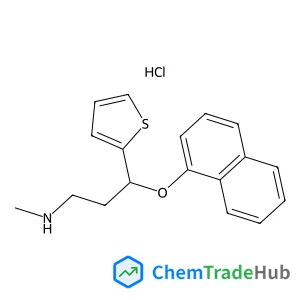
N-Methyl-3-(1-naphthyloxy)-3-(2-thienyl)-1-propanamine hydrochloride (1:1)
CAS Number:
1188266-11-6
Molecular Formula:
C18H20ClNOS
![1-{3-[4-Amino-3-(4-phenoxyphenyl)-1H-pyrazolo[3,4-d]pyrimidin-1-yl]-1-piperidinyl}-2,3-dihydroxy-1-propanone structure](https://static.chemtradehub.com/structs/122/1226872-27-0-e037.webp "1-{3-[4-Amino-3-(4-phenoxyphenyl)-1H-pyrazolo[3,4-d]pyrimidin-1-yl]-1-piperidinyl}-2,3-dihydroxy-1-propanone structure")
1-{3-[4-Amino-3-(4-phenoxyphenyl)-1H-pyrazolo[3,4-d]pyrimidin-1-yl]-1-piperidinyl}-2,3-dihydroxy-1-propanone
CAS Number:
1226872-27-0
Molecular Formula:
C25H26N6O4
Recommended Suppliers






Disclaimer
This page provides academic journal information for reference and research purposes only. We are not affiliated with any journal publishers and do not handle publication submissions. For publication-related inquiries, please contact the respective journal publishers directly.
If you notice any inaccuracies in the information displayed, please contact us at support@chemtradehub.com. We will promptly review and address your concerns.