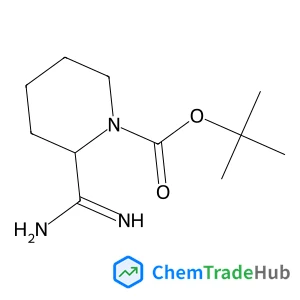
2-Methyl-2-propanyl 2-carbamimidoyl-1-piperidinecarboxylate
CAS Number:
1258640-98-0
Molecular Formula:
C11H21N3O2
Guobin Mao, Mingyuan Du, Xinxin Wang, Xinghu Ji, Zhike He
In this work, a simple and novel ratiometric fluorescence method based on ROX-DNA-functionalized CdZnTeS quantum dots (QDs) was developed for the detection of dopamine (DA) and tyrosinase (TYR). A ratiometric fluorescent probe was constructed by binding phosphorothioate DNA to the metal ions of QDs, which is a modification-free and low-cost method. DA was easily oxidized to DA quinone under the catalysis of TYR by dissolved O2, which effectively quenched the fluorescence of the QDs. Strong linear correlations were achieved for TYR in the range of 10.0–100.0 ng mL−1 and for DA in the range of 10.0–1000.0 nM. The limit of detection was estimated to be as low as 1.05 ng mL−1 for TYR and 1.93 nM for DA. Moreover, various colors were displayed in the course of detection, which could be observed by the naked eye. Therefore, an on-site and sensitive fluorescence method for the visual detection of DA and TYR can be developed. In addition, the findings revealed the potential applicability of the ratiometric fluorescent probe for the detection of DA and TYR in human serum. This ratiometric fluorescence method is not only sensitive and selective but also rapid and convenient for the detection of the analytes without sophisticated instrumentation.
Jakub Goclon, Bernd Meyer
DOI: 10.1039/C3CP44546A
Hui-Juan Cui, Xian-Lei Sheng, Qing-Bo Yan, Qing-Rong Zheng, Gang Su
DOI: 10.1039/C3CP44457K
Zhiguo Wang, Qiulei Su, Huiqiu Deng
DOI: 10.1039/C3CP51167G
Ling Chen, Wan Guo, Yuxin Yang, Ang Zhang, Shengqu Zhang, Yihang Guo, Yingna Guo
DOI: 10.1039/C3CP00084B
Chuan Liu, Yun Li, Michael V. Lee, Akichika Kumatani, Kazuhito Tsukagoshi
DOI: 10.1039/C3CP44715D
George Hasegawa, Mai Sannohe, Yuya Ishihara, Kazuyoshi Kanamori, Kazuki Nakanishi, Takeshi Abe
DOI: 10.1039/C3CP50352F
Mark A. Newton, Marco Di Michiel, Songhak Yoon, Gian Luca Chiarello, Santhosh Kumar Matam, Myriam H. Aguirre, Anke Weidenkaff, Fei Wen, Jürgen Gieshoff
DOI: 10.1039/C3CP44638G
Johannes Auerswald, Bernd Engels, Ingo Fischer, Thiemo Gerbich, Jörg Herterich, Anke Krueger, Melanie Lang, Hans-Christian Schmitt, Christof Schon, Christof Walter
DOI: 10.1039/C3CP44271C
Uttam Anand, Saptarshi Mukherjee
DOI: 10.1039/C3CP50207D
Jonathan Keating, Gopinathan Sankar, Timothy I. Hyde, Shinji Kohara, Koji Ohara
DOI: 10.1039/C3CP50600B
N-(4-Methoxybenzyl)-2-pyridinamine (CAS: 52818-63-0) is increasingly being used ...
When handling Ethyl 4-(2-chlorophenyl)-1,3-thiazole-2-carboxylate, appropriate p...
Diethyldiselane (CAS: 628-39-7) is classified under the Globally Harmonized Syst...
The market for oxocopper (CAS: 12053-18-8) is primarily driven by its use in cat...
The market for 5-{[(2-Methyl-2-propanyl)oxy]carbonyl}-5-azaspiro[2.4]heptane-7-c...
2-(1-Pyrrolidinyl)-4-pyridinamine is a chemical compound with the CAS number 359...
2-(3-Pyridinyl)-1-azabicyclo[2.2.2]octane (CAS: 91556-75-1) is a crystalline sol...
(S)-Alpha-allyl-proline hydrochloride is usually synthesized via a Wittig reacti...
3-Methyl-1,2-oxazole-5-carboxylic acid (CAS: 4857-42-5) is an organic compound w...
Lys-SMCC-DM1 is synthesized via a multi-step process involving the coupling of S...

Analyst publishes analytical and bioanalytical research that reports premier fundamental discoveries and inventions, and the applications of those discoveries, unconfined by traditional discipline barriers.
![1-[6-(1H-Imidazol-1-yl)-3-pyridinyl]methanamine structure](https://static.chemtradehub.com/structs/914/914637-08-4-8825.webp "1-[6-(1H-Imidazol-1-yl)-3-pyridinyl]methanamine structure")