













Logical MS/MS scans: a new set of operations for tandem mass spectrometry
Literature Information
Publication Date
2018-10-08
DOI
10.1039/C8AN01661E
Impact Factor
4.616
Authors
Dalton T. Snyder, Lucas J. Szalwinski, J. Mitchell Wells, R. Graham Cooks
View Original
Abstract
A new set of operations for tandem mass spectrometry in a linear ion trap is described. Logical MS/MS operations categorize compounds in mixtures based on characteristic structural features as revealed by MS/MS behavior recorded in multiple fragmentation pathways. This approach is a conceptual extension of tandem mass spectrometry in which interrogation of the full data domain is performed by simultaneous implementation of precursor and neutral loss scans. This process can be thought of as moving through the 2D MS/MS data domain along multiple scan lines simultaneously, which allows experiments that explore the 2D data domain of MS/MS to be couched in terms of logical operations, AND, NAND (not and), OR (inclusive or), XOR (exclusive or), NOT, etc. Examples of particular logical conditions include all precursor ions that fragment to both of two selected product ions (logical AND), or all precursor ions that do not produce a specified fragment ion (logical NOT). These and other operational modes (TRUE/FALSE, XOR, OR, etc.) complement and extend the existing set of conventional MS/MS scans, namely product scans, precursor scans, and neutral loss scans. We describe the implementation of logical MS/MS scans on a commercial linear ion trap mass spectrometer using simple mixtures of amphetamines and fentanyl analogues and argue their utility for complex mixture analysis.
Related Literature
Reliable contact fabrication on nanostructured Bi2Te3-based thermoelectric materials
Shien-Ping Feng, Ya-Huei Chang, Jian Yang, Bed Poudel, Bo Yu, Zhifeng Ren, Gang Chen
2013-03-15
Communication
DOI: 10.1039/C3CP50993A
Chelating ionic liquids for reversible zinc electrochemistry
Mega Kar, Bjorn Winther-Jensen, Maria Forsyth, Douglas R. MacFarlane
2013-03-22
Paper
DOI: 10.1039/C3CP51102B
Photoelectrical properties and the electronic structure of Tl1−xIn1−xSnxSe2 (x = 0, 0.1, 0.2, 0.25) single crystalline alloys
G. E. Davydyuk, H. Kamarudin, G. L. Myronchuk, S. P. Danylchuk, A. O. Fedorchuk, L. V. Piskach, M. Yu. Mozolyuk, O. V. Parasyuk
2013-03-12
Paper
DOI: 10.1039/C3CP50836F
Thermal oxidation of Ni films for p-type thin-film transistors
Jie Jiang, Xinghui Wang, Qing Zhang, Jingqi Li, X. X. Zhang
2013-03-15
Paper
DOI: 10.1039/C3CP50197C
Characterization of strain recovery and “self-healing” in a self-assembled metallo-gel
Pierre Terech, Minhao Yan, Manuel Maréchal, Guy Royal, Jose Galvez, Sabareesh K. P. Velu
2013-03-21
Paper
DOI: 10.1039/C3CP50671A
Mesoscopic modelling of frustration in microemulsions
Magali Duvail, Jean-François Dufrêche, Lise Arleth, Thomas Zemb
2013-03-18
Paper
DOI: 10.1039/C3CP43981J
A statistical approach for analyzing the development of 1H multiple-quantum coherence in solids
Yuuki Mogami, Yasuto Noda, Hiroto Ishikawa, K. Takegoshi
2013-04-12
Paper
DOI: 10.1039/C3CP43778G
Density-induced molecular arrangements of water inside carbon nanotubes
M. Sadeghi
2013-03-18
Paper
DOI: 10.1039/C3CP44563A
You might also like
Compound Q&A
What is the market or research trend for N-(4-Methoxybenzyl)-2-pyridinamine (CAS: 52818-63-0)?
N-(4-Methoxybenzyl)-2-pyridinamine (CAS: 52818-63-0) is increasingly being used ...
52818-63-0N-(4-Methoxybenzyl)-...
Compound Q&A
What precautions should be taken when handling Ethyl 4-(2-chlorophenyl)-1,3-thiazole-2-carboxylate (CAS: 1050507-06-6)?
When handling Ethyl 4-(2-chlorophenyl)-1,3-thiazole-2-carboxylate, appropriate p...
1050507-06-6Ethyl 4-(2-chlorophe...
Compound Q&A
What regulatory guidelines apply to diethyldiselane (CAS: 628-39-7)?
Diethyldiselane (CAS: 628-39-7) is classified under the Globally Harmonized Syst...
628-39-7Diethyldiselane
Compound Q&A
What is the market or research trend for oxocopper (CAS: 12053-18-8)?
The market for oxocopper (CAS: 12053-18-8) is primarily driven by its use in cat...
12053-18-8oxocopper; oxo-(oxoc...
Compound Q&A
What is the market or research trend for 5-{[(2-Methyl-2-propanyl)oxy]carbonyl}-5-azaspiro[2.4]heptane-7-carboxylic acid?
The market for 5-{[(2-Methyl-2-propanyl)oxy]carbonyl}-5-azaspiro[2.4]heptane-7-c...
1268519-54-55-{[(2-Methyl-2-prop...
Compound Q&A
What is 2-(1-Pyrrolidinyl)-4-pyridinamine (CAS: 35981-63-6)?
2-(1-Pyrrolidinyl)-4-pyridinamine is a chemical compound with the CAS number 359...
35981-63-62-(1-Pyrrolidinyl)-4...
Compound Q&A
What are the physical and chemical properties of 2-(3-Pyridinyl)-1-azabicyclo[2.2.2]octane (CAS: 91556-75-1)?
2-(3-Pyridinyl)-1-azabicyclo[2.2.2]octane (CAS: 91556-75-1) is a crystalline sol...
91556-75-12-(3-Pyridinyl)-1-az...
Compound Q&A
How is (S)-Alpha-allyl-proline hydrochloride (CAS: 129704-91-2) typically synthesized?
(S)-Alpha-allyl-proline hydrochloride is usually synthesized via a Wittig reacti...
129704-91-2(S)-Alpha-allyl-prol...
Compound Q&A
What is 3-Methyl-1,2-oxazole-5-carboxylic acid (CAS: 4857-42-5)?
3-Methyl-1,2-oxazole-5-carboxylic acid (CAS: 4857-42-5) is an organic compound w...
4857-42-53-Methyl-1,2-oxazole...
Compound Q&A
How is Lys-SMCC-DM1 (CAS: 1281816-04-3) typically synthesized?
Lys-SMCC-DM1 is synthesized via a multi-step process involving the coupling of S...
1281816-04-3Lys-SMCC-DM1
Source Journal
Analyst

CiteScore:
7.8
Self-citation Rate:
5.6%
Articles per Year:
653
Analyst publishes analytical and bioanalytical research that reports premier fundamental discoveries and inventions, and the applications of those discoveries, unconfined by traditional discipline barriers.
Recommended Compounds
![N-{[(2-Methyl-2-propanyl)oxy]carbonyl}-L-methionylglycine structure](https://static.chemtradehub.com/structs/234/23446-03-9-e1e5.webp "N-{[(2-Methyl-2-propanyl)oxy]carbonyl}-L-methionylglycine structure")
N-{[(2-Methyl-2-propanyl)oxy]carbonyl}-L-methionylglycine
CAS Number:
23446-03-9
Molecular Formula:
C12H22N2O5S
![1-(1-Benzyl-1,2,3,6-tetrahydropyridin-4-yl)-1H-benzo[d]imidazol-2(3H)-one structure](https://static.chemtradehub.com/structs/603/60373-71-9-7dfb.webp "1-(1-Benzyl-1,2,3,6-tetrahydropyridin-4-yl)-1H-benzo[d]imidazol-2(3H)-one structure")
1-(1-Benzyl-1,2,3,6-tetrahydropyridin-4-yl)-1H-benzo[d]imidazol-2(3H)-one
CAS Number:
60373-71-9
Molecular Formula:
C19H19N3O

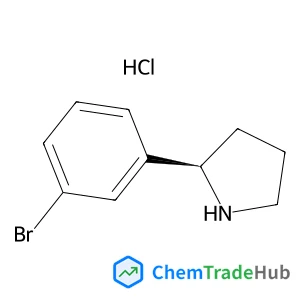
(2R)-2-(3-Bromophenyl)pyrrolidine hydrochloride (1:1)
CAS Number:
1391550-13-2
Molecular Formula:
C10H13BrClN
Recommended Suppliers




Disclaimer
This page provides academic journal information for reference and research purposes only. We are not affiliated with any journal publishers and do not handle publication submissions. For publication-related inquiries, please contact the respective journal publishers directly.
If you notice any inaccuracies in the information displayed, please contact us at support@chemtradehub.com. We will promptly review and address your concerns.