












Virtual staining of colon cancer tissue by label-free Raman micro-spectroscopy
Literature Information
Publication Date
2016-11-03
DOI
10.1039/C6AN02072K
Impact Factor
4.616
Authors
D. Petersen, L. Mavarani, D. Niedieker, E. Freier, A. Tannapfel, C. Kötting, K. Gerwert, S. F. El-Mashtoly
View Original
Abstract
The great capability of the label-free classification of tissue via vibrational spectroscopy, like Raman or infrared imaging, is shown in numerous publications (review: Diem et al., J. Biophotonics, 2013, 6, 855–886). Herein, we present a new approach, virtual staining, that improves the Raman spectral histopathology (SHP) images of colorectal cancer tissue by combining the integrated Raman intensity image in the C–H stretching region (2800–3050 cm−1) with the pseudo-colour Raman image. This allows the display of fine structures such as the filamentous composition of muscle tissue. The morphology of the virtually stained images is in agreement with the gold standard in medical diagnosis, the haematoxylin–eosin staining. The virtual staining image also represents the whole biochemical fingerprint, and several tissue components including carcinoma were identified automatically with high sensitivity and specificity. For fast tissue classifications, a similar approach was applied on coherent anti-Stokes Raman scattering (CARS) spectral data that is faster and therefore potentially more suitable for clinical applications.
Related Literature
Compositional-asymmetry influenced non-linear optical processes of plasmonic nanoparticle dimers
Anke Horneber, Anne-Laure Baudrion, Pierre-Michel Adam, Alfred J. Meixner, Dai Zhang
2013-03-07
Communication
DOI: 10.1039/C3CP43349H
Photoinduced electron transfer of platinum(ii) bipyridine diacetylides linked by triphenylamine- and naphthaleneimide-derivatives and their application to photoelectric conversion systems
Yuma Matsumoto, Mai Tsubamoto, Ryoji Sugimura, Masatoshi Kozaki, Kenshi Kimoto, Munetaka Iwamura, Koichi Nozaki, Naoki Senju, Chiasa Uragami, Yohei Muramatsu, Akinori Konno
2013-02-28
Paper
DOI: 10.1039/C3CP50182E
A simple reduction process to synthesize MoO2/C composites with cage-like structure for high-performance lithium-ion batteries
Bing Liu, Xinyu Zhao, Yuan Tian, Di Zhao, Changwen Hu, Minhua Cao
2013-03-28
Paper
DOI: 10.1039/C3CP44707C
ZnO nanoparticle based highly efficient CdS/CdSe quantum dot-sensitized solar cells
Chunhui Li, Lei Yang, Junyan Xiao, Yih-Chyng Wu, Martin Søndergaard, Yanhong Luo, Dongmei Li, Qingbo Meng, Bo Brummerstedt Iversen
2013-03-27
Communication
DOI: 10.1039/C3CP50365H
Nonlinear length dependent electrical resistance of a single crystal zinc oxide micro/nanobelt
Chaolong Tang, Chengming Jiang, Wenqiang Lu, Jinhui Song
2013-04-05
Paper
DOI: 10.1039/C3CP50679G
Self-discharge of electrochemical double layer capacitors
Andrzej Lewandowski, Pawel Jakobczyk, Maciej Galinski, Marcin Biegun
2013-03-22
Perspective
DOI: 10.1039/C3CP44612C
Ultra-slow dynamics in low density amorphous ice revealed by deuteron NMR: indication of a glass transition
Florian Löw, Katrin Amann-Winkel, Thomas Loerting, Franz Fujara, Burkhard Geil
2013-05-10
Paper
DOI: 10.1039/C3CP50818H
Single-layered V2O5 a promising cathode material for rechargeable Li and Mg ion batteries: an ab initio study
Zhiguo Wang, Qiulei Su, Huiqiu Deng
2013-04-12
Communication
DOI: 10.1039/C3CP51167G
Ultrafast spectroscopy of linear carbon chains: the case of dinaphthylpolyynes
D. Fazzi, A. Milani, D. Brida, C. Manzoni, E. Cinquanta, M. Devetta, L. Ravagnan, P. Milani, F. Cataldo, L. Lüer, R. Wannemacher, J. Cabanillas-Gonzalez, M. Negro, S. Stagira, C. Vozzi
2013-04-19
Paper
DOI: 10.1039/C3CP50508A
The fast Z-scan method for studying working catalytic reactors with high energy X-ray diffraction: ZSM-5 in the methanol to gasoline process
David S. Wragg, Francesca L. Bleken, Matthew G. O'Brien, Marco Di Michiel, Helmer Fjellvåg, Unni Olsbye
2013-03-18
Paper
DOI: 10.1039/C3CP44343D
You might also like
Compound Q&A
What is the market or research trend for N-(4-Methoxybenzyl)-2-pyridinamine (CAS: 52818-63-0)?
N-(4-Methoxybenzyl)-2-pyridinamine (CAS: 52818-63-0) is increasingly being used ...
52818-63-0N-(4-Methoxybenzyl)-...
Compound Q&A
What precautions should be taken when handling Ethyl 4-(2-chlorophenyl)-1,3-thiazole-2-carboxylate (CAS: 1050507-06-6)?
When handling Ethyl 4-(2-chlorophenyl)-1,3-thiazole-2-carboxylate, appropriate p...
1050507-06-6Ethyl 4-(2-chlorophe...
Compound Q&A
What regulatory guidelines apply to diethyldiselane (CAS: 628-39-7)?
Diethyldiselane (CAS: 628-39-7) is classified under the Globally Harmonized Syst...
628-39-7Diethyldiselane
Compound Q&A
What is the market or research trend for oxocopper (CAS: 12053-18-8)?
The market for oxocopper (CAS: 12053-18-8) is primarily driven by its use in cat...
12053-18-8oxocopper; oxo-(oxoc...
Compound Q&A
What is the market or research trend for 5-{[(2-Methyl-2-propanyl)oxy]carbonyl}-5-azaspiro[2.4]heptane-7-carboxylic acid?
The market for 5-{[(2-Methyl-2-propanyl)oxy]carbonyl}-5-azaspiro[2.4]heptane-7-c...
1268519-54-55-{[(2-Methyl-2-prop...
Compound Q&A
What is 2-(1-Pyrrolidinyl)-4-pyridinamine (CAS: 35981-63-6)?
2-(1-Pyrrolidinyl)-4-pyridinamine is a chemical compound with the CAS number 359...
35981-63-62-(1-Pyrrolidinyl)-4...
Compound Q&A
What are the physical and chemical properties of 2-(3-Pyridinyl)-1-azabicyclo[2.2.2]octane (CAS: 91556-75-1)?
2-(3-Pyridinyl)-1-azabicyclo[2.2.2]octane (CAS: 91556-75-1) is a crystalline sol...
91556-75-12-(3-Pyridinyl)-1-az...
Compound Q&A
How is (S)-Alpha-allyl-proline hydrochloride (CAS: 129704-91-2) typically synthesized?
(S)-Alpha-allyl-proline hydrochloride is usually synthesized via a Wittig reacti...
129704-91-2(S)-Alpha-allyl-prol...
Compound Q&A
What is 3-Methyl-1,2-oxazole-5-carboxylic acid (CAS: 4857-42-5)?
3-Methyl-1,2-oxazole-5-carboxylic acid (CAS: 4857-42-5) is an organic compound w...
4857-42-53-Methyl-1,2-oxazole...
Compound Q&A
How is Lys-SMCC-DM1 (CAS: 1281816-04-3) typically synthesized?
Lys-SMCC-DM1 is synthesized via a multi-step process involving the coupling of S...
1281816-04-3Lys-SMCC-DM1
Source Journal
Analyst

CiteScore:
7.8
Self-citation Rate:
5.6%
Articles per Year:
653
Analyst publishes analytical and bioanalytical research that reports premier fundamental discoveries and inventions, and the applications of those discoveries, unconfined by traditional discipline barriers.
Recommended Compounds
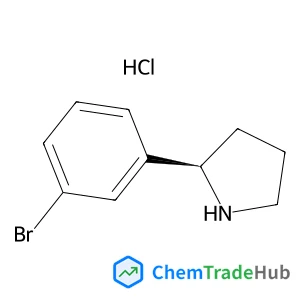
(2R)-2-(3-Bromophenyl)pyrrolidine hydrochloride (1:1)
CAS Number:
1391550-13-2
Molecular Formula:
C10H13BrClN
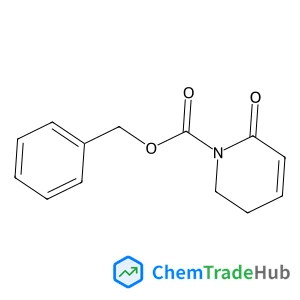
Benzyl 6-oxo-3,6-dihydro-1(2H)-pyridinecarboxylate
CAS Number:
725746-35-0
Molecular Formula:
C13H13NO3
![1-{3-[4-Amino-3-(4-phenoxyphenyl)-1H-pyrazolo[3,4-d]pyrimidin-1-yl]-1-piperidinyl}-2,3-dihydroxy-1-propanone structure](https://static.chemtradehub.com/structs/122/1226872-27-0-e037.webp "1-{3-[4-Amino-3-(4-phenoxyphenyl)-1H-pyrazolo[3,4-d]pyrimidin-1-yl]-1-piperidinyl}-2,3-dihydroxy-1-propanone structure")
1-{3-[4-Amino-3-(4-phenoxyphenyl)-1H-pyrazolo[3,4-d]pyrimidin-1-yl]-1-piperidinyl}-2,3-dihydroxy-1-propanone
CAS Number:
1226872-27-0
Molecular Formula:
C25H26N6O4
Recommended Suppliers






Disclaimer
This page provides academic journal information for reference and research purposes only. We are not affiliated with any journal publishers and do not handle publication submissions. For publication-related inquiries, please contact the respective journal publishers directly.
If you notice any inaccuracies in the information displayed, please contact us at support@chemtradehub.com. We will promptly review and address your concerns.