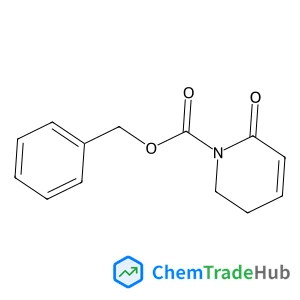
Benzyl 6-oxo-3,6-dihydro-1(2H)-pyridinecarboxylate
CAS Number:
725746-35-0
Molecular Formula:
C13H13NO3
James Bonner, Lance E. Talbert, Nicholas Akkawi, Ryan R. Julian
Disulfide heterogeneity and other non-native crosslinks introduced during therapeutic antibody production and storage could have considerable negative effects on clinical efficacy, but tracking these modifications remains challenging. Analysis must also be carried out cautiously to avoid introduction of disulfide scrambling or reduction, necessitating the use of low pH digestion with less specific proteases. Herein we demonstrate that 213 nm ultraviolet photodissociation streamlines disulfide elucidation through bond-selective dissociation of sulfur–sulfur and carbon–sulfur bonds in combination with less specific backbone dissociation. Importantly, both types of fragmentation can be initiated in a single MS/MS activation stage. In addition to disulfide mapping, it is also shown that thioethers and trisulfides can be identified by characteristic fragmentation patterns. The photochemistry resulting from 213 nm excitation facilitates a simplified, two-tiered data processing approach that allows observation of all native disulfide bonds, scrambled disulfide bonds, and non-native sulfur-based linkages in a pepsin digest of Rituximab. Native disulfides represented the majority of bonds according to ion count, but the highly solvent-exposed heavy/light interchain disulfides were found to be most prone to modification. Production and storage methods that facilitate non-native links are discussed. Due to the importance of heavy and light chain connectivity for antibody structure and function, this region likely requires particular attention in terms of its influence on maintaining structural fidelity.
V. Epp, Ö. Gün, H.-J. Deiseroth, M. Wilkening
DOI: 10.1039/C3CP44379E
Ji Chen, Qianfan Zhang, Angelos Michaelides, Enge Wang
DOI: 10.1039/C3CP50218J
Changqing Liu, Xiaobo Ji, Pingmin Zhang, Qiyuan Chen, Craig E. Banks
DOI: 10.1039/C3CP44171G
Roel Menting, Jian-Yong Liu, Ying-Si Huang, Dennis K. P. Ng, Beate Röder
DOI: 10.1039/C3CP50576F
Paul E. Crider, Matthias Vonderach, Patrick Weis
DOI: 10.1039/C2CP43808A
Guilherme Oliveira Siqueira, Tulio Matencio, Herculano Vieira da Silva, Yara Gonçalves de Souza, José Domingos Ardisson, Geraldo Magela de Lima, Arilza de Oliveira Porto
DOI: 10.1039/C3CP50549A
Benedetta Mennucci
DOI: 10.1039/C3CP44417A
Purna P. Maharjan, Qiliang Chen, Lianjie Zhang, Olusegun Adebanjo, Nirmal Adhikari, Swaminathan Venkatesan, Prajwal Adhikary, Bjorn Vaagensmith, Qiquan Qiao
DOI: 10.1039/C3CP51070K
Matija Zlatar, Maja Gruden-Pavlović, Mireia Güell
DOI: 10.1039/C2CP43735J
Joseph W. DePalma, Andrew J. Horan, Wiley A. Hall IV, Murray V. Johnston
DOI: 10.1039/C3CP44586K
N-(4-Methoxybenzyl)-2-pyridinamine (CAS: 52818-63-0) is increasingly being used ...
When handling Ethyl 4-(2-chlorophenyl)-1,3-thiazole-2-carboxylate, appropriate p...
Diethyldiselane (CAS: 628-39-7) is classified under the Globally Harmonized Syst...
The market for oxocopper (CAS: 12053-18-8) is primarily driven by its use in cat...
The market for 5-{[(2-Methyl-2-propanyl)oxy]carbonyl}-5-azaspiro[2.4]heptane-7-c...
2-(1-Pyrrolidinyl)-4-pyridinamine is a chemical compound with the CAS number 359...
2-(3-Pyridinyl)-1-azabicyclo[2.2.2]octane (CAS: 91556-75-1) is a crystalline sol...
(S)-Alpha-allyl-proline hydrochloride is usually synthesized via a Wittig reacti...
3-Methyl-1,2-oxazole-5-carboxylic acid (CAS: 4857-42-5) is an organic compound w...
Lys-SMCC-DM1 is synthesized via a multi-step process involving the coupling of S...

Analyst publishes analytical and bioanalytical research that reports premier fundamental discoveries and inventions, and the applications of those discoveries, unconfined by traditional discipline barriers.
![1-[6-(1H-Imidazol-1-yl)-3-pyridinyl]methanamine structure](https://static.chemtradehub.com/structs/914/914637-08-4-8825.webp "1-[6-(1H-Imidazol-1-yl)-3-pyridinyl]methanamine structure")