












Isolated and assembled silver aggregates on the Si(001) surface: the initial stage of film formation
Literature Information
Publication Date
2021-01-25
DOI
10.1039/D0CP06353C
Impact Factor
3.676
Authors
Kai Huang, Xiaohang Huang, Jun Nogami
View Original
Abstract
We examined the dynamics of adsorption and the subsequent growth of submonolayered silver on Si(001) from 100 K to 230 K, using scanning tunneling microscopy and density functional theory. The dynamics is demonstrated to depend on substrate temperature, as described in the following three stages: (I) at 100–140 K, silver is adsorbed as isolated aggregates (regular-Ag4, variant-Ag4 and Ag2), in the absence of single silver adatoms. The spontaneous formation of silver aggregates arises from the hot-atom motion upon the initial impingement of individual silver atoms onto the Si(001) substrate. (II) At 140–190 K, the migration of isolated Ag-aggregates is sufficiently activated, leading to the formation of Ag-chains by surface polymerization. (III) At 190–230 K, there is implication that the Ag-chains become mobile on Si(001), en route to forming patches of 2×2 Ag-films by agglomeration.
Related Literature
The solvent effect on the luminescence of silver nanoclusters
Yang Li, Xumei Wang, Shuping Xu, Weiqing Xu
2013-01-14
Communication
DOI: 10.1039/C3CP44309D
Evidence for the carbon–nitrogen complex in ZnO nanostructures with very high nitrogen doping
Luwei Sun, Haiping He, Liang Hu, Zhizhen Ye
2012-12-07
Communication
DOI: 10.1039/C2CP43657D
Trimetallic deltahedral Zintl ions [Sn9−m−nGemBin](4−n)− for n = 1–4 and m = 0–(9 − n): a theoretical survey with prediction and rationalization of the possible structures
Alvaro Muñoz-Castro, Slavi C. Sevov
2012-11-19
Paper
DOI: 10.1039/C2CP43196C
Gamma-radiolysis-assisted cobalt oxide nanoparticle formation
L. M. Alrehaily, J. M. Joseph, M. C. Biesinger, D. A. Guzonas, J. C. Wren
2012-11-14
Paper
DOI: 10.1039/C2CP43094K
Effect of nuclear vibrations, temperature, co-adsorbed water, and dye orientation on light absorption, charge injection and recombination conditions in organic dyes on TiO2
Sergei Manzhos, Hiroshi Segawa, Koichi Yamashita
2012-11-23
Paper
DOI: 10.1039/C2CP43448B
A comparative VCD study of methyl mandelate in methanol, dimethyl sulfoxide, and chloroform: explicit and implicit solvation models
Mohammad Reza Poopari, Zahra Dezhahang, Yunjie Xu
2012-11-30
Paper
DOI: 10.1039/C2CP42722B
Prospects for hydrogen storage in graphene
Valentina Tozzini, Vittorio Pellegrini
2012-10-31
Perspective
DOI: 10.1039/C2CP42538F
Assessment of permethylated transition-metal sandwich complexes as internal reference redox systems in ionic liquids
Angel A. J. Torriero, Jaka Sunarso, Maria Forsyth, Cristina Pozo-Gonzalo
2013-01-03
Paper
DOI: 10.1039/C2CP43177G
Hydrogen spillover mechanism on covalent organic frameworks as investigated by ab initio density functional calculation
Jing-hua Guo, Hong Zhang, Yongjian Tang, Xinlu Cheng
2013-01-22
Paper
DOI: 10.1039/C2CP44007E
Theoretical predictions for hexagonal BN based nanomaterials as electrocatalysts for the oxygen reduction reaction
2012-12-17
Paper
DOI: 10.1039/C2CP42907A
You might also like
Compound Q&A
Is 6-(3-Fluorophenyl)picolinic acid (CAS: 887982-40-3) safe?
6-(3-Fluorophenyl)picolinic acid is generally considered safe for laboratory use...
887982-40-36-(3-Fluorophenyl)pi...
Compound Q&A
What industries use (3R)-3-Pyrrolidinol (CAS: 2799-21-5)?
(3R)-3-Pyrrolidinol is used in the pharmaceutical industry as a precursor for dr...
2799-21-5(3R)-3-Pyrrolidinol
Compound Q&A
What precautions should be taken when handling (4R,5R)-4,5-Diethoxycarbonyl-2,2-dimethyldioxolane (CAS: 59779-75-8)?
When handling (4R,5R)-4,5-Diethoxycarbonyl-2,2-dimethyldioxolane (CAS: 59779-75-...
59779-75-8(4R,5R)-4,5-Diethoxy...
Compound Q&A
How is 1-(6-Chloroimidazo[1,2-b]pyridazin-3-yl)ethanone (CAS: 90734-71-7) typically synthesized?
1-(6-Chloroimidazo[1,2-b]pyridazin-3-yl)ethanone is often synthesized via a mult...
90734-71-71-(6-Chloroimidazo[1...
Compound Q&A
What is the market or research trend for N-Ethyl-3,4-dimethylbenzylamine (CAS: 39180-83-1)?
The market for N-Ethyl-3,4-dimethylbenzylamine (CAS: 39180-83-1) remains steady,...
39180-83-1N-Ethyl-3,4-dimethyl...
Compound Q&A
What is Tert-butyl 3-(pyrrolidin-1-yl)azetidine-1-carboxylate (CAS: 1019008-21-9)?
Tert-butyl 3-(pyrrolidin-1-yl)azetidine-1-carboxylate is a chemical compound wit...
1019008-21-9Tert-butyl 3-(pyrrol...
Compound Q&A
What regulatory guidelines apply to 1-Bromo-3-chloro-2,4-dimethoxybenzene (CAS: 1228956-93-1)?
1-Bromo-3-chloro-2,4-dimethoxybenzene (CAS: 1228956-93-1) falls under the classi...
1228956-93-11-Bromo-3-chloro-2,4...
Compound Q&A
Is 8-Bromo-2-methyl-3,4-dihydroisoquinolin-1(2H)-one (CAS: 1368622-07-4) safe?
The safety of 8-Bromo-2-methyl-3,4-dihydroisoquinolin-1(2H)-one (CAS: 1368622-07...
1368622-07-48-Bromo-2-methyl-3,4...
Compound Q&A
Is Benzyl [(3S)-2,6-dioxo-3-piperidinyl]carbamate (CAS: 22785-43-9) safe?
Benzyl [(3S)-2,6-dioxo-3-piperidinyl]carbamate is generally safe when handled wi...
22785-43-9Benzyl [(3S)-2,6-dio...
Compound Q&A
How should 1-{[4-(4,4,5,5-Tetramethyl-1,3,2-dioxaborolan-2-yl)phenyl]sulfonyl}pyrrolidine (CAS: 928657-21-0) be stored?
1-{[4-(4,4,5,5-Tetramethyl-1,3,2-dioxaborolan-2-yl)phenyl]sulfonyl}pyrrolidine s...
928657-21-01-{[4-(4,4,5,5-Tetra...
Source Journal
Physical Chemistry Chemical Physics

CiteScore:
5.5
Self-citation Rate:
10.3%
Articles per Year:
3036
Physical Chemistry Chemical Physics (PCCP) is an international journal co-owned by 19 physical chemistry and physics societies from around the world. This journal publishes original, cutting-edge research in physical chemistry, chemical physics and biophysical chemistry. To be suitable for publication in PCCP, articles must include significant innovation and/or insight into physical chemistry; this is the most important criterion that reviewers and Editors will judge against when evaluating submissions. The journal has a broad scope and welcomes contributions spanning experiment, theory, computation and data science. Topical coverage includes spectroscopy, dynamics, kinetics, statistical mechanics, thermodynamics, electrochemistry, catalysis, surface science, quantum mechanics, quantum computing and machine learning. Interdisciplinary research areas such as polymers and soft matter, materials, nanoscience, energy, surfaces/interfaces, and biophysical chemistry are welcomed if they demonstrate significant innovation and/or insight into physical chemistry. Joined experimental/theoretical studies are particularly appreciated when complementary and based on up-to-date approaches.
Recommended Compounds
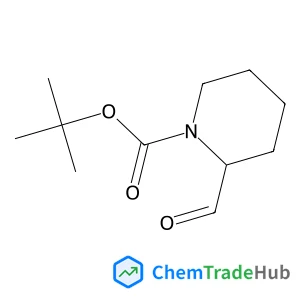
2-Methyl-2-propanyl (2R)-2-formyl-1-piperidinecarboxylate
CAS Number:
134526-69-5
Molecular Formula:
C11H19NO3

(11alpha,13E)-11-Hydroxy-9,15-dioxoprost-13-en-1-oic acid
CAS Number:
22973-19-9
Molecular Formula:
C20H32O5
![(2E)-4-[(1R,2S,8R,19S,21R)-14-Hydroxy-11-isopropenyl-8,23,23-trimethyl-5-(3-methyl-2-buten-1-yl)-16,20-dioxo-3,7,22-trioxaheptacyclo[17.4.1.1~8,12~.0~2,17~.0~2,21~.0~4,15~.0~6,13~]pentacosa-4(15),5,13
,17-tetraen-21-yl]-2-methyl-2-butenoic acid structure](https://static.chemtradehub.com/structs/173/173867-04-4-d2d3.webp "(2E)-4-[(1R,2S,8R,19S,21R)-14-Hydroxy-11-isopropenyl-8,23,23-trimethyl-5-(3-methyl-2-buten-1-yl)-16,20-dioxo-3,7,22-trioxaheptacyclo[17.4.1.1~8,12~.0~2,17~.0~2,21~.0~4,15~.0~6,13~]pentacosa-4(15),5,13
,17-tetraen-21-yl]-2-methyl-2-butenoic acid structure")
Recommended Suppliers




Disclaimer
This page provides academic journal information for reference and research purposes only. We are not affiliated with any journal publishers and do not handle publication submissions. For publication-related inquiries, please contact the respective journal publishers directly.
If you notice any inaccuracies in the information displayed, please contact us at support@chemtradehub.com. We will promptly review and address your concerns.