












Hydrogen spillover mechanism on covalent organic frameworks as investigated by ab initio density functional calculation
Literature Information
Publication Date
2013-01-22
DOI
10.1039/C2CP44007E
Impact Factor
3.676
Authors
Jing-hua Guo, Hong Zhang, Yongjian Tang, Xinlu Cheng
View Original
Abstract
The hydrogen spillover mechanism, including the H chemisorption, diffusion, and H2 associative desorption on the surface of COFs and H atoms migration from metal catalyst to COFs, have been studied via density functional theory (DFT) calculation. The results described herein show that each sp2 C atom on COFs' surface can adsorb one H atom with the bond length dC–H between 1.11 and 1.14 Å, and the up-down arrangement of the adsorbed H atoms is the most stable configuration. By counting the chemisorption binding sites for these COFs, we can predict the saturation storage densities. High hydrogen storage densities show that the gravimetric uptakes of COFs are in the range of 5.13–6.06 wt%. The CI-NEB calculations reveal that one H atom diffusing along the C–C path on HHTP surface should overcome the 1.41–2.16 eV energy barrier. We chose tetrahedral Pt4 cluster and HHTP as the representative catalyst and substrate, respectively, to study the H migration from metal cluster to COFs. At most, two H atoms can migrate from Pt4 cluster to HHTP substrate. The migration reaction is an endothermic process, undergoing an activation barrier of 1.87 eV and 0.57 eV for the first and second H migration process, respectively. Three types of H2 associative desorption from hydrogenated COFs were studied: (I) the two H adatoms recombining to one H2 molecule with a recombination barrier of 4.28 eV, (II) the abstraction of adsorbed H atoms by gas-phase hydrogen atoms through ER type recombination reactions with a recombination barrier of 1.05 eV, (III) the H2 desorption through the reverse spillover mechanism with an energy barrier of 2.90 eV.
Related Literature
Grafting of polyethylene onto graphite oxide sheets: a comparison of two routes
Gregory Martin, Philippe Sonntag, Franck D'Agosto, Christophe Boisson
2013-02-26
Paper
DOI: 10.1039/C3PY00160A
2-Amino-1,3-propane diols: a versatile platform for the synthesis of aliphatic cyclic carbonate monomers
Shrinivas Venkataraman, Natalia Veronica, Zhi Xiang Voo, James L. Hedrick, Yi Yan Yang
2013-03-22
Communication
DOI: 10.1039/C3PY00318C
Polymerization of protecting-group-free peptidesvia ROMP
Jacquelin K. Kammeyer, Angela P. Blum, Lisa Adamiak, Nathan C. Gianneschi
2013-05-28
Communication
DOI: 10.1039/C3PY00526G
Organocatalyzed controlled ROP of β-lactones towards poly(hydroxyalkanoate)s: from β-butyrolactone to benzyl β-malolactone polymers
Cédric G. Jaffredo, Jean-François Carpentier, Sophie M. Guillaume
2013-04-24
Paper
DOI: 10.1039/C3PY00401E
A rapid and sensitive detection of ferritin at a nanomolar level and disruption of amyloid β fibrils using fluorescent conjugated polymer
B. Muthuraj, Sameer Hussain, Parameswar Krishnan Iyer
2013-06-27
Paper
DOI: 10.1039/C3PY00680H
Atom transfer radical polymerization of hydrophilic monomers and its applications
Weiwei He, Hongjuan Jiang, Lifen Zhang, Zhenping Cheng, Xiulin Zhu
2013-01-30
Review Article
DOI: 10.1039/C3PY00122A
Polypyrrole–silver composites prepared by the reduction of silver ions with polypyrrole nanotubes
Jitka Škodová, Dušan Kopecký, Martin Vrňata, Martin Varga, Jan Prokeš, Miroslav Cieslar, Patrycja Bober, Jaroslav Stejskal
2013-04-05
Paper
DOI: 10.1039/C3PY00250K
Nitrogen-rich diaminotriazine-based porous organic polymers for small gas storage and selective uptake
Wei-Chao Song, Xiao-Kang Xu, Qiang Chen, Zhan-Zhong Zhuang, Xian-He Bu
2013-06-13
Paper
DOI: 10.1039/C3PY00590A
You might also like
Compound Q&A
Is 6-(3-Fluorophenyl)picolinic acid (CAS: 887982-40-3) safe?
6-(3-Fluorophenyl)picolinic acid is generally considered safe for laboratory use...
887982-40-36-(3-Fluorophenyl)pi...
Compound Q&A
What industries use (3R)-3-Pyrrolidinol (CAS: 2799-21-5)?
(3R)-3-Pyrrolidinol is used in the pharmaceutical industry as a precursor for dr...
2799-21-5(3R)-3-Pyrrolidinol
Compound Q&A
What precautions should be taken when handling (4R,5R)-4,5-Diethoxycarbonyl-2,2-dimethyldioxolane (CAS: 59779-75-8)?
When handling (4R,5R)-4,5-Diethoxycarbonyl-2,2-dimethyldioxolane (CAS: 59779-75-...
59779-75-8(4R,5R)-4,5-Diethoxy...
Compound Q&A
How is 1-(6-Chloroimidazo[1,2-b]pyridazin-3-yl)ethanone (CAS: 90734-71-7) typically synthesized?
1-(6-Chloroimidazo[1,2-b]pyridazin-3-yl)ethanone is often synthesized via a mult...
90734-71-71-(6-Chloroimidazo[1...
Compound Q&A
What is the market or research trend for N-Ethyl-3,4-dimethylbenzylamine (CAS: 39180-83-1)?
The market for N-Ethyl-3,4-dimethylbenzylamine (CAS: 39180-83-1) remains steady,...
39180-83-1N-Ethyl-3,4-dimethyl...
Compound Q&A
What is Tert-butyl 3-(pyrrolidin-1-yl)azetidine-1-carboxylate (CAS: 1019008-21-9)?
Tert-butyl 3-(pyrrolidin-1-yl)azetidine-1-carboxylate is a chemical compound wit...
1019008-21-9Tert-butyl 3-(pyrrol...
Compound Q&A
What regulatory guidelines apply to 1-Bromo-3-chloro-2,4-dimethoxybenzene (CAS: 1228956-93-1)?
1-Bromo-3-chloro-2,4-dimethoxybenzene (CAS: 1228956-93-1) falls under the classi...
1228956-93-11-Bromo-3-chloro-2,4...
Compound Q&A
Is 8-Bromo-2-methyl-3,4-dihydroisoquinolin-1(2H)-one (CAS: 1368622-07-4) safe?
The safety of 8-Bromo-2-methyl-3,4-dihydroisoquinolin-1(2H)-one (CAS: 1368622-07...
1368622-07-48-Bromo-2-methyl-3,4...
Compound Q&A
Is Benzyl [(3S)-2,6-dioxo-3-piperidinyl]carbamate (CAS: 22785-43-9) safe?
Benzyl [(3S)-2,6-dioxo-3-piperidinyl]carbamate is generally safe when handled wi...
22785-43-9Benzyl [(3S)-2,6-dio...
Compound Q&A
How should 1-{[4-(4,4,5,5-Tetramethyl-1,3,2-dioxaborolan-2-yl)phenyl]sulfonyl}pyrrolidine (CAS: 928657-21-0) be stored?
1-{[4-(4,4,5,5-Tetramethyl-1,3,2-dioxaborolan-2-yl)phenyl]sulfonyl}pyrrolidine s...
928657-21-01-{[4-(4,4,5,5-Tetra...
Source Journal
Physical Chemistry Chemical Physics

CiteScore:
5.5
Self-citation Rate:
10.3%
Articles per Year:
3036
Physical Chemistry Chemical Physics (PCCP) is an international journal co-owned by 19 physical chemistry and physics societies from around the world. This journal publishes original, cutting-edge research in physical chemistry, chemical physics and biophysical chemistry. To be suitable for publication in PCCP, articles must include significant innovation and/or insight into physical chemistry; this is the most important criterion that reviewers and Editors will judge against when evaluating submissions. The journal has a broad scope and welcomes contributions spanning experiment, theory, computation and data science. Topical coverage includes spectroscopy, dynamics, kinetics, statistical mechanics, thermodynamics, electrochemistry, catalysis, surface science, quantum mechanics, quantum computing and machine learning. Interdisciplinary research areas such as polymers and soft matter, materials, nanoscience, energy, surfaces/interfaces, and biophysical chemistry are welcomed if they demonstrate significant innovation and/or insight into physical chemistry. Joined experimental/theoretical studies are particularly appreciated when complementary and based on up-to-date approaches.
Recommended Compounds
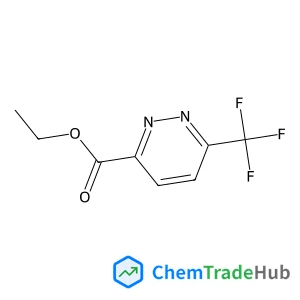
Ethyl 6-(trifluoromethyl)pyridazine-3-carboxylate
CAS Number:
1192155-06-8
Molecular Formula:
C8H7F3N2O2
Recommended Suppliers




Disclaimer
This page provides academic journal information for reference and research purposes only. We are not affiliated with any journal publishers and do not handle publication submissions. For publication-related inquiries, please contact the respective journal publishers directly.
If you notice any inaccuracies in the information displayed, please contact us at support@chemtradehub.com. We will promptly review and address your concerns.