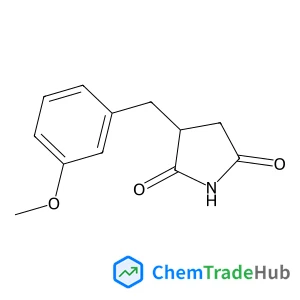
4-Cyclohexene-1,2-dicarboxylic acid, 1,2-dimethyl ester, (1R,2R)-rel-
CAS Number:
17673-68-6
Molecular Formula:
C10H14O4
Sergei Manzhos, Hiroshi Segawa, Koichi Yamashita
We study the effect of nuclear motions at different temperatures, including the effect of a dye molecule's orientation with respect to the oxide surface, on factors determining the performance of dye sensitized solar cells: light absorption, electron injection, and back-donation. We perform ab initio molecular dynamics simulations of aminophenyl acid dyes NK1 and NK7, differing by the electron donating group, in a vacuum and adsorbed in mono- and bi-dentate modes on a dry and a water-covered anatase (101) surface of TiO2, at 300 and 350 K. Nuclear vibrations and an increase of temperature cause a red shift in the absorption spectra of free dyes. This effect is preserved in dyes on dry TiO2 but largely disappears in the presence of water. Averaged over nuclear vibrations, the driving force to injection, ΔG, differs from the static estimate. It depends on the adsorption mode and the presence of H2O but is almost the same for 300 and 350 K. Recombination to the dye cation is expected to be much enhanced by the approach of the dye oxidation equivalent hole to the surface during dye wagging around TiO2. This effect is somewhat mitigated by the co-adsorbed water. The dynamics of ΔG(t) are explained by uncorrelated evolution of the energies of the dye excited state and the conduction band minimum of the oxide due to their respective vibrations, and are almost independent of dye orientation. It may therefore be possible to independently control the conditions of recombination and of injection.

Biopolymers

Anti-Corrosion Methods and Materials

Doklady Chemistry

Chemistry of Natural Compounds

Chemistry of Heterocyclic Compounds

Bulletin of the Chemical Society of Japan

Canadian Metallurgical Quarterly

Advances in Colloid and Interface Science

Australian Journal of Chemistry

Accounts of Chemical Research
Chunchen Liu, Wanzhu Cai, Xing Guan, Chunhui Duan, Qifan Xue, Lei Ying, Fei Huang, Yong Cao
DOI: 10.1039/C3PY00430A
Ergang Liu, Xiaoyi Sun, Pengyu Huang, Hao Long, Hua Wang, Xin Yu, Caihong Zheng
DOI: 10.1039/C3PY00042G
Shrinivas Venkataraman, Natalia Veronica, Zhi Xiang Voo, James L. Hedrick, Yi Yan Yang
DOI: 10.1039/C3PY00318C
Yangyi Sun, Yuyong Yin, Min Chen, Shuxue Zhou, Limin Wu
DOI: 10.1039/C3PY21155J
Ruiwen Hao, Jinming Zhang, Tao Xu, Lei Huang, Jinrong Yao, Xin Chen, Zhengzhong Shao
DOI: 10.1039/C3PY21096K
Wei-Chao Song, Xiao-Kang Xu, Qiang Chen, Zhan-Zhong Zhuang, Xian-He Bu
DOI: 10.1039/C3PY00590A
Lionel Petton, Edwin P. C. Mes, Hanno Van Der Wal, Sven Claessens, Freddy Van Damme, Sam Verbrugghe, Filip E. Du Prez
DOI: 10.1039/C3PY00600J
DOI: 10.1039/C3PY00216K
6-(3-Fluorophenyl)picolinic acid is generally considered safe for laboratory use...
(3R)-3-Pyrrolidinol is used in the pharmaceutical industry as a precursor for dr...
When handling (4R,5R)-4,5-Diethoxycarbonyl-2,2-dimethyldioxolane (CAS: 59779-75-...
1-(6-Chloroimidazo[1,2-b]pyridazin-3-yl)ethanone is often synthesized via a mult...
The market for N-Ethyl-3,4-dimethylbenzylamine (CAS: 39180-83-1) remains steady,...
Tert-butyl 3-(pyrrolidin-1-yl)azetidine-1-carboxylate is a chemical compound wit...
1-Bromo-3-chloro-2,4-dimethoxybenzene (CAS: 1228956-93-1) falls under the classi...
The safety of 8-Bromo-2-methyl-3,4-dihydroisoquinolin-1(2H)-one (CAS: 1368622-07...
Benzyl [(3S)-2,6-dioxo-3-piperidinyl]carbamate is generally safe when handled wi...
1-{[4-(4,4,5,5-Tetramethyl-1,3,2-dioxaborolan-2-yl)phenyl]sulfonyl}pyrrolidine s...

Physical Chemistry Chemical Physics (PCCP) is an international journal co-owned by 19 physical chemistry and physics societies from around the world. This journal publishes original, cutting-edge research in physical chemistry, chemical physics and biophysical chemistry. To be suitable for publication in PCCP, articles must include significant innovation and/or insight into physical chemistry; this is the most important criterion that reviewers and Editors will judge against when evaluating submissions. The journal has a broad scope and welcomes contributions spanning experiment, theory, computation and data science. Topical coverage includes spectroscopy, dynamics, kinetics, statistical mechanics, thermodynamics, electrochemistry, catalysis, surface science, quantum mechanics, quantum computing and machine learning. Interdisciplinary research areas such as polymers and soft matter, materials, nanoscience, energy, surfaces/interfaces, and biophysical chemistry are welcomed if they demonstrate significant innovation and/or insight into physical chemistry. Joined experimental/theoretical studies are particularly appreciated when complementary and based on up-to-date approaches.
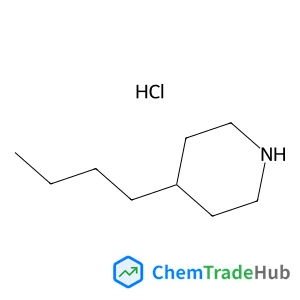

![Benzyl spiro[indole-3,4'-piperidine]-1(2H)-carboxylate hydrochloride (1:1) structure](https://static.chemtradehub.com/structs/159/159635-46-8-8de0.webp "Benzyl spiro[indole-3,4'-piperidine]-1(2H)-carboxylate hydrochloride (1:1) structure")