












Assessment of permethylated transition-metal sandwich complexes as internal reference redox systems in ionic liquids
Literature Information
Publication Date
2013-01-03
DOI
10.1039/C2CP43177G
Impact Factor
3.676
Authors
Angel A. J. Torriero, Jaka Sunarso, Maria Forsyth, Cristina Pozo-Gonzalo
View Original
Abstract
This work reports the voltammetric behaviour of decamethylcobaltocenium, DmCc+, in different ionic liquids for the first time. Its redox potential was studied relative to that of decamethylferrocene, DmFc, and it is shown that the difference in the mid-point potential between these two permethylated transition-metal sandwich complexes is independent of the ionic liquid composition. A variable difference in mid-point potential, in contrast, was observed for ferrocene and cobaltocenium relative to that of DmFc in similar ionic liquids. In addition, different limitations in the application of DmFc0/+ and DmCc+/0 couples as internal reference redox systems in ILs are discussed. From these, the observed spontaneous reaction between DmFc and oxygen leads to important implications toward the establishment of particular conditions for DmFc applications.
Related Literature
Pluronic L61 as a long-circulating modifier for enhanced liposomal delivery of cancer drugs
Ergang Liu, Xiaoyi Sun, Pengyu Huang, Hao Long, Hua Wang, Xin Yu, Caihong Zheng
2013-03-27
Communication
DOI: 10.1039/C3PY00042G
Photo-responsive linear and cross-linked supramolecular polymers based on host–guest interactions
Shengyi Dong, Lingyan Gao, Jinying Li, Donghua Xu, Qizhong Zhou
2013-05-01
Paper
DOI: 10.1039/C3PY00494E
SET-LRP of 2-hydroxyethyl acrylate in protic and dipolar aprotic solvents
Xuefei Leng, Nga H. Nguyen, Virgil Percec
2013-02-07
Paper
DOI: 10.1039/C3PY00048F
Comparing solution and melt-state association of hydrogen bonds in supramolecular polymers
Florian Herbst, Wolfgang H. Binder
2013-04-19
Paper
DOI: 10.1039/C3PY00362K
2-Amino-1,3-propane diols: a versatile platform for the synthesis of aliphatic cyclic carbonate monomers
Shrinivas Venkataraman, Natalia Veronica, Zhi Xiang Voo, James L. Hedrick, Yi Yan Yang
2013-03-22
Communication
DOI: 10.1039/C3PY00318C
Main-chain second-order nonlinear optical polyaryleneethynylenes containing isolation chromophores: enhanced nonlinear optical properties, improved optical transparency and stability
Wenbo Wu, Shaohui Xin, Zhen Xu, Cheng Ye, Jingui Qin, Zhen Li
2013-03-26
Paper
DOI: 10.1039/C3PY00257H
Alkoxyamine with reduced homolysis temperature and its application in repeated autonomous self-healing of stiff polymers
Ze Ping Zhang, Min Zhi Rong, Ming Qiu Zhang, Chan'e Yuan
2013-06-10
Paper
DOI: 10.1039/C3PY00679D
Polymerization of methyl methacrylate by latent pre-catalysts based on CO2-protected N-heterocyclic carbenes
Stefan Naumann, Friedrich Georg Schmidt, Roman Schowner, Wolfgang Frey
2013-02-19
Paper
DOI: 10.1039/C3PY00073G
Synthesis of α-helix-containing PPEGMEA-g-PBLG, well-defined amphiphilic graft copolymer, by sequential SET-LRP and ROP
Sujuan Zhai, Xuemei Song, Chun Feng, Xiuyu Jiang, Yongjun Li, Guolin Lu, Xiaoyu Huang
2013-05-14
Paper
DOI: 10.1039/C3PY00474K
You might also like
Compound Q&A
Is 6-(3-Fluorophenyl)picolinic acid (CAS: 887982-40-3) safe?
6-(3-Fluorophenyl)picolinic acid is generally considered safe for laboratory use...
887982-40-36-(3-Fluorophenyl)pi...
Compound Q&A
What industries use (3R)-3-Pyrrolidinol (CAS: 2799-21-5)?
(3R)-3-Pyrrolidinol is used in the pharmaceutical industry as a precursor for dr...
2799-21-5(3R)-3-Pyrrolidinol
Compound Q&A
What precautions should be taken when handling (4R,5R)-4,5-Diethoxycarbonyl-2,2-dimethyldioxolane (CAS: 59779-75-8)?
When handling (4R,5R)-4,5-Diethoxycarbonyl-2,2-dimethyldioxolane (CAS: 59779-75-...
59779-75-8(4R,5R)-4,5-Diethoxy...
Compound Q&A
How is 1-(6-Chloroimidazo[1,2-b]pyridazin-3-yl)ethanone (CAS: 90734-71-7) typically synthesized?
1-(6-Chloroimidazo[1,2-b]pyridazin-3-yl)ethanone is often synthesized via a mult...
90734-71-71-(6-Chloroimidazo[1...
Compound Q&A
What is the market or research trend for N-Ethyl-3,4-dimethylbenzylamine (CAS: 39180-83-1)?
The market for N-Ethyl-3,4-dimethylbenzylamine (CAS: 39180-83-1) remains steady,...
39180-83-1N-Ethyl-3,4-dimethyl...
Compound Q&A
What is Tert-butyl 3-(pyrrolidin-1-yl)azetidine-1-carboxylate (CAS: 1019008-21-9)?
Tert-butyl 3-(pyrrolidin-1-yl)azetidine-1-carboxylate is a chemical compound wit...
1019008-21-9Tert-butyl 3-(pyrrol...
Compound Q&A
What regulatory guidelines apply to 1-Bromo-3-chloro-2,4-dimethoxybenzene (CAS: 1228956-93-1)?
1-Bromo-3-chloro-2,4-dimethoxybenzene (CAS: 1228956-93-1) falls under the classi...
1228956-93-11-Bromo-3-chloro-2,4...
Compound Q&A
Is 8-Bromo-2-methyl-3,4-dihydroisoquinolin-1(2H)-one (CAS: 1368622-07-4) safe?
The safety of 8-Bromo-2-methyl-3,4-dihydroisoquinolin-1(2H)-one (CAS: 1368622-07...
1368622-07-48-Bromo-2-methyl-3,4...
Compound Q&A
Is Benzyl [(3S)-2,6-dioxo-3-piperidinyl]carbamate (CAS: 22785-43-9) safe?
Benzyl [(3S)-2,6-dioxo-3-piperidinyl]carbamate is generally safe when handled wi...
22785-43-9Benzyl [(3S)-2,6-dio...
Compound Q&A
How should 1-{[4-(4,4,5,5-Tetramethyl-1,3,2-dioxaborolan-2-yl)phenyl]sulfonyl}pyrrolidine (CAS: 928657-21-0) be stored?
1-{[4-(4,4,5,5-Tetramethyl-1,3,2-dioxaborolan-2-yl)phenyl]sulfonyl}pyrrolidine s...
928657-21-01-{[4-(4,4,5,5-Tetra...
Source Journal
Physical Chemistry Chemical Physics

CiteScore:
5.5
Self-citation Rate:
10.3%
Articles per Year:
3036
Physical Chemistry Chemical Physics (PCCP) is an international journal co-owned by 19 physical chemistry and physics societies from around the world. This journal publishes original, cutting-edge research in physical chemistry, chemical physics and biophysical chemistry. To be suitable for publication in PCCP, articles must include significant innovation and/or insight into physical chemistry; this is the most important criterion that reviewers and Editors will judge against when evaluating submissions. The journal has a broad scope and welcomes contributions spanning experiment, theory, computation and data science. Topical coverage includes spectroscopy, dynamics, kinetics, statistical mechanics, thermodynamics, electrochemistry, catalysis, surface science, quantum mechanics, quantum computing and machine learning. Interdisciplinary research areas such as polymers and soft matter, materials, nanoscience, energy, surfaces/interfaces, and biophysical chemistry are welcomed if they demonstrate significant innovation and/or insight into physical chemistry. Joined experimental/theoretical studies are particularly appreciated when complementary and based on up-to-date approaches.
Recommended Compounds
![[4-Chloro-3-(diethylcarbamoyl)phenyl]boronic acid structure](https://static.chemtradehub.com/structs/871/871332-68-2-0e3b.webp "[4-Chloro-3-(diethylcarbamoyl)phenyl]boronic acid structure")
[4-Chloro-3-(diethylcarbamoyl)phenyl]boronic acid
CAS Number:
871332-68-2
Molecular Formula:
C11H15BClNO3
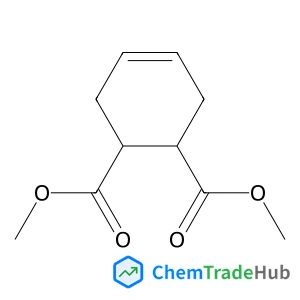
4-Cyclohexene-1,2-dicarboxylic acid, 1,2-dimethyl ester, (1R,2R)-rel-
CAS Number:
17673-68-6
Molecular Formula:
C10H14O4
Recommended Suppliers







Disclaimer
This page provides academic journal information for reference and research purposes only. We are not affiliated with any journal publishers and do not handle publication submissions. For publication-related inquiries, please contact the respective journal publishers directly.
If you notice any inaccuracies in the information displayed, please contact us at support@chemtradehub.com. We will promptly review and address your concerns.