












Significant improvement in thermoelectric performance of SnSe/SnS via nano-heterostructures
Literature Information
Publication Date
2021-01-19
DOI
10.1039/D0CP05548D
Impact Factor
3.676
Authors
Zizhen Zhou, Qi Yao, Ning Qi, Zhiquan Chen
View Original
Abstract
In this work, we study theoretically the electronic and phonon transport properties of heterojunction SnSe/SnS, bilayer SnSe and SnS. The energy filtering effect caused by the nano heterostructure in SnSe/SnS induces an increase in the Seebeck coefficient, causing a large power factor. We calculate the phonon relaxation time and lattice thermal conductivity κL for the three structures; the heterogeneous nanostructure could effectively reduce κL due to the enhanced phonon boundary scattering at interfaces. The average κL notably reduces from around 3.3 (3.2) W m−1 K−1 for bilayer SnSe (SnS) to nearly 2.2 W m−1 K−1 for SnSe/SnS at 300 K. As a result, the average ZT (ZTave in b and c directions) reaches 1.63 with temperature range around 300–800 K, which is improved by 63% (25%) compared with that of bilayer SnSe (SnS). Our theoretical results show that the heterogeneous nanostructure is an innovative approach for improving the Seebeck coefficient and significantly reducing κL, effectively enhancing thermoelectric properties.
Related Literature
Conjugated polymers with 2,7-linked 3,6-difluorocarbazole as donor unit for high efficiency polymer solar cells
Chun Du, Weiwei Li, Yan Duan, Cuihong Li, Huanli Dong, Jia Zhu, Wenping Hu, Zhishan Bo
2013-02-20
Paper
DOI: 10.1039/C3PY00177F
Photoinduced polyaddition of multifunctional azides and alkynes
Peter Burtscher, Norbert Moszner
2013-04-24
Paper
DOI: 10.1039/C3PY00356F
Push–pull (thio)barbituric acid derivatives in dye photosensitized radical and cationic polymerization reactions under 457/473 nm laser beams or blue LEDs
Mohamad-Ali Tehfe, Frédéric Dumur, Bernadette Graff, Fabrice Morlet-Savary, Didier Gigmes, Jean-Pierre Fouassier, Jacques Lalevée
2013-05-07
Paper
DOI: 10.1039/C3PY00372H
Synthesis and photoresponsive properties of two liquid crystalline polymers bearing branched azobenzene-containing side chains
Yu Zhu, Xiaogong Wang
2013-07-09
Paper
DOI: 10.1039/C3PY00757J
Pluronic L61 as a long-circulating modifier for enhanced liposomal delivery of cancer drugs
Ergang Liu, Xiaoyi Sun, Pengyu Huang, Hao Long, Hua Wang, Xin Yu, Caihong Zheng
2013-03-27
Communication
DOI: 10.1039/C3PY00042G
Solution-processable blue-to-transmissive electrochromic benzotriazole-containing conjugated polymers
Wei Teng Neo, Lee May Loo, Jing Song, Xiaobai Wang, Ching Mui Cho, Hardy Sze On Chan, Yun Zong
2013-06-20
Paper
DOI: 10.1039/C3PY00677H
Construction of aromatic-ring-layered structures using a terphenylene-layered polymer as the scaffold
Yuichi Tsuji, Yasuhiro Morisaki, Yoshiki Chujo
2013-06-21
Paper
DOI: 10.1039/C3PY00607G
2-Amino-1,3-propane diols: a versatile platform for the synthesis of aliphatic cyclic carbonate monomers
Shrinivas Venkataraman, Natalia Veronica, Zhi Xiang Voo, James L. Hedrick, Yi Yan Yang
2013-03-22
Communication
DOI: 10.1039/C3PY00318C
Fabrication of polymerizable ZnS nanoparticles in N,N′-dimethylacrylamide and the resulting high refractive index optical materials
Guoyan Zhang, Jibin Zhang, Bai Yang
2013-04-26
Paper
DOI: 10.1039/C3PY00458A
You might also like
Compound Q&A
Is 6-(3-Fluorophenyl)picolinic acid (CAS: 887982-40-3) safe?
6-(3-Fluorophenyl)picolinic acid is generally considered safe for laboratory use...
887982-40-36-(3-Fluorophenyl)pi...
Compound Q&A
What industries use (3R)-3-Pyrrolidinol (CAS: 2799-21-5)?
(3R)-3-Pyrrolidinol is used in the pharmaceutical industry as a precursor for dr...
2799-21-5(3R)-3-Pyrrolidinol
Compound Q&A
What precautions should be taken when handling (4R,5R)-4,5-Diethoxycarbonyl-2,2-dimethyldioxolane (CAS: 59779-75-8)?
When handling (4R,5R)-4,5-Diethoxycarbonyl-2,2-dimethyldioxolane (CAS: 59779-75-...
59779-75-8(4R,5R)-4,5-Diethoxy...
Compound Q&A
How is 1-(6-Chloroimidazo[1,2-b]pyridazin-3-yl)ethanone (CAS: 90734-71-7) typically synthesized?
1-(6-Chloroimidazo[1,2-b]pyridazin-3-yl)ethanone is often synthesized via a mult...
90734-71-71-(6-Chloroimidazo[1...
Compound Q&A
What is the market or research trend for N-Ethyl-3,4-dimethylbenzylamine (CAS: 39180-83-1)?
The market for N-Ethyl-3,4-dimethylbenzylamine (CAS: 39180-83-1) remains steady,...
39180-83-1N-Ethyl-3,4-dimethyl...
Compound Q&A
What is Tert-butyl 3-(pyrrolidin-1-yl)azetidine-1-carboxylate (CAS: 1019008-21-9)?
Tert-butyl 3-(pyrrolidin-1-yl)azetidine-1-carboxylate is a chemical compound wit...
1019008-21-9Tert-butyl 3-(pyrrol...
Compound Q&A
What regulatory guidelines apply to 1-Bromo-3-chloro-2,4-dimethoxybenzene (CAS: 1228956-93-1)?
1-Bromo-3-chloro-2,4-dimethoxybenzene (CAS: 1228956-93-1) falls under the classi...
1228956-93-11-Bromo-3-chloro-2,4...
Compound Q&A
Is 8-Bromo-2-methyl-3,4-dihydroisoquinolin-1(2H)-one (CAS: 1368622-07-4) safe?
The safety of 8-Bromo-2-methyl-3,4-dihydroisoquinolin-1(2H)-one (CAS: 1368622-07...
1368622-07-48-Bromo-2-methyl-3,4...
Compound Q&A
Is Benzyl [(3S)-2,6-dioxo-3-piperidinyl]carbamate (CAS: 22785-43-9) safe?
Benzyl [(3S)-2,6-dioxo-3-piperidinyl]carbamate is generally safe when handled wi...
22785-43-9Benzyl [(3S)-2,6-dio...
Compound Q&A
How should 1-{[4-(4,4,5,5-Tetramethyl-1,3,2-dioxaborolan-2-yl)phenyl]sulfonyl}pyrrolidine (CAS: 928657-21-0) be stored?
1-{[4-(4,4,5,5-Tetramethyl-1,3,2-dioxaborolan-2-yl)phenyl]sulfonyl}pyrrolidine s...
928657-21-01-{[4-(4,4,5,5-Tetra...
Source Journal
Physical Chemistry Chemical Physics

CiteScore:
5.5
Self-citation Rate:
10.3%
Articles per Year:
3036
Physical Chemistry Chemical Physics (PCCP) is an international journal co-owned by 19 physical chemistry and physics societies from around the world. This journal publishes original, cutting-edge research in physical chemistry, chemical physics and biophysical chemistry. To be suitable for publication in PCCP, articles must include significant innovation and/or insight into physical chemistry; this is the most important criterion that reviewers and Editors will judge against when evaluating submissions. The journal has a broad scope and welcomes contributions spanning experiment, theory, computation and data science. Topical coverage includes spectroscopy, dynamics, kinetics, statistical mechanics, thermodynamics, electrochemistry, catalysis, surface science, quantum mechanics, quantum computing and machine learning. Interdisciplinary research areas such as polymers and soft matter, materials, nanoscience, energy, surfaces/interfaces, and biophysical chemistry are welcomed if they demonstrate significant innovation and/or insight into physical chemistry. Joined experimental/theoretical studies are particularly appreciated when complementary and based on up-to-date approaches.
Recommended Compounds
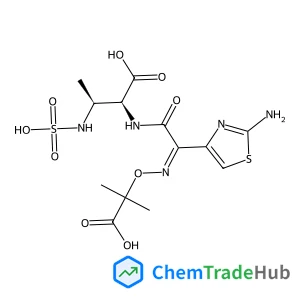
Aztreonam USP Related Compound A (Open-ring Aztreonam)
CAS Number:
87500-74-1
Molecular Formula:
C13H19N5O9S2
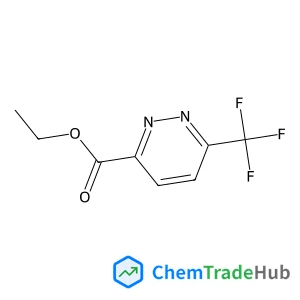
Ethyl 6-(trifluoromethyl)pyridazine-3-carboxylate
CAS Number:
1192155-06-8
Molecular Formula:
C8H7F3N2O2
Recommended Suppliers






Disclaimer
This page provides academic journal information for reference and research purposes only. We are not affiliated with any journal publishers and do not handle publication submissions. For publication-related inquiries, please contact the respective journal publishers directly.
If you notice any inaccuracies in the information displayed, please contact us at support@chemtradehub.com. We will promptly review and address your concerns.