












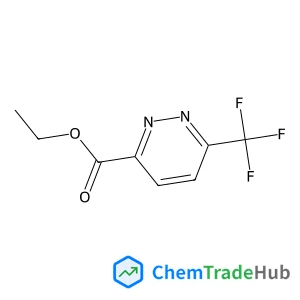
Ethyl 6-(trifluoromethyl)pyridazine-3-carboxylate
CAS Number:
1192155-06-8
Molecular Formula:
C8H7F3N2O2
Mohamad-Ali Tehfe, Frédéric Dumur, Bernadette Graff, Fabrice Morlet-Savary, Didier Gigmes, Jean-Pierre Fouassier, Jacques Lalevée
A series of new dyes based on (thio)barbituric acid derivatives were synthesized and used as photoinitiators of polymerization upon very soft irradiation (laser diodes at 457 nm and 473 nm; blue LED bulbs or even a halogen lamp). These dyes can work according to an oxidative cycle (dye/diphenyl iodonium salt/N-vinylcarbazole system) or a reductive cycle (dye/amine/alkyl halide system) and partly behave as organic photocatalysts. Ring-opening polymerization (ROP) of epoxides and radical polymerization (RP) of acrylates are easily promoted. Excellent RP and/or ROP polymerization profiles are obtained. The contrasting behavior of the thiobarbituric vs. barbituric acid derivative is discussed. The initiation mechanisms, analyzed by Electron Spin Resonance (ESR) and steady state photolysis experiments, are detailed.
Martin Schilling, Sylvain Brimaud, R. Jürgen Behm
DOI: 10.1039/C7CP03961A
Ronghua Ma, Xiaotong Chen, Xvsheng Qiao, Xianping Fan, Jincheng Du, Xianghua Zhang
DOI: 10.1039/C7CP02531A
DOI: 10.1039/C7CP04152G
Binita Pathak, Goutam Prasanna Kar, Suryasarathi Bose, Saptarshi Basu
DOI: 10.1039/C7CP03621C
DOI: 10.1039/C7CP00798A
Pratik P. Dholabhai, Enrique Martínez, Nicholas T. Brown, Blas Pedro Uberuaga
DOI: 10.1039/C7CP04884J
Saeid Arabnejad, Koichi Yamashita, Sergei Manzhos
DOI: 10.1039/C7CP00510E
Amanda N. Oehrlein, Antonio Sanchez-Diaz, Philip C. Goff, Gretchen M. Ziegler, Ted M. Pappenfus, Kent R. Mann, David A. Blank, Wayne L. Gladfelter
DOI: 10.1039/C7CP03784H
J. S. Eardley, N. Warner, L. Z. Deng, E. Wrede
DOI: 10.1039/C7CP00458C
Yvonne Gründer, Christopher A. Lucas
DOI: 10.1039/C7CP00244K
6-(3-Fluorophenyl)picolinic acid is generally considered safe for laboratory use...
(3R)-3-Pyrrolidinol is used in the pharmaceutical industry as a precursor for dr...
When handling (4R,5R)-4,5-Diethoxycarbonyl-2,2-dimethyldioxolane (CAS: 59779-75-...
1-(6-Chloroimidazo[1,2-b]pyridazin-3-yl)ethanone is often synthesized via a mult...
The market for N-Ethyl-3,4-dimethylbenzylamine (CAS: 39180-83-1) remains steady,...
Tert-butyl 3-(pyrrolidin-1-yl)azetidine-1-carboxylate is a chemical compound wit...
1-Bromo-3-chloro-2,4-dimethoxybenzene (CAS: 1228956-93-1) falls under the classi...
The safety of 8-Bromo-2-methyl-3,4-dihydroisoquinolin-1(2H)-one (CAS: 1368622-07...
Benzyl [(3S)-2,6-dioxo-3-piperidinyl]carbamate is generally safe when handled wi...
1-{[4-(4,4,5,5-Tetramethyl-1,3,2-dioxaborolan-2-yl)phenyl]sulfonyl}pyrrolidine s...

Polymer Chemistry welcomes submissions in all areas of polymer science that have a strong focus on macromolecular chemistry. Manuscripts may cover a broad range of fields, yet no direct application focus is required.
![[4-Chloro-3-(diethylcarbamoyl)phenyl]boronic acid structure](https://static.chemtradehub.com/structs/871/871332-68-2-0e3b.webp "[4-Chloro-3-(diethylcarbamoyl)phenyl]boronic acid structure")





