












2-Amino-1,3-propane diols: a versatile platform for the synthesis of aliphatic cyclic carbonate monomers
Literature Information
Publication Date
2013-03-22
DOI
10.1039/C3PY00318C
Impact Factor
5.582
Authors
Shrinivas Venkataraman, Natalia Veronica, Zhi Xiang Voo, James L. Hedrick, Yi Yan Yang
View Original
Abstract
Starting from commercially available 2-amino-1,3-propane diols, a variety of functional cyclic carbonate monomers were synthesized through a general two-step strategy. First the amino group was chemo-selectively reacted with a diverse set of electrophiles to result in functional diol intermediates (1), which were then cyclized in an intramolecular fashion to generate a series of functional aliphatic six-membered cyclic carbonate monomers (2). The unique feature of this approach is its ability to install concurrently two different functional groups. This includes a specific tethered functional group and a second functional group, which are installed in the monomer-forming reactions. Selected monomers were subjected to organo-catalytic ring opening polymerization to produce well-defined homopolymers and copolymers (ĐM ≥ 1.5) with controlled composition. Primary amine containing polymers were also readily accessed via post-polymerization acidolysis of a tBoc-derived monomer (2k). This approach will provide direct access to functional biodegradable polymers and impact the development of next-generation materials for biomedical and environmentally friendly products.
Related Literature
Probing the charge distribution at the electrochemical interface
Yvonne Gründer, Christopher A. Lucas
2017-02-27
Paper
DOI: 10.1039/C7CP00244K
From force curves to surface nanomechanical properties
Illia Dobryden, Gen Li, Yunjuan He, Hui Huang, Per-Anders Thorén, David B. Haviland
2017-05-22
Perspective
DOI: 10.1039/C7CP02612A
The transient manifold structure of the p53 extreme C-terminal domain: insight into disorder, recognition, and binding promiscuity by molecular dynamics simulations
E. Fadda, M. G. Nixon
2017-06-02
Paper
DOI: 10.1039/C7CP02485A
Defects in crystalline PVDF: a density functional theory-density functional tight binding study
Saeid Arabnejad, Koichi Yamashita, Sergei Manzhos
2017-02-17
Paper
DOI: 10.1039/C7CP00510E
Cation/macromolecule interaction in alkaline cellulose solution characterized with pulsed field-gradient spin-echo NMR spectroscopy
Sen Wang, Peng Sun, Rongrong Zhang, Ang Lu, Maili Liu, Lina Zhang
2017-02-20
Communication
DOI: 10.1039/C6CP08744B
Improving the capacity of lithium–sulfur batteries by tailoring the polysulfide adsorption efficiency of hierarchical oxygen/nitrogen-functionalized carbon host materials
Artur Schneider, Torsten Brezesinski
2017-02-23
Paper
DOI: 10.1039/C6CP08865A
Magnetic trapping of SH radicals
J. S. Eardley, N. Warner, L. Z. Deng, E. Wrede
2017-03-02
Paper
DOI: 10.1039/C7CP00458C
High temperature activation of hematite nanorods for sunlight driven water oxidation reaction
Nathalie Minko Ito, Waldemir Moura Carvalho, Jr, Dereck Nills Ferreira Muche, Ricardo Hauch Ribeiro Castro, Gustavo Martini Dalpian
2017-08-24
Paper
DOI: 10.1039/C7CP04827K
Two-photon absorption of the spatially confined LiH molecule
Justyna Kozłowska, Marta Chołuj, Robert Zaleśny, Wojciech Bartkowiak
2017-02-15
Paper
DOI: 10.1039/C6CP07368A
Unifying hydrotropy under Gibbs phase rule
Seishi Shimizu
2017-05-11
Perspective
DOI: 10.1039/C7CP02132A
You might also like
Compound Q&A
Is 6-(3-Fluorophenyl)picolinic acid (CAS: 887982-40-3) safe?
6-(3-Fluorophenyl)picolinic acid is generally considered safe for laboratory use...
887982-40-36-(3-Fluorophenyl)pi...
Compound Q&A
What industries use (3R)-3-Pyrrolidinol (CAS: 2799-21-5)?
(3R)-3-Pyrrolidinol is used in the pharmaceutical industry as a precursor for dr...
2799-21-5(3R)-3-Pyrrolidinol
Compound Q&A
What precautions should be taken when handling (4R,5R)-4,5-Diethoxycarbonyl-2,2-dimethyldioxolane (CAS: 59779-75-8)?
When handling (4R,5R)-4,5-Diethoxycarbonyl-2,2-dimethyldioxolane (CAS: 59779-75-...
59779-75-8(4R,5R)-4,5-Diethoxy...
Compound Q&A
How is 1-(6-Chloroimidazo[1,2-b]pyridazin-3-yl)ethanone (CAS: 90734-71-7) typically synthesized?
1-(6-Chloroimidazo[1,2-b]pyridazin-3-yl)ethanone is often synthesized via a mult...
90734-71-71-(6-Chloroimidazo[1...
Compound Q&A
What is the market or research trend for N-Ethyl-3,4-dimethylbenzylamine (CAS: 39180-83-1)?
The market for N-Ethyl-3,4-dimethylbenzylamine (CAS: 39180-83-1) remains steady,...
39180-83-1N-Ethyl-3,4-dimethyl...
Compound Q&A
What is Tert-butyl 3-(pyrrolidin-1-yl)azetidine-1-carboxylate (CAS: 1019008-21-9)?
Tert-butyl 3-(pyrrolidin-1-yl)azetidine-1-carboxylate is a chemical compound wit...
1019008-21-9Tert-butyl 3-(pyrrol...
Compound Q&A
What regulatory guidelines apply to 1-Bromo-3-chloro-2,4-dimethoxybenzene (CAS: 1228956-93-1)?
1-Bromo-3-chloro-2,4-dimethoxybenzene (CAS: 1228956-93-1) falls under the classi...
1228956-93-11-Bromo-3-chloro-2,4...
Compound Q&A
Is 8-Bromo-2-methyl-3,4-dihydroisoquinolin-1(2H)-one (CAS: 1368622-07-4) safe?
The safety of 8-Bromo-2-methyl-3,4-dihydroisoquinolin-1(2H)-one (CAS: 1368622-07...
1368622-07-48-Bromo-2-methyl-3,4...
Compound Q&A
Is Benzyl [(3S)-2,6-dioxo-3-piperidinyl]carbamate (CAS: 22785-43-9) safe?
Benzyl [(3S)-2,6-dioxo-3-piperidinyl]carbamate is generally safe when handled wi...
22785-43-9Benzyl [(3S)-2,6-dio...
Compound Q&A
How should 1-{[4-(4,4,5,5-Tetramethyl-1,3,2-dioxaborolan-2-yl)phenyl]sulfonyl}pyrrolidine (CAS: 928657-21-0) be stored?
1-{[4-(4,4,5,5-Tetramethyl-1,3,2-dioxaborolan-2-yl)phenyl]sulfonyl}pyrrolidine s...
928657-21-01-{[4-(4,4,5,5-Tetra...
Source Journal
Polymer Chemistry

CiteScore:
8.6
Self-citation Rate:
7.3%
Articles per Year:
457
Polymer Chemistry welcomes submissions in all areas of polymer science that have a strong focus on macromolecular chemistry. Manuscripts may cover a broad range of fields, yet no direct application focus is required.
Recommended Compounds
![4-[(2,4-Dihydroxyphenyl)diazenyl]-5-hydroxy-2,7-naphthalenedisulfonic acid structure](https://static.chemtradehub.com/structs/362/3627-01-8-79ac.webp "4-[(2,4-Dihydroxyphenyl)diazenyl]-5-hydroxy-2,7-naphthalenedisulfonic acid structure")
4-[(2,4-Dihydroxyphenyl)diazenyl]-5-hydroxy-2,7-naphthalenedisulfonic acid
CAS Number:
3627-01-8
Molecular Formula:
C16H12N2O9S2
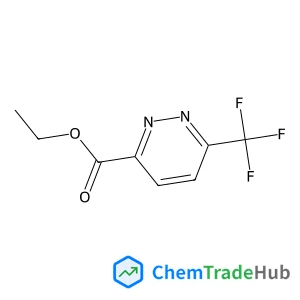
Ethyl 6-(trifluoromethyl)pyridazine-3-carboxylate
CAS Number:
1192155-06-8
Molecular Formula:
C8H7F3N2O2

Recommended Suppliers





Disclaimer
This page provides academic journal information for reference and research purposes only. We are not affiliated with any journal publishers and do not handle publication submissions. For publication-related inquiries, please contact the respective journal publishers directly.
If you notice any inaccuracies in the information displayed, please contact us at support@chemtradehub.com. We will promptly review and address your concerns.