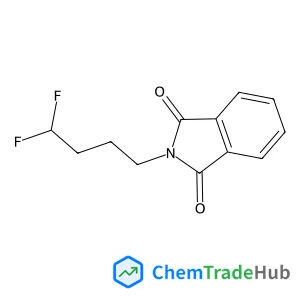
2-(4,4-Difluorobutyl)-1H-isoindole-1,3(2H)-dione
CAS Number:
1265341-14-7
Molecular Formula:
C12H11F2NO2
Oxygen plays a key role in human physiology and is abnormally modulated in various disease pathologies making its in situ monitoring quite important. Most oxygen sensors are not able to measure oxygen levels deep inside the tissue or have mismatched electrode–tissue interfaces. In this study we developed a flexible thread-based oxygen sensor that combines the unique advantages of minimal invasiveness and superior flexibility offering the possibility for tissue integration. The sensor is featured by a simple and low-cost fabrication approach which allows for measuring the overall oxygen concentration either over a large surface area or locally at any spot in any three-dimensional environment with high spatial accuracy and high sensitivity. The sensor can sensitively detect dissolved oxygen levels within the physiological range of tissue oxygenation. The sensor's performance is insensitive to pH variation from 5.8 to 8.0. The sensor shows good repeatability and stability over a period of one week in phosphate buffered saline. In addition, the signal variation is less than 10% after hundreds of cycles of physical bending. Using a hydrogel-based tissue model the sensor has been shown to probe dissolved oxygen levels at different spatial locations inside a tissue-like environment.

Science Progress

Russian Chemical Reviews

Proceedings of the National Academy of Sciences of the United States of America

Journal of Physics and Chemistry of Solids

Journal of Catalysis

Helvetica Chimica Acta

Pure and Applied Chemistry

Israel Journal of Chemistry

Journal of Heterocyclic Chemistry

Planta Medica
John W. C. Cheing, William P. D. Goldring, Gerald Pattenden
DOI: 10.1039/B310753A
C. Boissiere, D. Grosso, H. Amenitsch, A. Gibaud, A. Coupé, N. Baccile, C. Sanchez
DOI: 10.1039/B308694A
Guo-Jun Zhang, Takashi Tanii
DOI: 10.1039/B315278B
Mònica Soler, Wolfgang Wernsdorfer, Ziming Sun, John C. Huffman, David N. Hendrickson, George Christou
DOI: 10.1039/B306246E
Arif Ali Khan, Cathleen Wismach, Peter G. Jones, Rainer Streubel
DOI: 10.1039/B309443J
Ki-Sub Kim, Sukjeong Choi, D. Demberelnyamba, Huen Lee, Jaeseung Oh, Byoung-Bae Lee, Su-Jin Mun
DOI: 10.1039/B400198B
Janice Aldrich-Wright, Craig Brodie, Edith C. Glazer, Nathan W. Luedtke, Lev Elson-Schwab, Yitzhak Tor
DOI: 10.1039/B316917K
Xinjun Wang, Yi Xie, Qixun Guo
DOI: 10.1039/B308264D
Osamu Tamura, Tomoya Shiro, Atsushi Toyao, Hiroyuki Ishibashi
DOI: 10.1039/B306791M
Kiyohiko Kawai, Aya Yokoohji, Sachiko Tojo, Tetsuro Majima
DOI: 10.1039/B310579B
N-(4-Methoxybenzyl)-2-pyridinamine (CAS: 52818-63-0) is increasingly being used ...
When handling Ethyl 4-(2-chlorophenyl)-1,3-thiazole-2-carboxylate, appropriate p...
Diethyldiselane (CAS: 628-39-7) is classified under the Globally Harmonized Syst...
The market for oxocopper (CAS: 12053-18-8) is primarily driven by its use in cat...
The market for 5-{[(2-Methyl-2-propanyl)oxy]carbonyl}-5-azaspiro[2.4]heptane-7-c...
2-(1-Pyrrolidinyl)-4-pyridinamine is a chemical compound with the CAS number 359...
2-(3-Pyridinyl)-1-azabicyclo[2.2.2]octane (CAS: 91556-75-1) is a crystalline sol...
(S)-Alpha-allyl-proline hydrochloride is usually synthesized via a Wittig reacti...
3-Methyl-1,2-oxazole-5-carboxylic acid (CAS: 4857-42-5) is an organic compound w...
Lys-SMCC-DM1 is synthesized via a multi-step process involving the coupling of S...

Analyst publishes analytical and bioanalytical research that reports premier fundamental discoveries and inventions, and the applications of those discoveries, unconfined by traditional discipline barriers.